
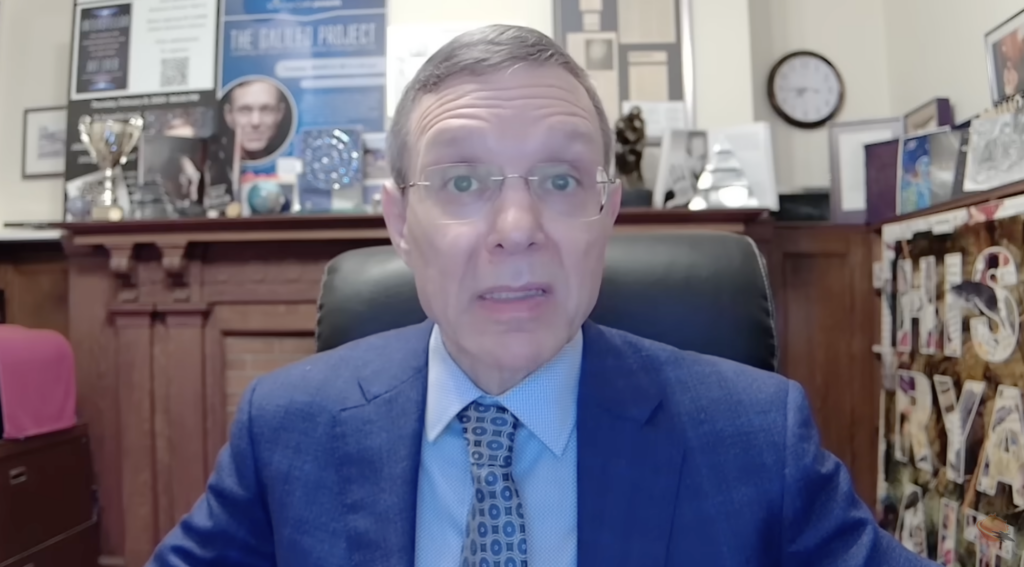
Humans are unlikely to sit at the top of the cosmic food chain and would probably be outclassed by any visiting aliens, according to Harvard professor Avi Loeb, who has urged US president Donald Trump to release all available UFO evidence as soon as possible.
Loeb, a theoretical physicist and former chair of Harvard’s astronomy department, has become one of the most outspoken academic voices arguing that unidentified aerial phenomena should be taken seriously by mainstream science. He has long pushed US authorities to declassify data on UFOs, and has framed the possibility of extra terrestrial technology not as a threat, but as a once‑in‑civilisation chance to learn from a more advanced species.
Aliens and the Food Chain
Loeb’s starting point is pragmatic rather than mystical. The Milky Way, he notes, contains around 100 billion stars. In that kind of numerical crush, he argues, it would be arrogant to assume that humanity represents the pinnacle of intelligence and power.
‘We are probably not at the top of the food chain, cosmologically speaking,’ he said. For him, the sheer number of possible planetary systems means that if aliens are visiting Earth at all, they are almost certainly ahead of us in technological terms.
His language is pointed. Extra terrestrials, if they exist and have reached us, are ‘more accomplished’ than humans, Loeb says. But he insists this is not a reason for panic. Instead, he casts humanity as the younger sibling in a very large, very quiet family.
‘We should treat our lives as a learning experience to determine whether any of our neighbours are visiting us,’ Loeb said. He likens potential alien visitors to a ‘more accomplished sibling,’ whose mere existence forces humanity to reassess its ambitions and priorities.
That sense of perspective is at the heart of his argument. Human civilisation, Loeb notes, has enjoyed only about a century of what we would recognise as modern science and technology. In that short window, humanity has leapt from early flight to satellites, nuclear power and artificial intelligence. If humans can achieve that in 100 years, he suggests, imagine what a civilisation with a million-year head start might look like.
Alien Technology, Trump and UFO Evidence
Loeb’s comments fold neatly into a broader, more political story. Trump ordered the release of US government files on UFOs, and has repeatedly teased that his administration uncovered intriguing material. The details of those discoveries, if any, remain opaque.
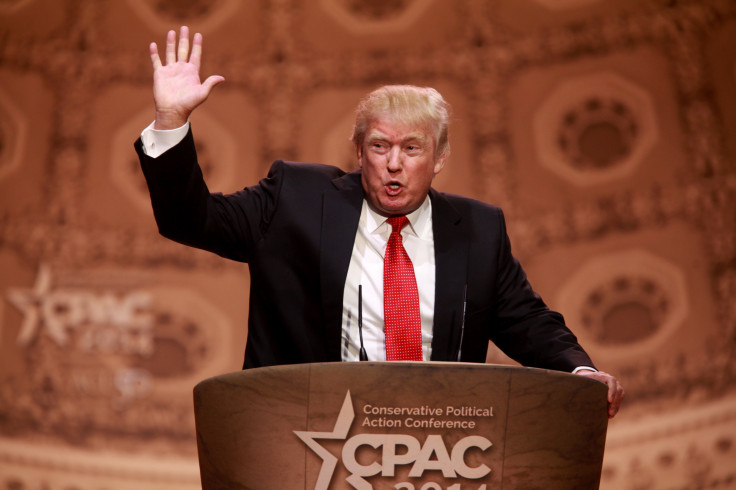
Trump ordered the release of US government files on UFOs.
Gage Skidmore from Peoria, AZ, United States of America, CC BY-SA 2.0 , via Wikimedia Commons
Some UFO enthusiasts and researchers worry that the full picture will never be made public. There is a long history of partial disclosures and heavily redacted documents, and a deep suspicion that defence and intelligence agencies will hold back the most sensitive evidence.
Loeb shares some of that caution but does not sound conspiratorial. He expects any release to arrive in waves, beginning with less sensitive material, particularly video recordings. ‘It’s unclear whether the most intriguing data will be released in the first wave,’ he acknowledged.
He points to another complication. Some of the most detailed information is likely to come from satellites and other classified sensors. Releasing raw data from those systems would tip off rival governments about US surveillance capabilities, making full transparency politically awkward.
Even so, Loeb argues, the public has a right to know if something genuinely anomalous has been detected. ‘Nevertheless, if there is something there, we should all know about it,’ he said, framing the issue as a shared human concern rather than a niche scientific question.
He has also positioned himself as ready to help. ‘I will be the first to respond to this opportunity. President Trump has me at “hello,” if he wants me to help the government figure things out,’ he said. The invitation sounds half‑wry, half‑serious, but it underlines his view that UFO data should be in the hands of scientists, not just security officials.
A ‘Sibling’ That Could Rewrite Human Priorities
Beneath the colourful analogies about food chains and siblings sits a stark claim about what alien contact could do to human self‑image.
Loeb believes that hard evidence of a non‑human, technological object would be ‘the biggest discovery of human history.’ Even a single artefact, he says, even ‘one out of a million objects’ proved to be manufactured by an extra terrestrial civilisation, would alter everything from physics textbooks to political priorities.
‘If they do have such evidence, that would be remarkable. It would make my life worth living as much as for a whole generation,’ he said. In his view, confirmed contact would not simply answer a scientific question. It would act as a forcing mechanism on humanity itself.
‘It will inspire humanity to do better. It will change our priorities. Altogether, I think it will bring us to a better place. It is just like realising that you have a sibling who is more accomplished than you are,’ he said.
Loeb also hints at the personal stakes for Trump. If the president were ultimately credited with enabling the scientific community to access definitive evidence of alien technology, Loeb argues, that alone would fix his name in the history books.