
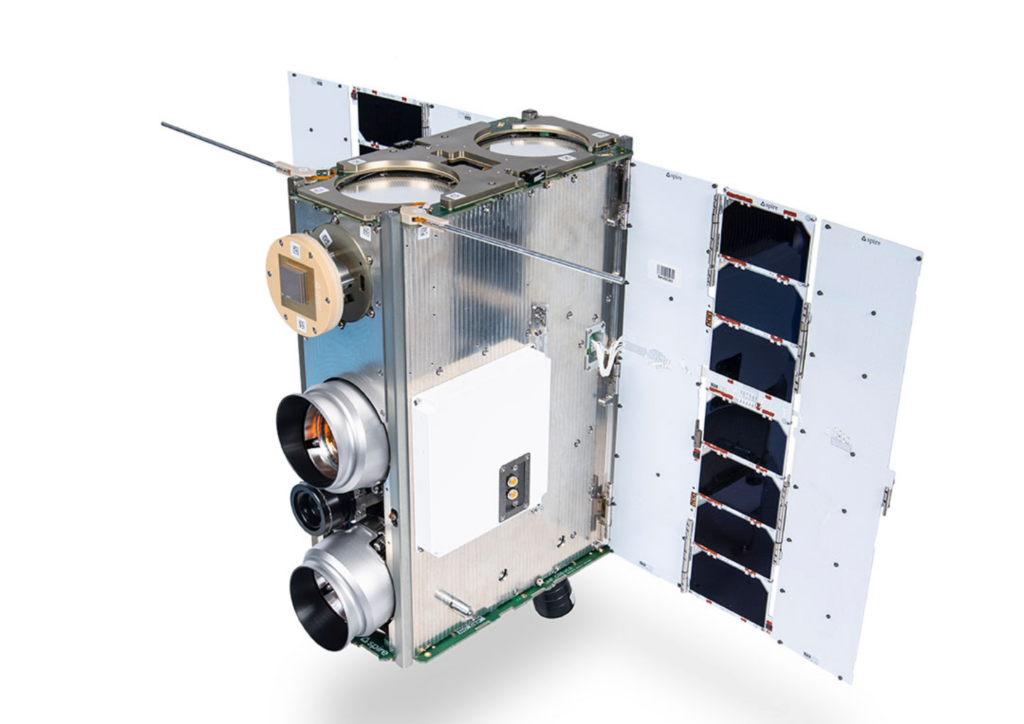
Spire Global has opened a satellite manufacturing facility in Munich as European governments push to expand sovereign space and intelligence capabilities amid growing concern over dependence on foreign systems.
Spire operates a constellation of satellites focused on radio frequency sensing, weather monitoring, maritime tracking, aircraft monitoring, and spoofing and jamming detection. The company has increasingly positioned its RF sensing infrastructure as a tool for both monitoring and national security applications.
The new facility will support the production of small satellites for security, reconnaissance, and radio frequency monitoring missions. The new site includes “an ISO-certified clean room and vertically integrated infrastructure, with the capacity to produce up to 100 satellites per year,” according to a release.
Spire said the Munich operation will initially support the EURIALO project, an initiative backed by the European Space Agency under its Advanced Research in Telecommunications Systems (ARTES) Space Systems for Safety & Security (4S) program. The effort is focused on developing GNSS-independent aircraft geolocation systems that can track aircraft through radio frequency emissions rather than traditional navigation signals.
The project reflects growing European concern about the vulnerability of satellite navigation systems to jamming and spoofing attacks. European defense planners and security agencies have increasingly warned that dependence on GPS and related navigation infrastructure creates risks for both military and civilian transport systems.
“By combining satellite manufacturing with Spire’s proven RF geolocation capabilities, we are enabling a new class of responsive space-based intelligence systems that can be integrated into national and European security frameworks and expanding our industrial footprint to support the growing demand for space-based intelligence solutions,” said Theresa Condor, Spire CEO.
Germany has accelerated spending on space and defense technologies since the start of the war in Ukraine, with particular focus on surveillance, communications resilience, and independent intelligence collection capabilities. European governments have also become more interested in rapidly deployable satellite constellations that can supplement or replace vulnerable legacy systems during conflict.