
A newly discovered object may be a key to unlocking the true nature of a mysterious class of sources that astronomers have found in the early universe in recent years.
NASA/CXC/SAO/M. Weiss; adapted by K. Arcand & J. Major
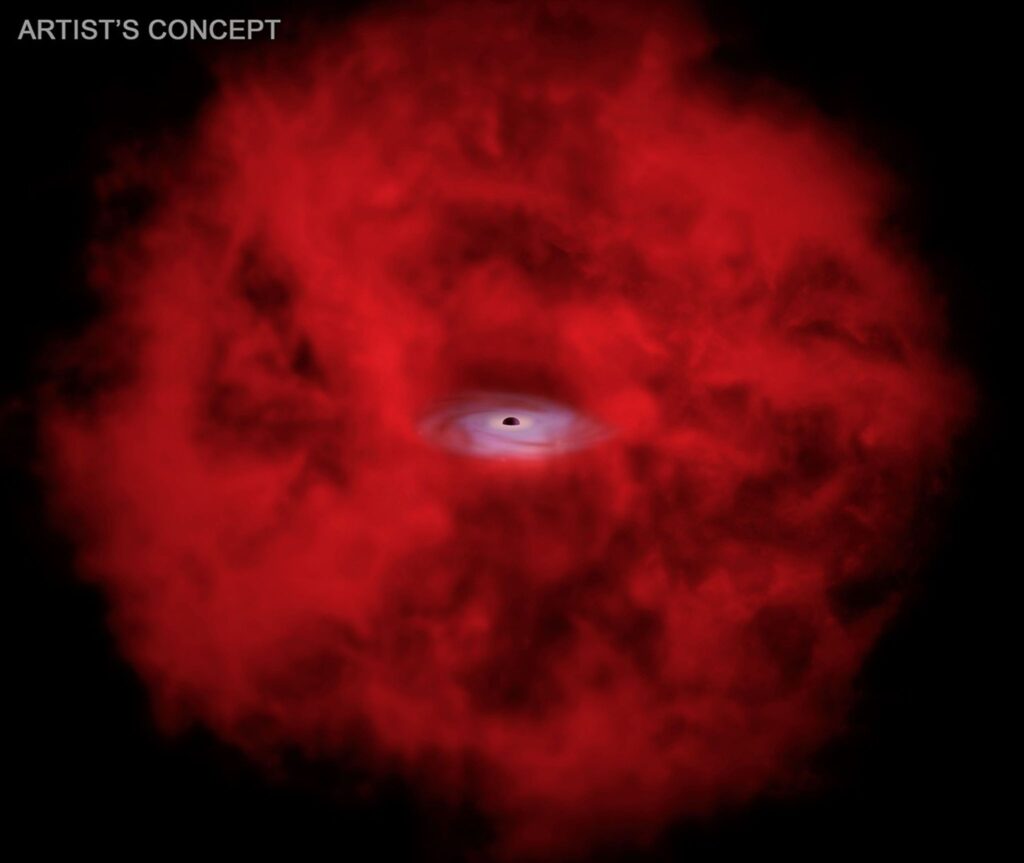
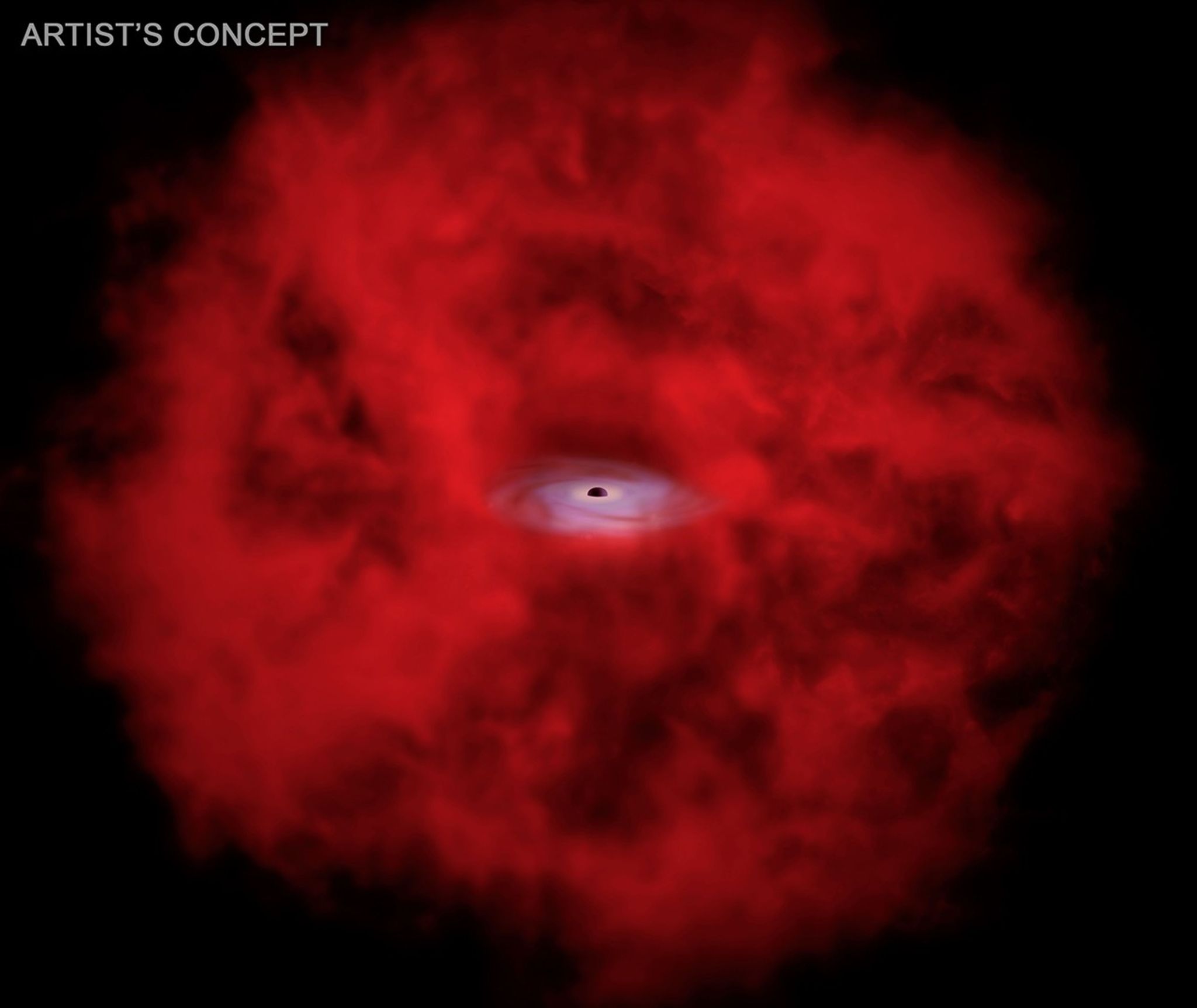
A new “X-ray dot” found by NASA’s Chandra X-ray Observatory – which could look like this artist’s illustration released on April 28, 2026 – could explain what the hundreds or potentially thousands of these objects are.
Shortly after NASA’s James Webb Space Telescope started its science observations, reports of a new class of mysterious objects emerged. Astronomers found small, red objects about 12 billion light-years from Earth or farther, which became known as “little red dots” (LRDs). The dot that Chandra found exhibits most of the features of an LRD, including being small, red, and located at a vast distance, but it glows in X-ray light, unlike other LRDs – hence the name “X-ray dot.”
This object (officially known as 3DHST-AEGIS-12014), which is located about 11.8 billion light-years from Earth, may provide a crucial bridge between black hole stars and typical growing supermassive black holes.
/Public Release. This material from the originating organization/author(s) might be of the point-in-time nature, and edited for clarity, style and length. Mirage.News does not take institutional positions or sides, and all views, positions, and conclusions expressed herein are solely those of the author(s).View in full here.