
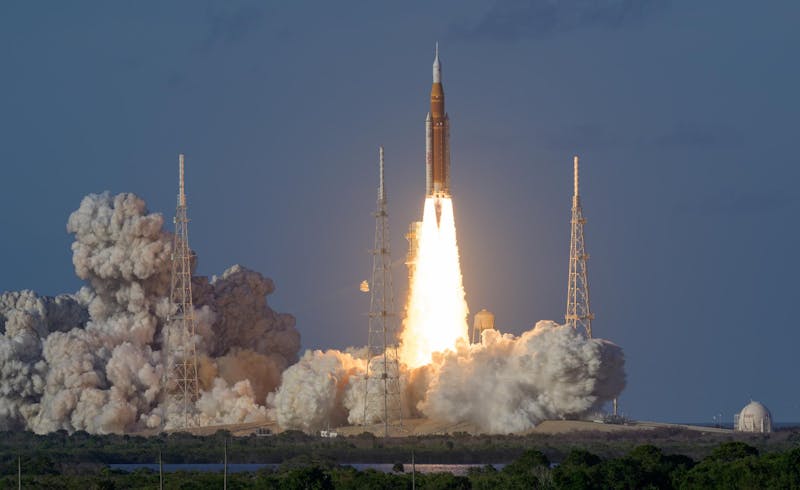
On April 1, NASA launched Artemis II. The mission launched approximately 10 minutes late, although it had been delayed several times from its initial launch window the previous month. Despite the delay, the launch and nine-day mission itself went off nearly flawlessly, sending the Orion spacecraft around the moon before returning to a splashdown and recovery in the Pacific Ocean on April 11.
The mission was the second in NASA’s modern lunar exploration program, known as Artemis, designed to be a permanent return to the moon and a stepping stone to future Mars missions. Similar to the Artemis I mission, which launched Nov. 16, 2022, it was a lunar flyby, a trial run of the long-overdue Orion spacecraft and Space Launch System
The most critical difference between the two missions was one of the simplest — Artemis I was uncrewed, and Artemis II carried four astronauts.
Commander Reid Wiseman, pilot Victor Glover and mission specialists Christina Koch and Jeremy Hansen became the first humans to leave low Earth orbit since 1972 — the return of Apollo 17 and the end of that program. They also set the record for the furthest humans have ever been from Earth at 252,756 miles, a title formerly held by the Apollo 13 crew. It was a historic mission, and one I was proud to watch lift off live, albeit through a live stream.
On a technical basis, the mission was impressive, but to just say it was historic and impressive misses the point.
Artemis II was about people, the astronauts on the spacecraft and the millions who watched them fly to the moon. It was a human mission at its core, a deeply human achievement. The astronauts made jokes and called the International Space Station — their friends and colleagues — to ask what they were making for dinner so they could do the same. Mission specialist Koch called herself a space plumber after she fixed the capsule’s toilet. They named a crater Carroll, after Commander Wiseman’s late wife.
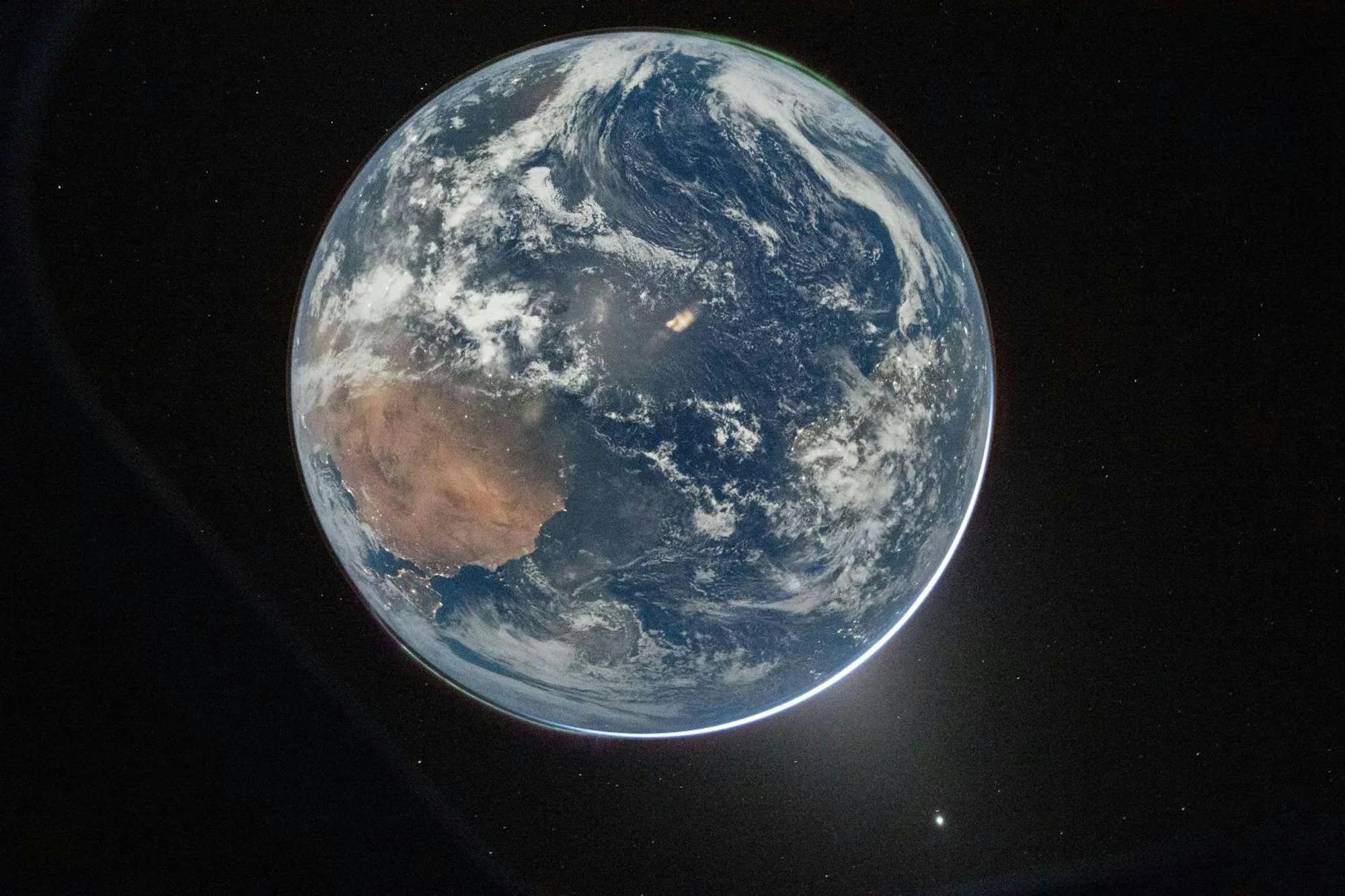
An Artemis II astronaut took this picture of Earth from the Orion spacecraft’s window. Photo courtesy of NASA.
It was a moving mission, one filled with humor and humanity. But my favorite part wasn’t the mission itself. It’s great to see a true return to deep space, and a continuation of the promise the Apollo program made 50 years ago, but my favorite part was watching the reactions.
Seeing the amount of interest, attention and awe directed toward Artemis II surprised me. I’ve been following space exploration for years; it’s been a fascination of mine since I was a little kid. I was astounded to find so many people, those who I had never seen really care about space exploration before, watching the streams even more than I was. It was a strange, but not bad, experience to have one of my fixations thrust into the limelight in such a potent way.
Artemis II turned out to be staggeringly popular, and it really did seem like everyone was watching. Major news outlets covered the day-to-day mission activities, and my social media feeds were filled with artwork and talk about the mission, favorite moments and what it really meant to those watching. Outside of some oddball negative comments, it felt like everyone was cheering the crew onwards.
It was unifying, an exceptionally literal beacon of light in an increasingly depressing world, and a reminder that not everything is bad. People coined the term “moon joy” for it, and it’s a term I love. The mission did bring people joy, and caught their attention.
Who knows whether or not the interest in the mission, NASA and space exploration as a whole will continue beyond this one event. But, with some luck, it will. The next generation of space lovers, enthusiasts and future astronauts watched the streams live. Maybe it gave them the same hope it gave me.
Enjoy what you’re reading?
Signup for our newsletter
Charley Babb is a sophomore majoring in professional writing. He is an Opinion writer for The Miami Student, and he is active as a fencer in the Miami Medieval Club. He likes reading and creative writing in his free time.