
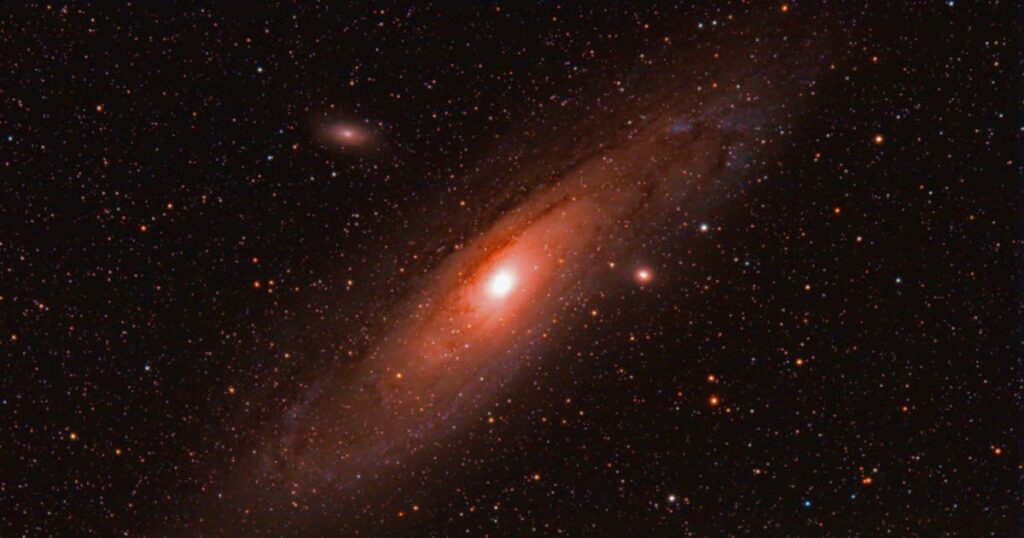
The discovered galaxy reached a state of non-rotation when the universe was less than 2 billion years old.
The James Webb Space Telescope has found that a massive galaxy far away from the early days of the universe is not rotating. This discovery about the galaxy named XMM-VID1-2075 has been reported in a paper published in Nature Astronomy. “This one in particular did not show any evidence of rotation, which was surprising and very interesting,” said lead author Ben Forrest at the University of California, Davis, in a statement.
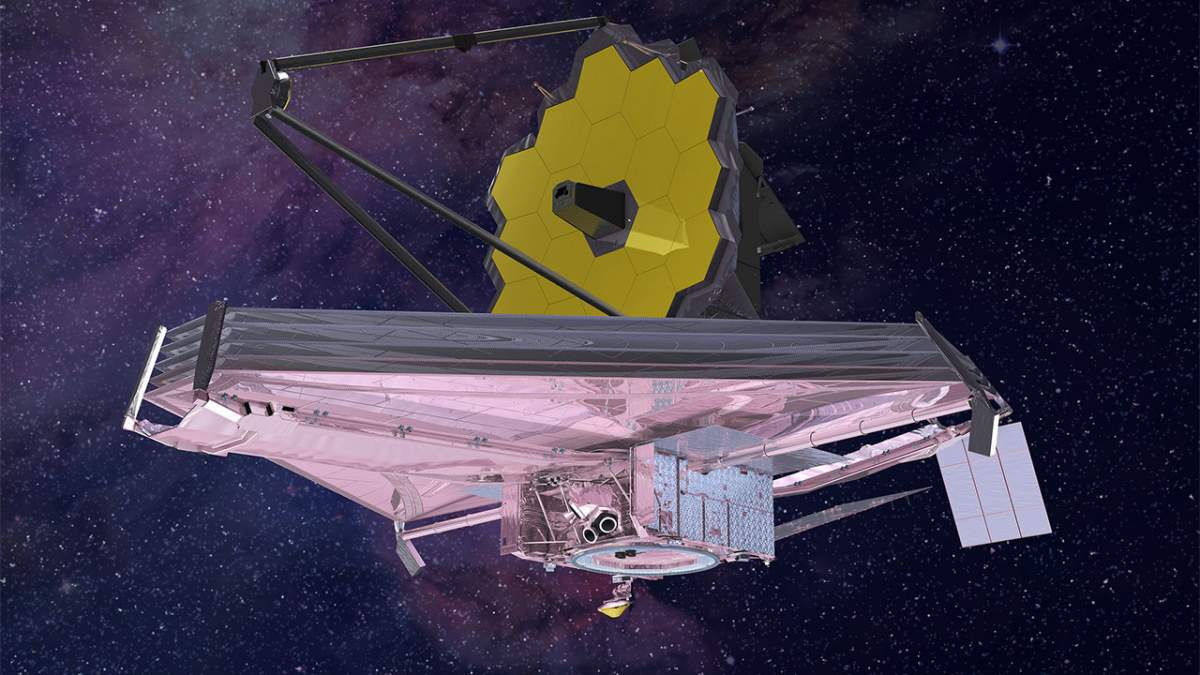
Artist’s concept of NASA’s James Webb Space Telescope (Image Source: NASA)
Existing theories tell us that the angular momentum of inflowing gas and the influence of gravity set the first galaxies spinning. Over billions of years, galaxies within galaxy clusters merged with each other many times. Their combined rotation added to or partly canceled each other out. This is why some of the galaxies that are the closest to Earth show little rotation but have a lot of random movement of stars within them. This is a slow process. So it’s rather baffling that the discovered galaxy reached this state when the universe was less than 2 billion years old.
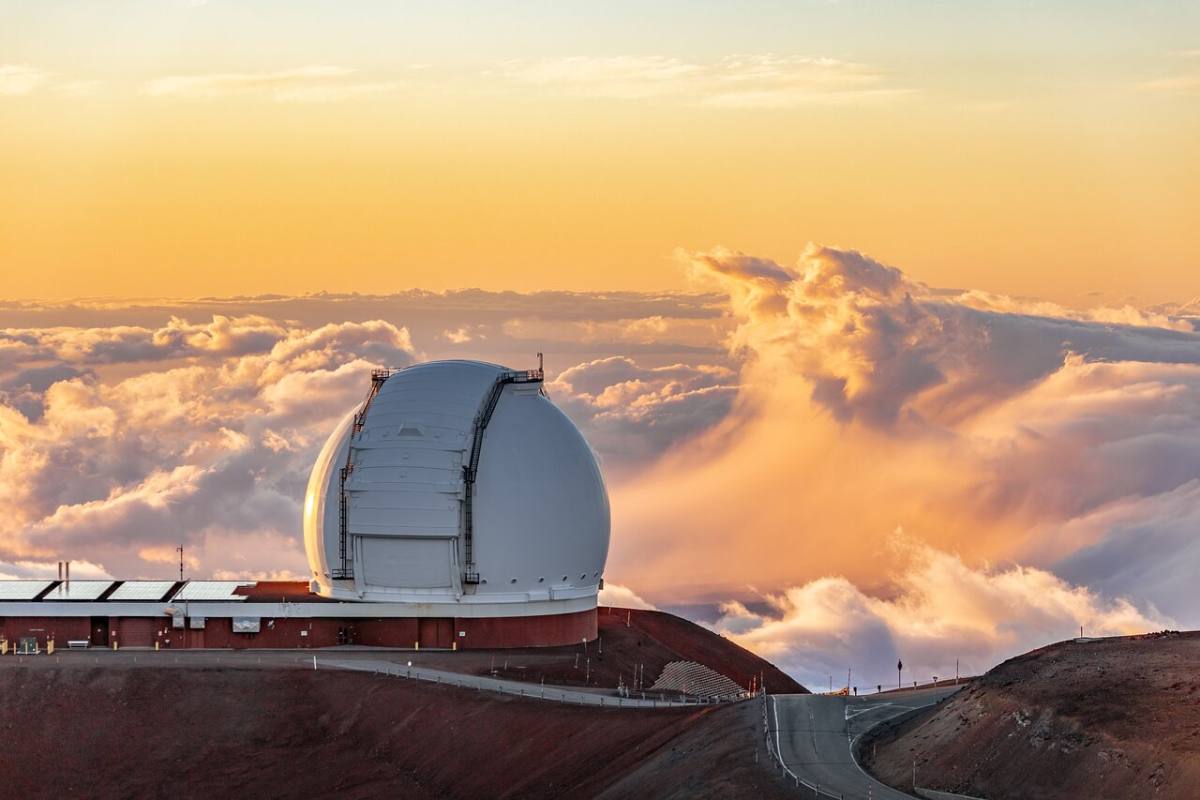
One half of the W. M. Keck Observatory telescopes near the summit of Maunakea in Hawai‘i. (Image Source: International Gemini Observatory/NOIRLab/NSF/AURA/ T. Slovinský)
Before this discovery by the JWST, Forrest and his peers had observed the galaxy using W. M. Keck Observatory in Hawai’i in a survey called MAGAZ3NE (Massive Ancient Galaxies at z>3 NEar-Infrared). “Previous MAGAZ3NE observations had confirmed this was one of the most massive galaxies in the early universe, with already several times as many stars as our Milky Way, and also confirmed that it was no longer forming new stars, making it a compelling target for follow-up observations,” Forrest said. The JWST allowed the team to take a closer look at XMM-VID1-2075 and two other galaxies of similar age. During such observations, they tracked and measured relative movement of material inside these galaxies.
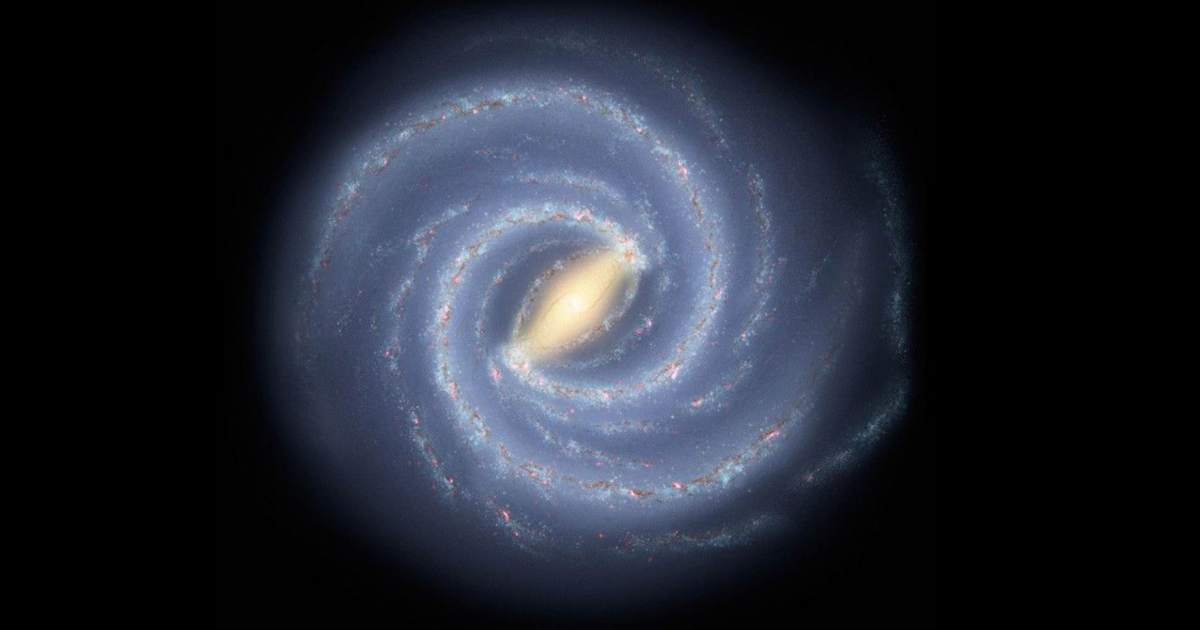
This illustration shows the Milky Way, our home galaxy. (Image edited by Starlust staff) (Representative Image Source: NASA/JPL-Caltech)
“This type of work has been done a lot with nearby galaxies because they’re closer and larger and so you can do these kinds of studies from the ground, but it’s very difficult to do with high redshift galaxies because they appear a lot smaller in the sky,” Forrest said. “(James Webb Space Telescope) is really pushing the frontier for these kinds of studies.” The team sampled three galaxies that cannot be placed in a single group. One of them is rotating, one is messy, and the other has no rotation but a lot of random motion. “That’s consistent with some of the most massive galaxies in the local universe, but it was a bit surprising to find it so early on,” Forrest said.
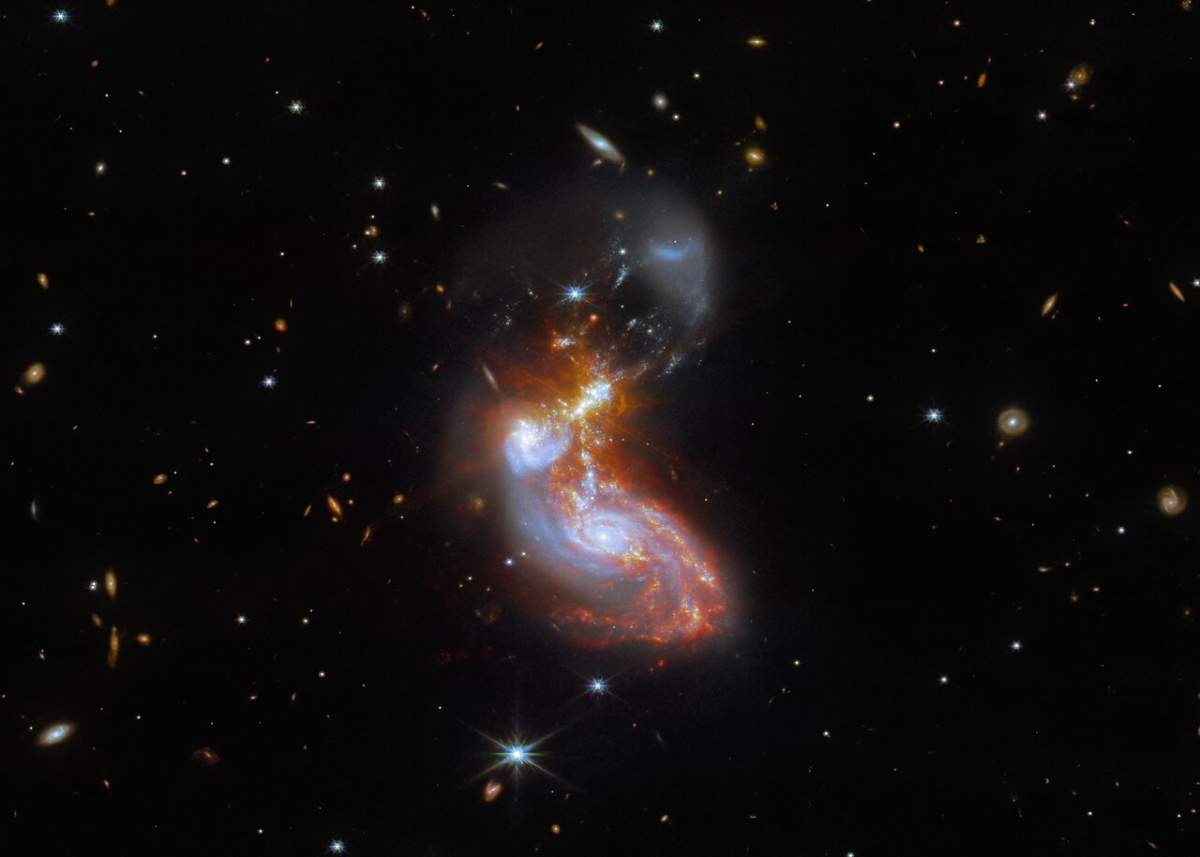
A merging galaxy pair cavort in this image captured by the NASA/ESA/CSA James Webb Space Telescope. (Image Source: ESA/Webb, NASA & CSA, L. Armus, A. Evans)
But how did the galaxy in question become a “slow rotator” at such an early epoch? One possibility is a single collision between two galaxies rotating in opposite directions. “For this particular galaxy, we see a large excess of light off to the side. And so that’s suggestive of some other object which has come in and is interacting with the system and potentially changing its dynamics,” Forrest said. The researchers say that slow rotators are rare in the early universe. But they have set out to hunt down more such galaxies nonetheless. This will allow them to test the theories of galaxy formation by comparing their observations with simulations.
More on Starlust
Tiny satellite galaxies orbiting the Milky Way could reveal the ‘climate’ of the early universe
Astronomers uncover Sombrero Galaxy’s elusive halo in unprecedented detail using Dark Energy Camera