
Sun, May 3, 2026 at 10:46 PM UTC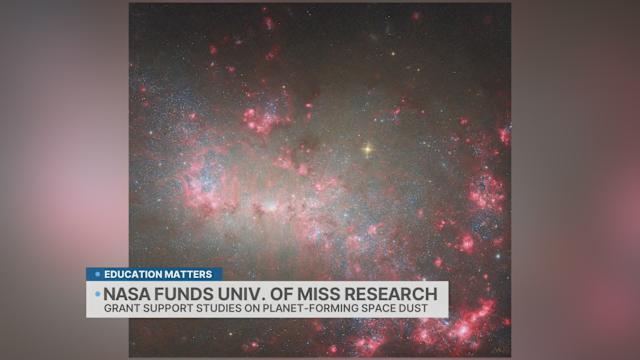
MEMPHIS, Tenn. — NASA is funding two new space research projects at the University of Mississippi.
Associate chemistry professor Ryan Fortenberry will lead both studies, focusing on how planets form and what materials exist across the universe.
One project will examine how tiny clusters of space dust may become the first building blocks of rocks, moons and planets. Scientists say these small particles can combine over time to form larger planetary bodies.

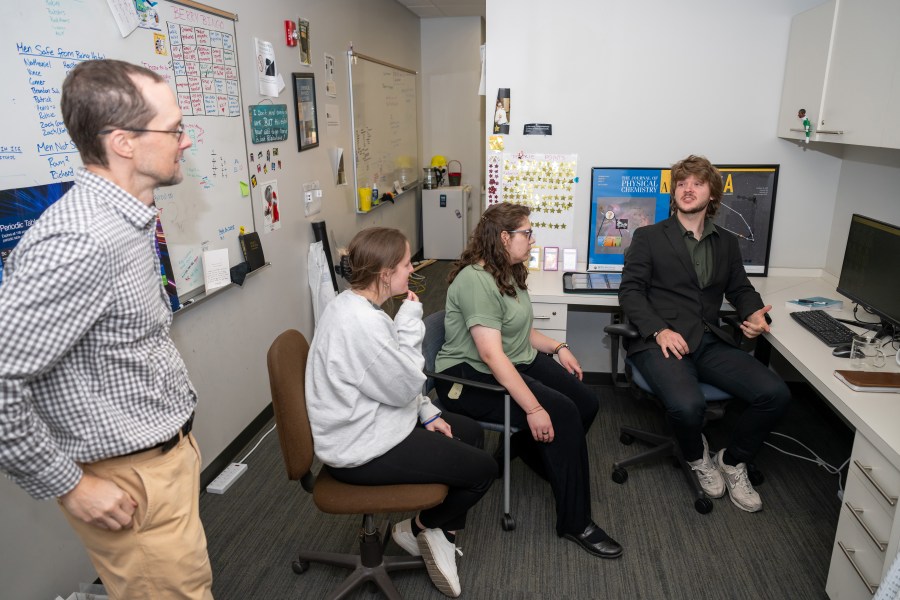
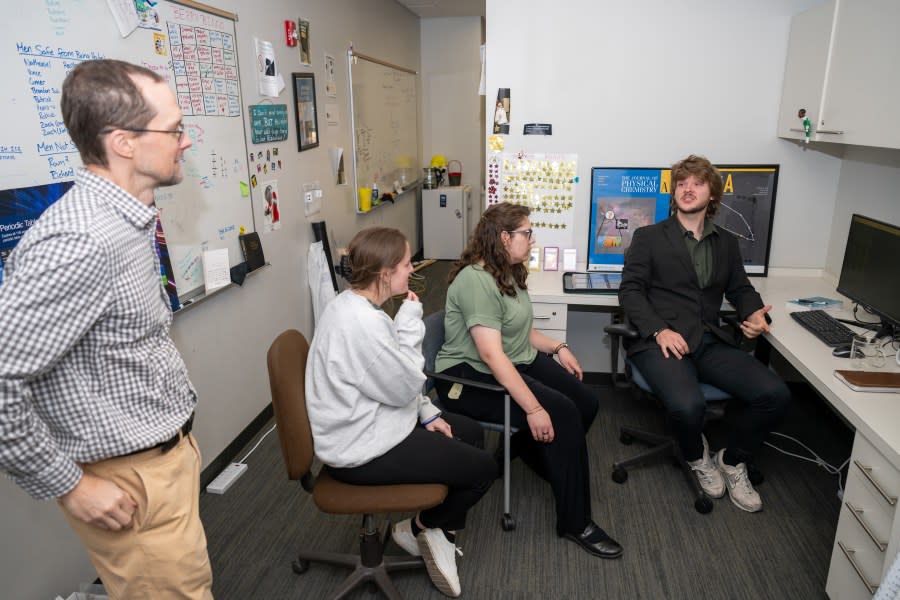
Ryan Fortenberry (left), associate professor of chemistry and biochemistry at the University of Mississippi, speaks with students in his astrochemistry lab. NASA has awarded Fortenberry two grants to study how space dust forms and to explore how to break extraterrestrial rocks down to produce water. Photo by Srijita Chattopadhyay/Ole Miss Digital Imaging Services
The research could also have future applications in space exploration. Fortenberry says the same chemistry could help scientists better understand how water might be produced from rocks in places like Mars.
$2M Powerball ticket sold in Byhalia remains unclaimed
A second project will use data from the James Webb Space Telescope to study carbon-based molecules found throughout the universe.

Dust and gas fill the space between stars and galaxies and form the building blocks of all bodies in the universe. This image of the nearby galaxy NGC 4449 was captured by the NASA/ESA Hubble Space Telescope. Interstellar dust is the focus of University of Mississippi chemistry professor Ryan Fortenberry’s upcoming research. Photo courtesy NASA
Researchers say those molecules act like “fingerprints” when interacting with light and could help scientists better understand the chemical makeup of space—and what materials may be available to form planets and life.
Copyright 2026 Nexstar Media, Inc. All rights reserved. This material may not be published, broadcast, rewritten, or redistributed.
For the latest news, weather, sports, and streaming video, head to WREG.com.