
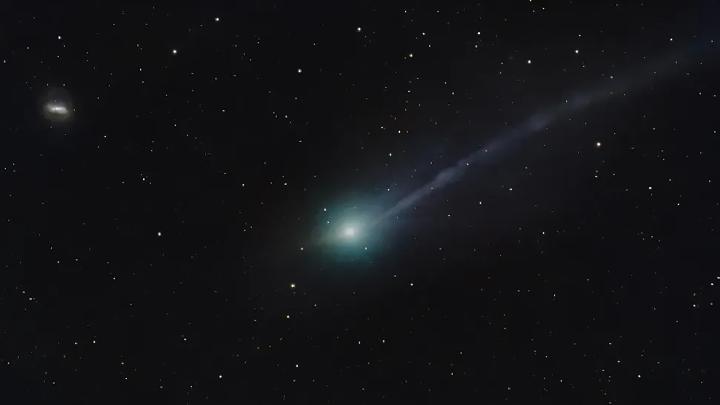
TEMPO.CO, Jakarta – A rare celestial visitor from the farthest reaches of the solar system is now sweeping across southern skies, drawing the attention of astronomers and night-sky enthusiasts alike with a once-in-a-lifetime appearance.
Formed on the distant fringes of space, the comet, formally known as C/2025 R3 PanSTARRS, is offering a fleeting opportunity for observation before vanishing for an estimated 170,000 years. Originating from the vast and icy Oort Cloud, the comet has now become visible over New Zealand, where clear evening skies have revealed its faint yet distinct luminous trail.
According to astronomers cited by RNZ and The Guardian, this newly observed comet represents a rare astronomical event, one that has not been documented in human history until now.
Despite its cosmic scale, the comet does not blaze brightly enough to be seen with the naked eye. Josh Aoraki of Stardome Observatory & Planetarium in Auckland explained that while the object is considered relatively bright compared to other comets, viewers will still need binoculars, a telescope, or a capable camera to properly observe it.
He noted, however, that its visibility makes it a particularly rewarding target for astrophotographers. “It’s not naked-eye brightness … [but] this one is a decently easy one to photograph,” he said, pointing to its appeal for those hoping to capture a rare moment in the night sky.
Time, however, is limited. Astronomers warn that the comet’s brightness will steadily diminish over the next two weeks, urging observers across Australia, South Africa, and parts of the Pacific to act quickly. The optimal viewing window comes shortly after sunset, when the comet hovers low along the western horizon for about an hour before fading from sight.
Aoraki emphasized that location plays a crucial role in successful viewing. Areas with an unobstructed view of the western skyline, particularly west-facing coastlines and open beaches, provide the best vantage points. Any hills, buildings, or natural barriers, he warned, could significantly hinder visibility.
As the comet continues its quiet journey back into deep space, observers are left with a narrow window to witness a phenomenon that will not return for millennia.
Read: Eta Aquarid Meteor Shower Set to Light Up Sydney Skies This May
Click here to get the latest news updates from Tempo on Google News