
In its infancy, the universe had a bit of an identity crisis.
For the first few hundred million years, the vast cosmic gas between galaxies was primarily a chilly, dense affair. But then, it seemed to wake up, deciding to get all warm and fuzzy.
This strange shift in the cosmos’ early disposition is a crucial clue to how the very first galaxies burst into being, shaping everything we see today. The early universe, a mere whisper after the Big Bang, just a few hundred million years old — that’s when the first stars and galaxies were starting to flicker on, like fairy lights across a cosmic dark.
You may like
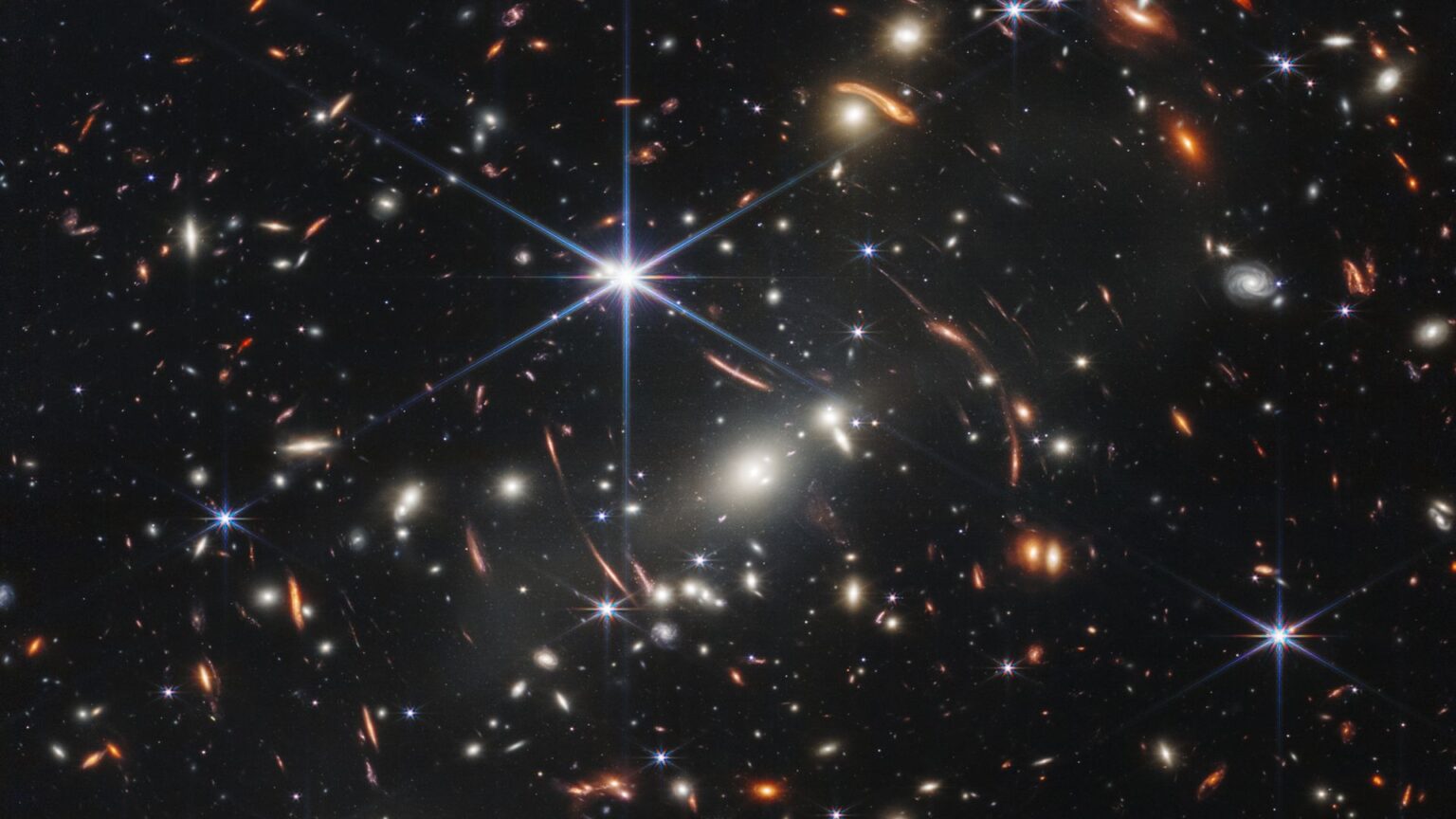
The fuel for all this grand production: gigantic clouds of gas, mostly hydrogen. Astronomers have always suspected these baby galaxies were busy, but new glimpses from the James Webb Space Telescope are showing them to be even brighter and larger than our wildest dreams. They’re like finding teenagers sitting in a kindergarten class, way ahead of their expected development.
This cosmic precociousness means our existing models of how galaxies form might need a serious tune-up. We thought we had a pretty good handle on how gas falls into dark matter halos, cools down, and then ignites into stars. But the JWST data suggests a much more aggressive, faster-paced star-making frenzy in those early days. The question becomes: How did these young galaxies manage such a booming business so quickly?
To untangle this mystery, Umberto Maio from the INAF-Italian National Institute of Astrophysics and the Institute for Fundamental Physics of the Universe, working with Céline Péroux at the European Southern Observatory, decided to dive into the virtual cosmos. They created incredibly detailed computer simulations, a sort of cosmic time machine called ColdSIM, to rewind the clock and watch how gas behaved in the first billion years after the Big Bang. Their goal was to make predictions about the early universe’s baryon budget — that’s the accounting sheet for all the “normal” matter, the stuff stars and planets are made of, and where it ended up.
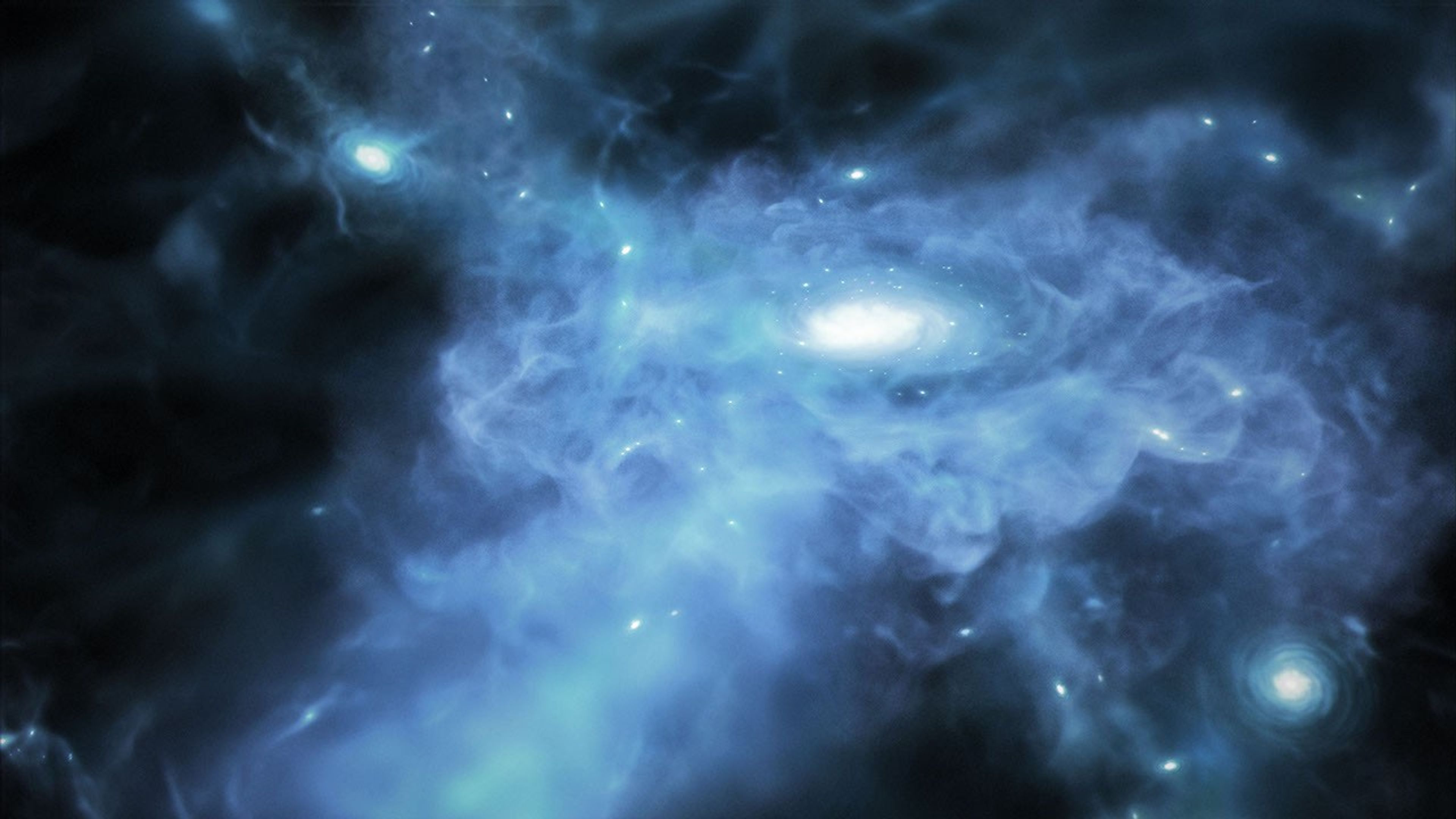
Artist’s concept showing a galaxy forming only a few hundred million years after the Big Bang, when gas was a mix of transparent and opaque during the Era of Reionization. (Image credit: NASA, ESA, CSA, Joseph Olmsted (STScI))
What they found was a universe in flux. Before a pivotal moment called the epoch of reionization — when the universe finally became transparent to ultraviolet light — the gas was indeed mostly cold. It was the perfect, dense environment for star formation. But as star formation really picked up, and that intense ultraviolet light started zipping around, things changed. The simulations showed that the gas quickly shifted, becoming dominated by a warm, less dense phase. It’s like the universe went from a quiet, cool morning to a bustling, sun-drenched afternoon, with all that energy from new stars and radiation heating things up.

This wasn’t just a minor temperature change. It fundamentally altered the rhythm of galaxy evolution. The team’s clever simulations traced the journey of various types of gas, carefully avoiding the usual shortcuts in models that can often lead to fuzzy answers. They found some eye-opening things about how these infant galaxies put themselves together.
For starters, the stellar return fraction was surprisingly low. This is the amount of material that stars eject back into the surrounding gas when they die, essentially recycling fuel for the next generation of stars. In the early universe, it seems, stars were less efficient at this recycling. Lower quantities of old stellar material returned to the gas, meaning that new stars largely formed from fresh, pristine gas constantly falling in from the cosmic web. It’s a bit like a construction site that keeps getting new materials delivered rather than reusing much from demolished buildings.
But even with less recycling, these galaxies were burning through their gas at an astonishing rate. Maio and Péroux discovered that the depletion times — the time it would take for a galaxy to convert all its gas into stars at its current rate — were incredibly short. Much shorter than we see in galaxies today. This means that early galaxies were true star-forming machines, gobbling up gas and spitting out stars with a furious intensity. It paints a picture of baby galaxies throwing one heck of a tantrum, furiously making stars with every available bit of gas.
What to read next
So, why does any of this matter? Because it rewrites a part of our cosmic origin story. Our initial predictions for these early galaxies, based on observations of later, more mature galaxies, simply weren’t capturing this dynamic, rapidly evolving picture. It turns out that you can’t just take what you know about middle-aged galaxies and apply it to their energetic youth. The physical processes, from gas dynamics to stellar feedback, are just too different when the universe itself is so young and compact.
Of course, this cosmic detective story is far from over. Numerical simulations are powerful, but they’re always battling with the sheer complexity of the universe. Modeling everything from the intricate, multi-phase structure of gas to the powerful winds blown out by massive stars and black holes is a huge challenge. There are still big uncertainties, like the exact initial mass function of stars (how many big stars versus small stars are born) and the precise amount of “metals” needed to kickstart cooling. Our models still have plenty of room to grow.
But the good news is, we’re armed with ever more powerful tools. The James Webb Space Telescope is out there, giving us sharper and sharper images of these distant, ancient galaxies. And coming down the pipeline are next-generation radio telescopes, like the Square Kilometer Array (SKA), which will let us peer even deeper into the cold gas reservoirs of these early galaxies. These new eyes on the sky will give us the crucial real-world data needed to test these new theoretical predictions, helping us refine our models and paint an even clearer picture of the universe’s chaotic, yet beautiful, beginnings.
The journey to understand how the universe built itself, one galaxy at a time, is still unfolding before us.