
Topline
As May progresses, the night sky keeps changing this week: the bright full moon dims, and a major meteor shower arrives. After sunset, Venus appears in the west while spring constellations shine. Here’s how to make the most of stargazing in the coming days:
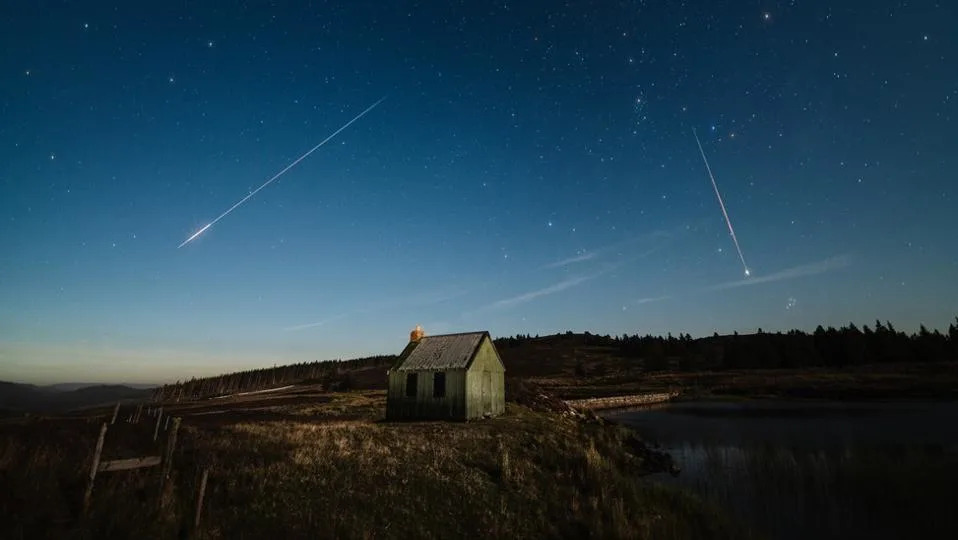
The Eta Aquariids, caused by debris from Halley’s Comet, appear when Earth passes through this dust stream each year.
gettyTimeline
May 5-6The Eta Aquariid meteor shower reaches its peak overnight from May 5 to 6. Best seen before dawn, it typically offers 10-20 fast meteors per hour from mid-northern latitudes, some leaving persistent streaks across the sky. For the best views, look toward the east or southeast in the hours before sunrise. Although some moonlight will be present, brighter meteors should still stand out.
May 9A few nights later, the Moon reaches last quarter on May 9. Rising at midnight, it leaves early evening hours moonlight-free, opening a darker window ideal for spotting fainter stars and constellations.
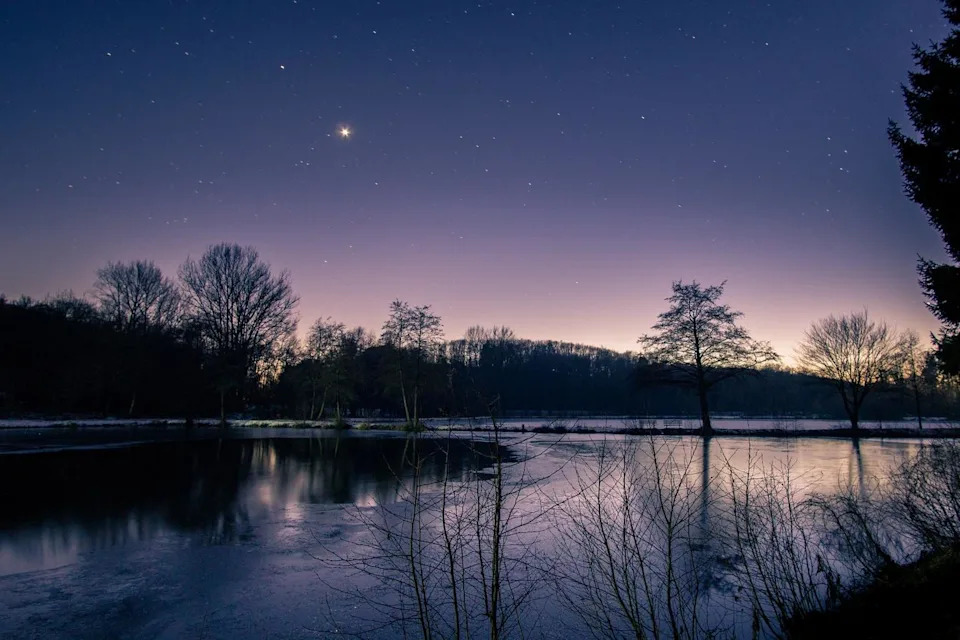
All weekThe planet Venus continues to rise higher, and shine more brightly, in the post-sunset evening sky. Look west.
A Meteor Shower From Halley’s Comet
The Eta Aquariids, caused by debris from Halley’s Comet, appear when Earth passes through this dust stream each year. Tiny particles striking the atmosphere create meteors, most visible just before dawn when Aquarius rises. While this shower is best in the Southern Hemisphere, observers in the north can still expect 10-20 meteors per hour—about half the southern rate.
‘arc To Arcturus’
With darker conditions returning, have a go at a classic sky navigation technique: the star-hop from the Big Dipper to red supergiant star Arcturu Arcturus and onward to bluish Spica. Locate the curved handle of the Big Dipper high in the north, follow its arc to bright Arcturus, then continue along the same curve to find Spica low in the south.
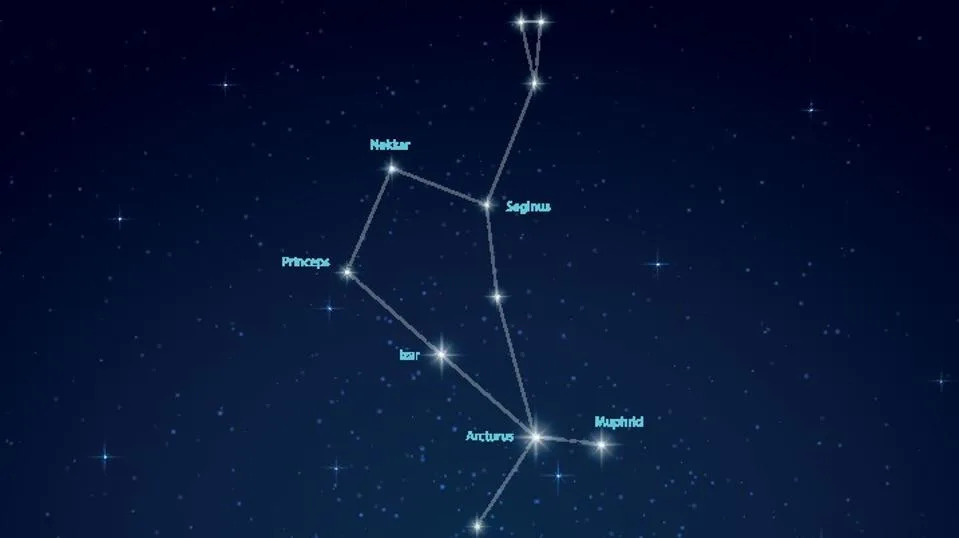
Boötes is anchored by Arcturus.
gettyConstellation Of The Week: Boötes
Look for Boötes high in the east after dark. This constellation—anchored by Arcturus—forms a loose kite (or cocktail glass) shape and is one of the easiest spring constellations to learn once you’ve found Arcturus. An ancient depiction of a herdsman, Boötes is memorable for its prominence and bright central star.
What’s Next In The Night Sky
On May 12-13, a waning crescent moon will appear low in the east, near Saturn, before sunrise for a brief pre-dawn view. On May 15, a 4%-lit waning crescent passes close to Mars. After the new moon on May 16, look for a young crescent in the west at sunset, near Venus and Jupiter on May 18-20. On May 30, a blue moon rises at dusk.
The times and dates given apply to mid-northern latitudes. For the most accurate location-specific information, consult online planetariums like Stellarium.
Further Reading
MORE FROM FORBESWhat Is That Bright Star In The West After Sunset?By Jamie Carter
MORE FROM FORBESIt’s 100 Days Until A Total Solar Eclipse. Here’s How To See ItBy Jamie Carter
MORE FROM FORBESIn Photos: Full ‘Flower Moon’ Lights Up Night Sky Around The WorldBy Jamie Carter

MORE FROM FORBESSee A Blue Moon, Bits Of Halley’s Comet And Venus: May’s Night SkyBy Jamie Carter
This article was originally published on Forbes.com