
Creating cerulean
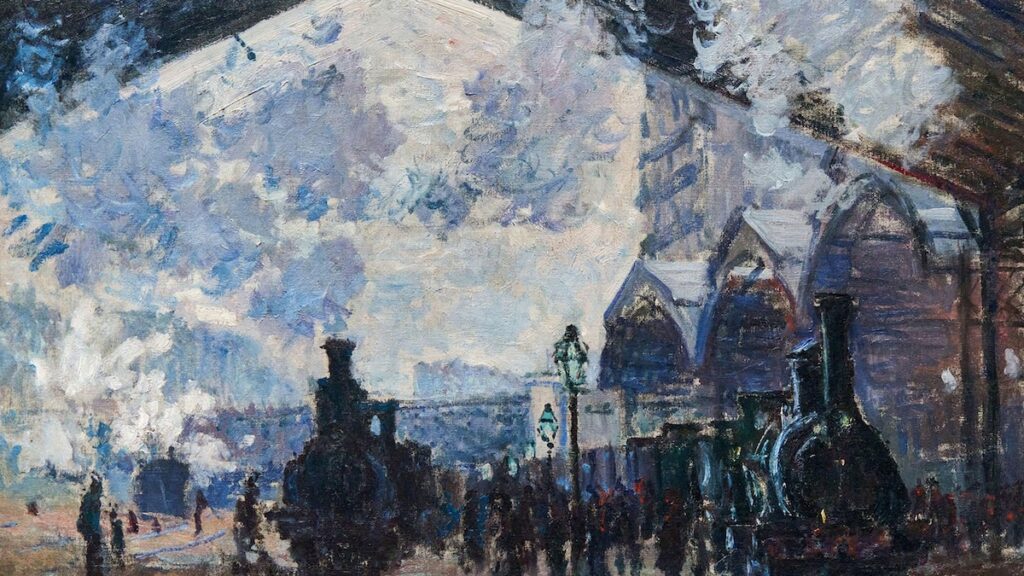
While the word is from Latin, cerulean was revived in the 18th century by the Swiss chemist Albrecht Höpfner, and used as a paint in the art world in the 1860s. This particular cerulean was a mixture of cobalt and tin, and billows in the blue clouds of steam and smoke coming off the train engines in Monet’s 1877 painting The Gare St-Lazare. The same cerulean colors the sky in the heads of two figures in Dali’s Couple aux têtes pleines de nuages from 1936.
As a conservation scientist, Antušková wanted to understand exactly what this cerulean was made of and how. Museums have to authenticate artworks, and paint chemistry is one way they do it, she explains. Sometimes, they have to remake the paint itself. “Reconstructions following historical recipes gave us valuable comparative material,” she says.
In a 2026 study, Antušková and her colleagues set out to re-create cerulean blue using different historical methods that were documented in the 1860s. They mixed together a chemical called potassium stannate with cobalt nitrate. The scientists also tried cobalt chloride with tin chloride and sodium carbonate. Both produced a chemical called cobalt stannate, which should, according to the records be cerulean.
It wasn’t. The resulting compounds came out in various shades of green. “Some samples were really dark, almost black with greenish hue, some of them were a bit greyish green,” Antušková says. Something was missing.
Analyzing scrapes of the paint from the historical paintings showed high magnesium levels, and when Antušková and her colleagues added magnesium to their mix, making magnesium cobalt stannate, they were rewarded with brilliant cerulean blue.