
10 hours agoAuthor: Sourabh Baghel
Super-Earths are among the most common planets in our galaxy, and they are changing how scientists think about how planets form and where life might exist beyond Earth. These planets are bigger than Earth but smaller than ice giants like Neptune and Uranus. They can be made of rock, gas, water, or a mix of all three. Most are between twice Earth’s size and up to 10 times its mass.
Despite their name, a “super-Earth” does not mean they are like our planet. The term only describes their size, not their surface or atmosphere. In fact, our solar system doesn’t have any planets like them, which makes them even more mysterious.
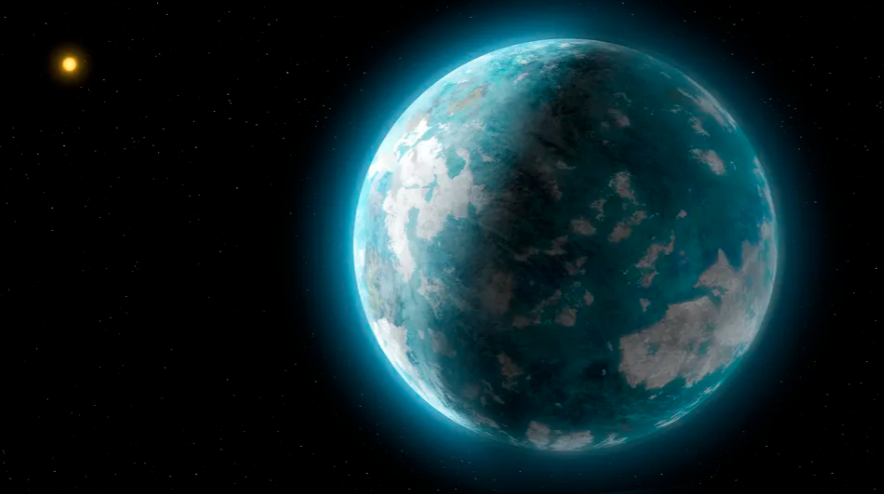
Image Credits: Space.com
A strange type of planet we don’t have at home
Over the last 30 years, astronomers have discovered many unusual planets outside our solar system. Super-Earths are one of the biggest surprises. Scientists still don’t fully understand what these planets are made of. Some could be water worlds, others frozen snowball planets, and some may have thick gas layers like Neptune. The largest ones in this group are sometimes called mini-Neptunes or sub-Neptunes.
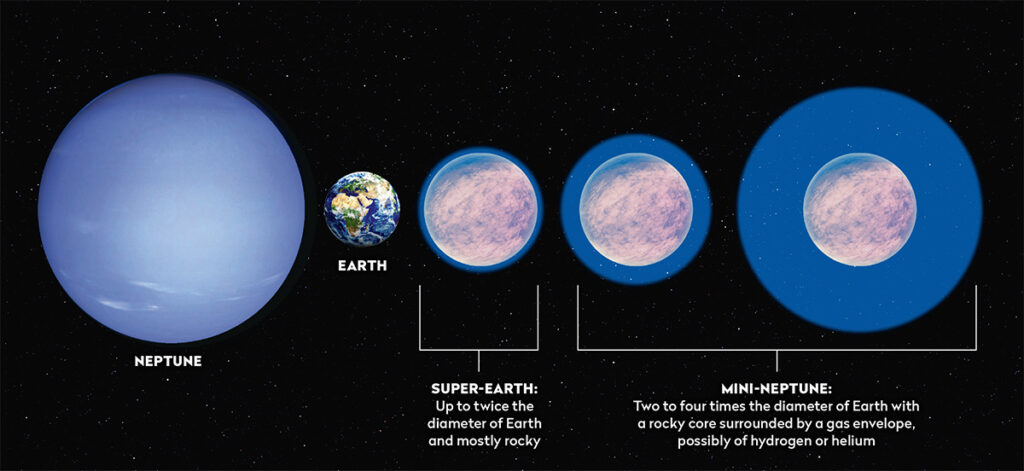
Image Credits: BBC
Because we lack examples in our own solar system, researchers are still figuring out when a super-Earth stops being rocky and starts behaving more like a gas planet.
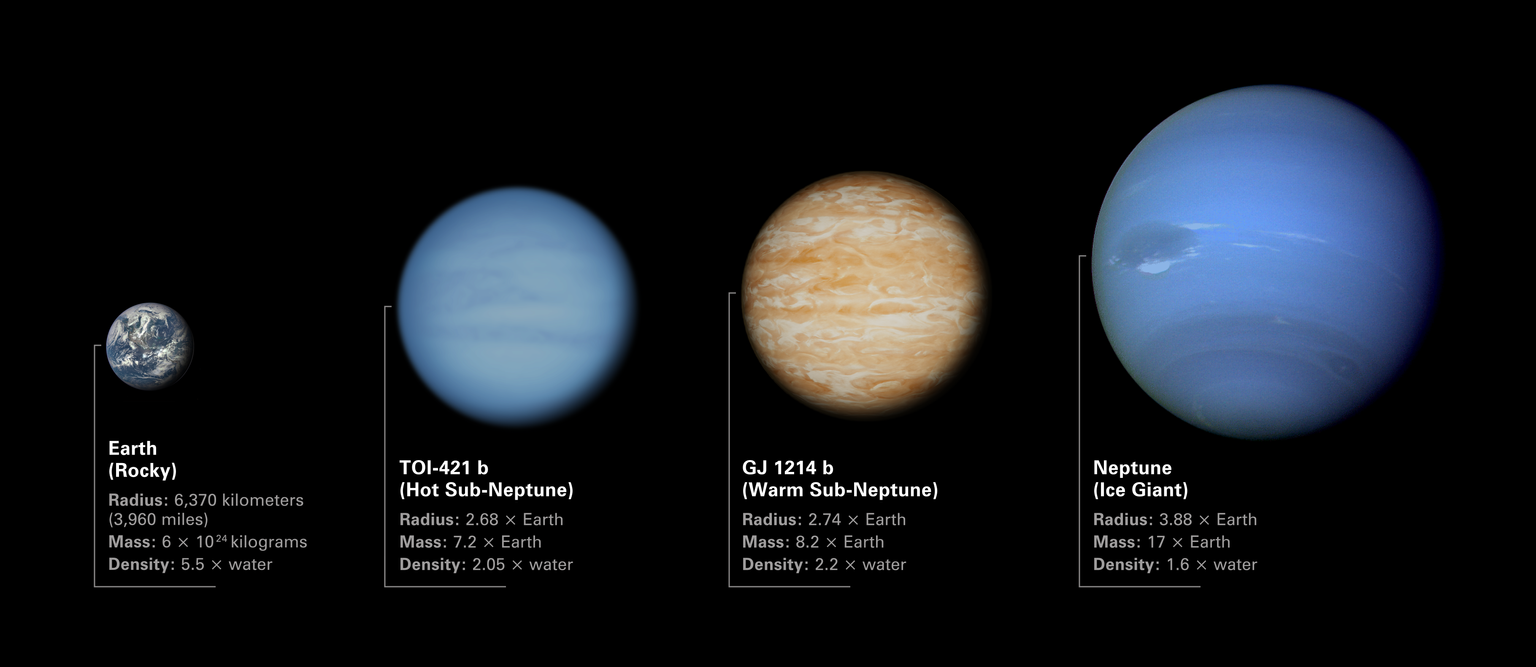
Illustration comparing the sizes of sub-Neptune exoplanets TOI-421 b and GJ 1214 b to Earth and Neptune. Both TOI-421 b and GJ 1214 b are in between Earth and Neptune in terms of radius, mass, and density. The low densities of the two exoplanets indicates that they must have thick atmospheres. (Image Credits: NASA Science)
Hidden worlds in distant orbits
Most planets are easier to detect when they orbit close to their stars. But planets farther away like Jupiter in our solar system are harder to find. Using a method called gravitational microlensing, scientists recently detected a super-Earth orbiting far from its star. This technique works by observing how a planet’s gravity bends light from a distant background star, briefly making it brighter.
This discovery suggests that distant super-Earths may be more common than previously thought.
5 key Super-Earth planet facts
1. Super hot Super-Earth
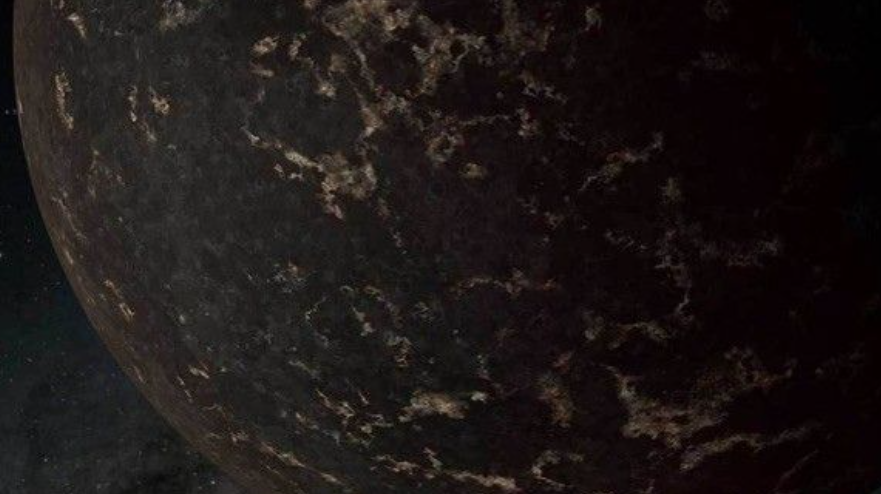
There’s a super-Earth exoplanet with temperatures hot enough to vaporize metal. Image Credits: NASA
2. A star like our Sun
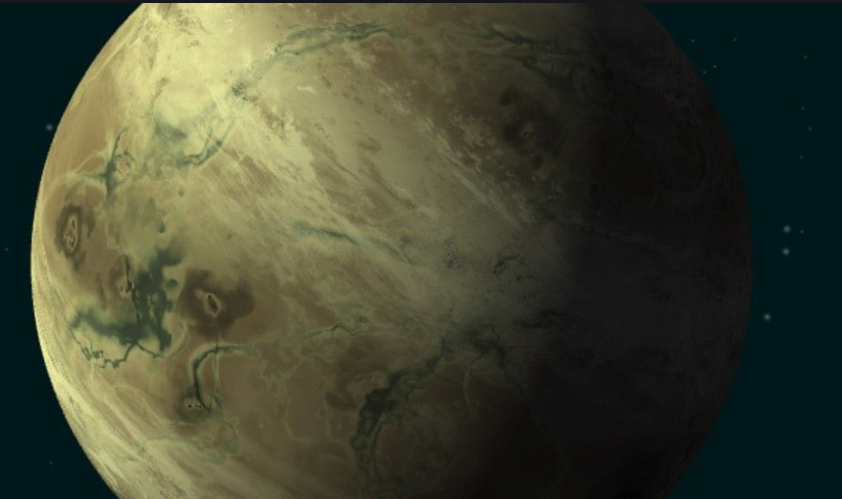
Kepler-452b was the first Earth-size planet discovered around a near solar twin. (Image Credits: NASA)
3. Water world
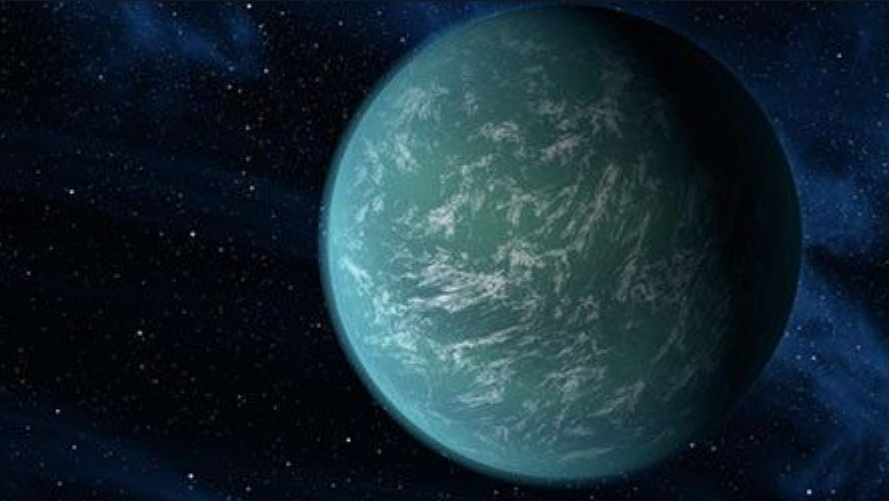
Kepler-22b is a super-Earth that could be covered in a super ocean. (Image Credits: NASA)
4. Closer to home
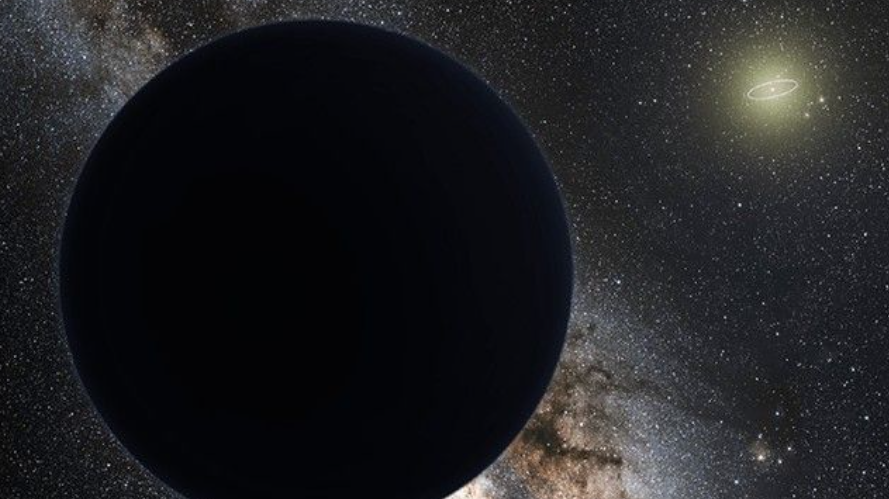
A super-Earth planet could be hiding at the edge of our own solar system. (Image Credits: NASA)
5. Frozen neighbor
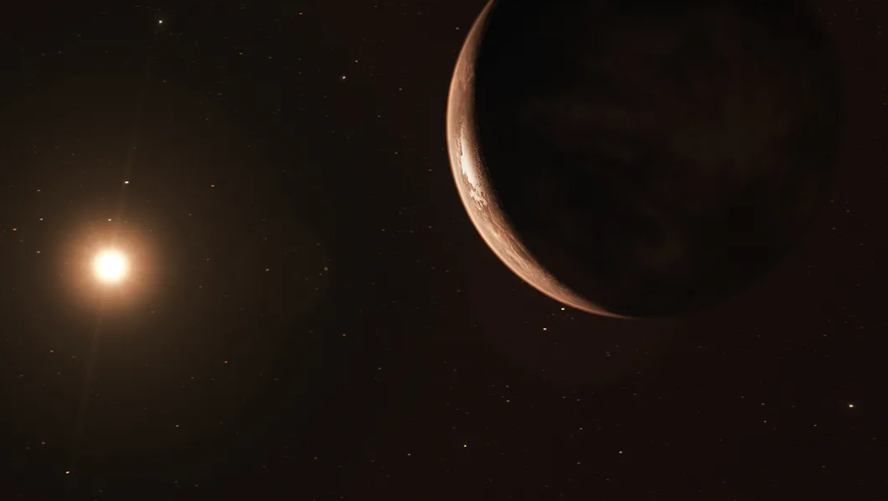
A dim, frozen super-Earth orbits a fast-moving star just 6 light-years away. (Image Credits: NASA)
The nearest single star to the Sun hosts an exoplanet at least 3.2 times as massive as Earth, a so-called super-Earth. Data from a worldwide array of telescopes, including ESO’s planet-hunting HARPS instrument, have revealed this frozen, dimly lit world. The newly discovered planet is the second-closest known exoplanet to the Earth and orbits the fastest moving star in the night sky.