
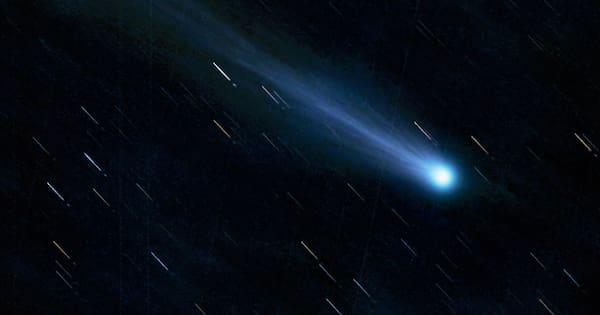
Kiwis will be able to catch a glimpse of a one-in-170,000 year celestial phenomenon as it passes through the Southern Hemisphere this week.
The rare comet — formally known as C/2025 R3 PanSTARRS — was currently visible in New Zealand skies and expected to remain in view for around another week before fading.
Te Whatu Stardome astronomer Josh Aoraki told 1News the comet was known as a “long-period comet”, travelling from far beyond the Sun with an orbital period of around 170,000 years.
“We basically haven’t seen anything like it before,” he said.
Aoraki said stargazers would be able to capture through a camera, telescope or binoculars as it was not visible to the naked eye.
“It’s a decently bright comet, so that makes it quite easy to capture with cameras,” he said.
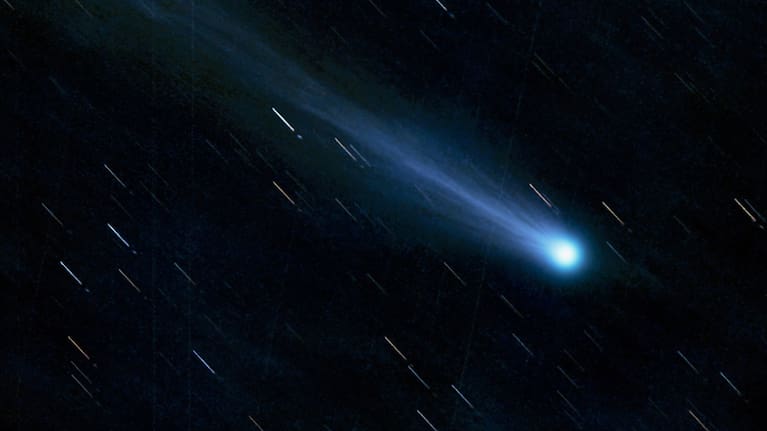
He said photographers would be able to spot the comet’s coma — the glowing, fuzzy cloud of gas surrounding the comet’s centre — and its tail, a stream of materials pushed away from the centre by the Sun’s heat.
“It’s quite cool to kind of see that interaction between an icy body and the Sun,” Aoraki said.
Keen stargazers around the country have been quick to capture the celestial visitor lighting up skies.
Amateur photographer Brian Diettrich captured the comet passing over Wellington skies on Friday evening, telling 1News he had been “eagerly waiting” to spot the phenomenon.
“Everyone’s been out there trying to grab it. It’s been pretty exciting,” he said.
Diettrich said capturing the comet could be a race against time, with only a short window each evening before it drops below the horizon.
“You take a series of exposures, maybe 30 seconds or one minute, and stack them together… that brings out the comet. It is a little bit stressful,” he said.
How to catch a glimpse
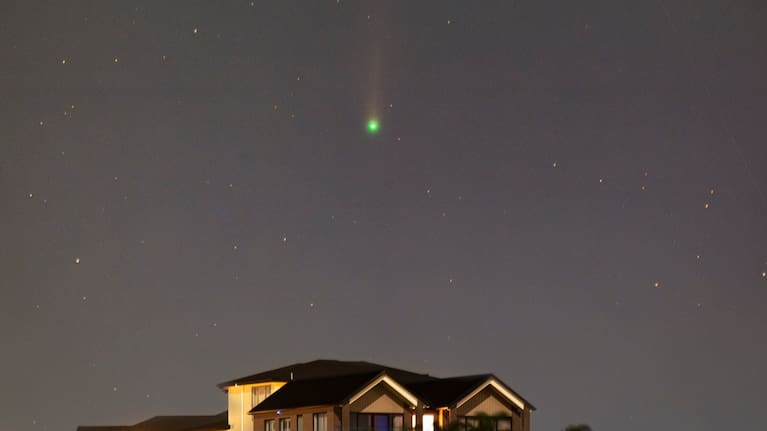
Aoraki said a clear, unobstructed view of the western horizon would give Kiwis the best chance of spotting the comet.
“If you head out to the west coast around an hour after sunset, that would be the best opportunity to capture it,” he said.
“Anywhere that’s going to block a view is going to be a disadvantage.”
He said beaches along the country’s west would provide a clear vantage point thanks to open views of the horizon.
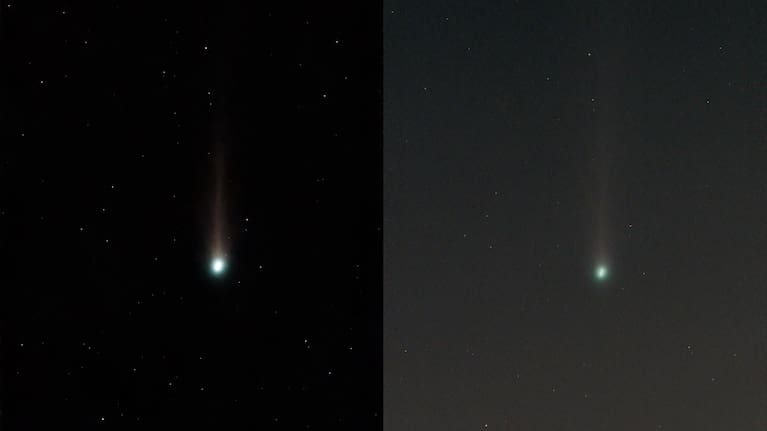
Diettrich said even everyday cameras could potentially capture it.
“A cell phone should be able to pick it up. It’ll be a bit of a smudge, and you might see a bit of a tail.”
The comet is expected to gradually dim and disappear from view over the coming days as it moves away from the Sun.
“My best guess is you’ve probably got about a week, maybe 10-ish days to see it,” Aoraki said.
“There’s probably a week until it kind of fades from view, so that would be the best chance to see it.”