
Astronomers have already identified more than 350 molecules in interstellar space—and the list grows every year. But finding a molecule and proving its existence are not the same thing: some sensational discoveries have not stood the test of time, writes astrochemist Olivia Harper Wilkins in The Conversation.
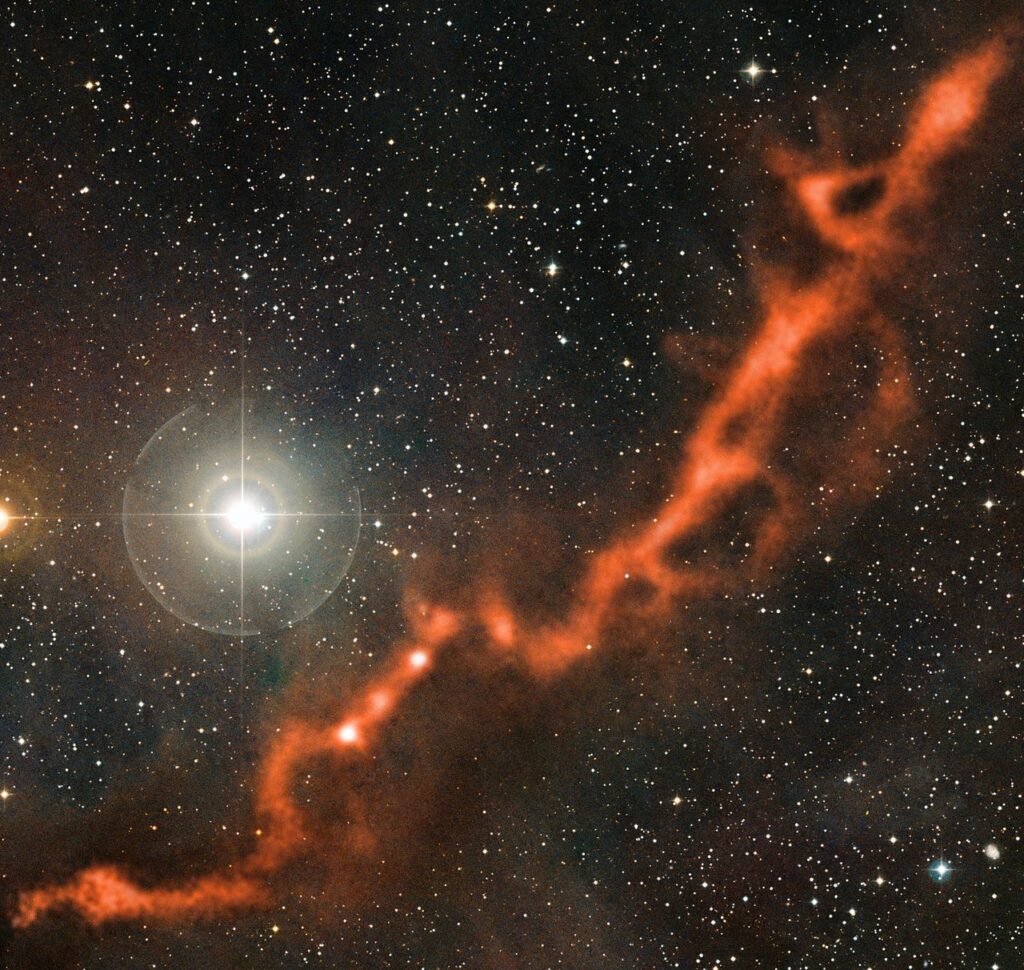
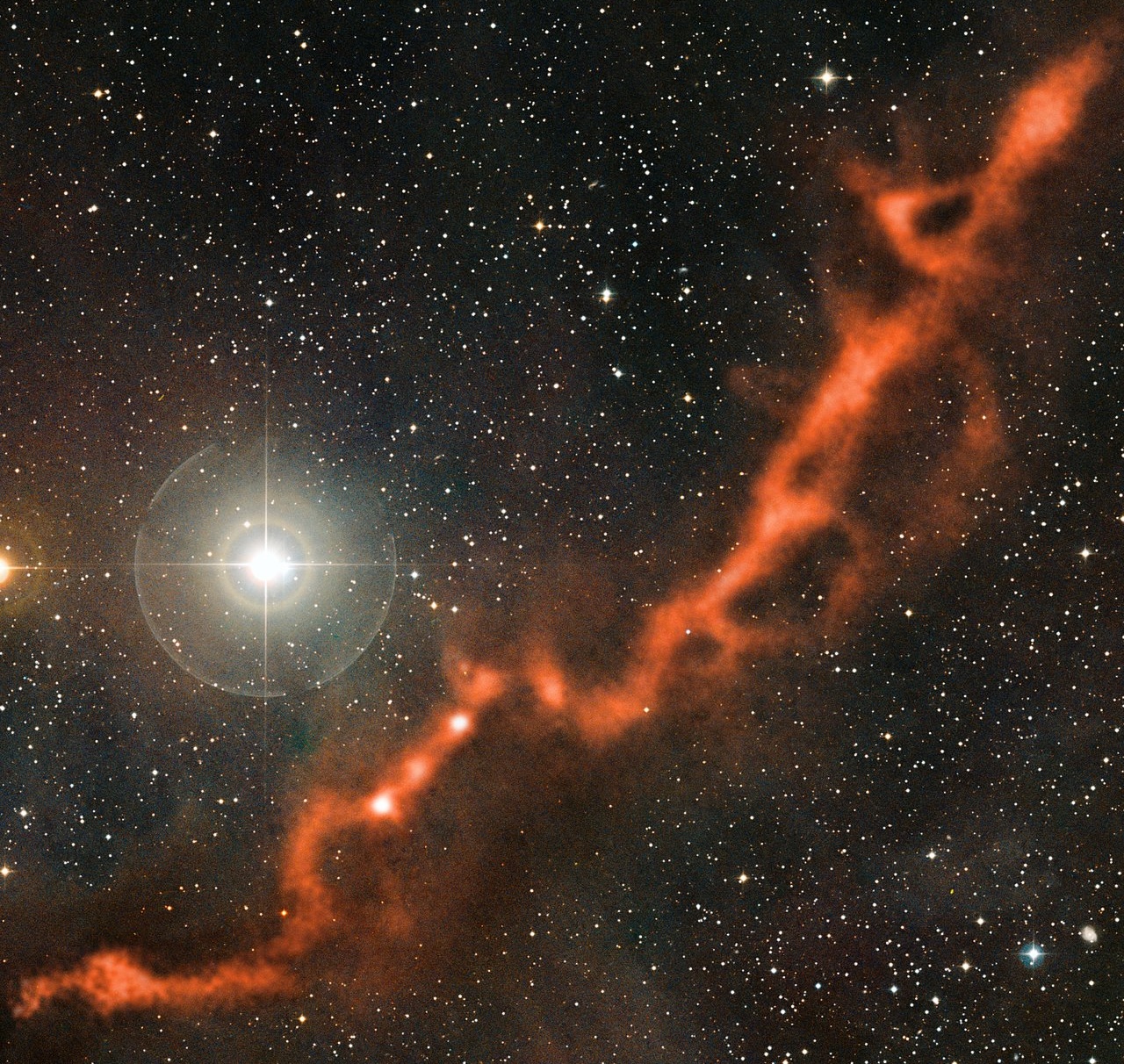 The Taurus Molecular Cloud is a star-forming region located 450 light-years away from us, where many complex organic molecules have been detected. Credit: European Southern Observatory. Source: universetoday.com
Chemical census of the Universe
Scientists are detecting molecules in the atmospheres of planets, in gas and dust nebulae hundreds and thousands of light-years away, as well as in distant galaxies. The first interstellar molecule was discovered as far back as 1937, and since then, several to two dozen new compounds have been added to the list every year. Many of them are precursors to biomolecules—that is, substances without which living organisms could not have emerged.
Molecules moving freely as a gas in outer space emit photons—particles of electromagnetic radiation—with specific characteristics. Radio telescopes detect these signals, and if the detected pattern matches the “fingerprint” of a specific molecule, scientists can confirm its detection.
Every molecule has its own unique spectrum—a kind of chemical signature. To know exactly what to look for, researchers first recreate these signatures in the lab: they place the substance in a glass tube under vacuum and measure what a radio telescope would “see.”
When excitement outpaces the evidence
The problem arises when the signals are too weak or interfere with each other. Scientists, especially when they discover biologically significant compounds, sometimes rush to publish their findings—partly because they want to be the first to announce the results, and partly because telescope data becomes publicly available shortly after it is collected.
A prime example is glycine, the simplest amino acid and an important component of living organisms. More than 20 years ago, scientists announced its discovery in interstellar space, but subsequent research revealed that key signals were missing from the original report. Today, the astrochemistry community generally agrees that no glycine was found at that time.
Phosphine on Venus: the question remains open
Another high-profile case involves the possible detection of phosphine in Venus’s atmosphere. Unlike the situation with glycine, the scientific debate on this issue is still ongoing: five years after the initial report, researchers remain divided on whether this substance is present. Phosphine is linked to certain biological processes on Earth, which has sparked a wave of public interest in the possibility of life on Venus.
Wilkins advises people to remain skeptical of sensational headlines. A detection based on just one or two signals is significantly less reliable than one confirmed by five or more. If you wait a few months after the initial publication, other research groups usually publish their own studies—and it is these studies that determine whether the discovery has been confirmed.
According to theconversation.com