
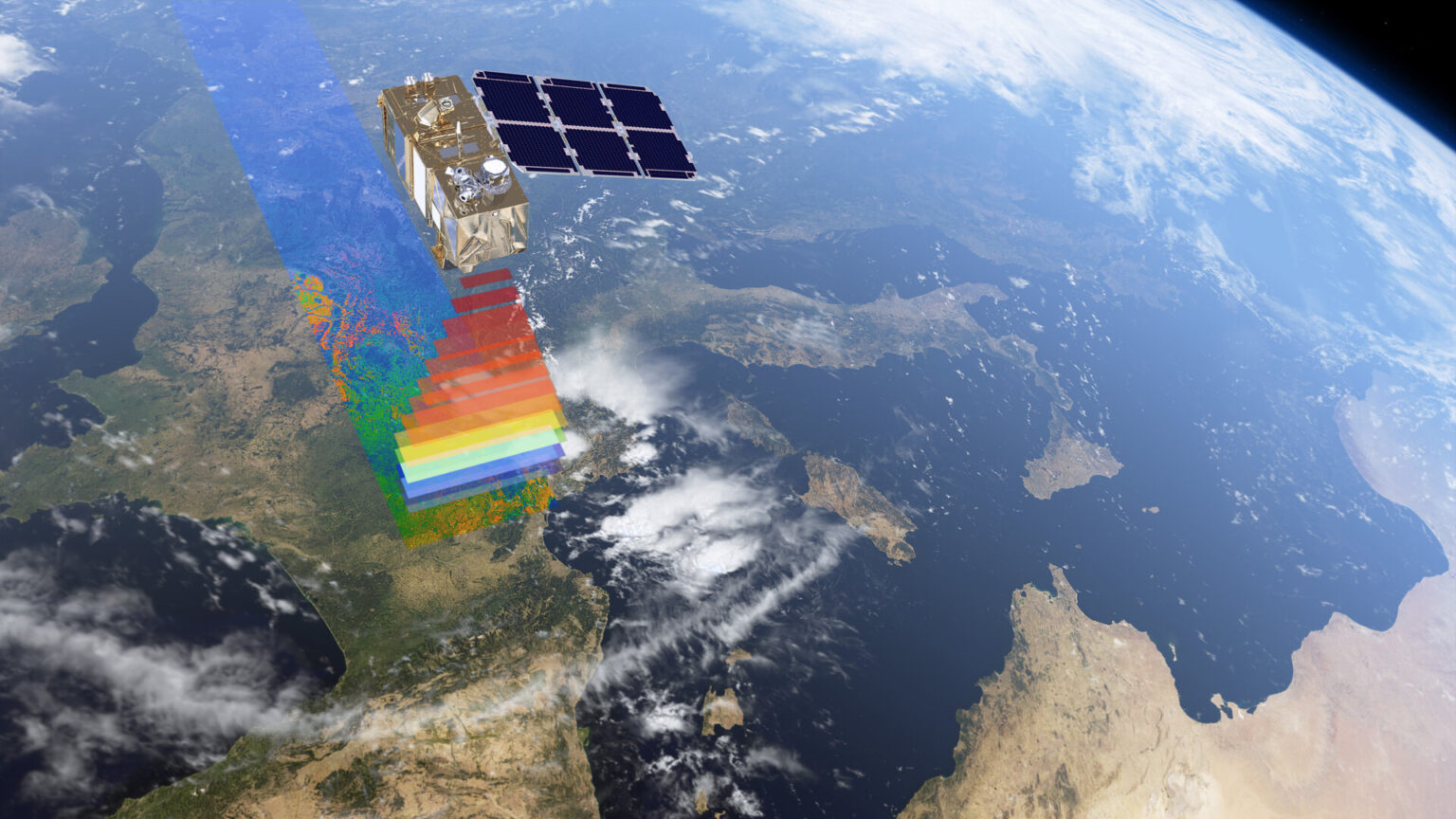
Designing a satellite mission from scratch is usually the work of large engineering teams. But the European Space Agency (ESA) is offering students the chance to do exactly that, compressing the full process into just two weeks. Applications are now open for the ESA Earth Observation Satellite Systems Design Training Course 2026, a hands-on programme in which participants build a complete Earth observation mission.
Inside the Course: from Concept to Orbit
The two-week programme is designed as a condensed version of a real mission lifecycle:
On-site week: 28 September – 2 October 2026 at ESA Academy’s Training and Learning Facility in ESEC-GalaxiaOnline week: 5-9 October 2026, focused on remote collaboration and final presentations
Now in its fourth edition, the course will bring together 30 students, including 15 participants from African countries through the Africa-EU Space Partnership Programme.
What Participants Will Actually Build
This is not a lecture-only course. Students work in teams to design a realistic EO satellite mission, guided by ESA experts and experienced engineers. Over the two weeks, participants will:
Translate real-world needs into mission objectivesExplore orbit selection and coverage trade-offsDesign optical and microwave payloadsDevelop spacecraft architecture and payload integrationPlan ground segment and mission operationsWork through assembly, testing, and in-orbit validation concepts
Each team member takes on a defined role, such as system engineer, payload specialist, or operations lead. Mentorship from ESA specialists and retired experts from ARES brings direct insight from flagship missions into the process.
Who Can Apply for the Earth Observation Course
The programme is open to students who:
Are at least 18 years old with limited professional space experienceHold citizenship of an ESA member or associate state, or CanadaAre enrolled in a Master’s or PhD programme (2026-2027) in a science or engineering field
ESA covers accommodation and meals during the on-site week and provides up to €350 in travel support. Participants are evaluated based on teamwork and final presentations, and receive a certificate and academic transcript. In some cases, ECTS credits may also be awarded.
For more information about the course, contact [email protected].
Why This Matters
Earth observation (EO) satellites have become some of the most essential tools in modern spaceflight. Missions like the Copernicus Programme and the BIOMASS mission track climate change, monitor ecosystems, map disasters, and support a growing range of scientific and commercial applications. As ESA continues to expand its EO portfolio, the need for engineers who understand entire mission architectures is growing rapidly.
For students interested in space, Earth observation often operates in the background, less visible than launches or planetary missions, but arguably more impactful. It’s where space meets everyday life on Earth. This course offers something rare: a chance to move beyond observing missions to actually designing one. In just two weeks, participants step into the roles that shape how satellites monitor our planet, gaining experience that would otherwise take years to build.
For aspiring engineers and scientists, it could be a direct entry point into one of the fastest-growing sectors of the space industry.