
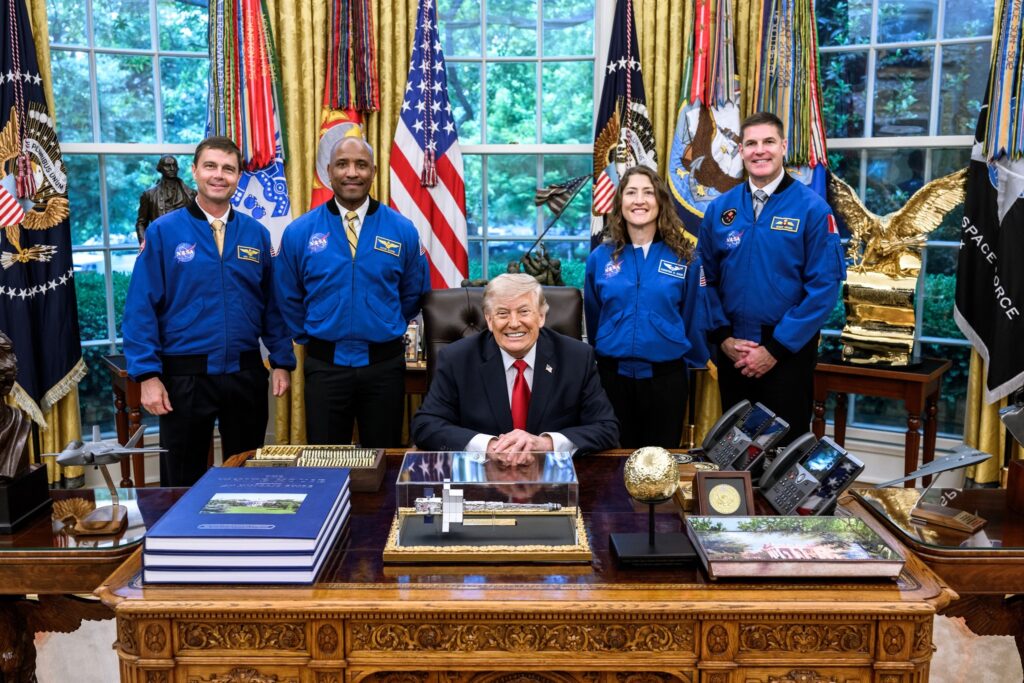
The crew of the historic Artemis II mission has made another important journey—this time to the Oval Office at the White House. The crew of the Orion spacecraft—Reid Wiseman, Victor Glover, Christina Koch, and Canadian Space Agency representative Jeremy Hansen—dressed in their signature blue jackets, met with President Donald Trump.
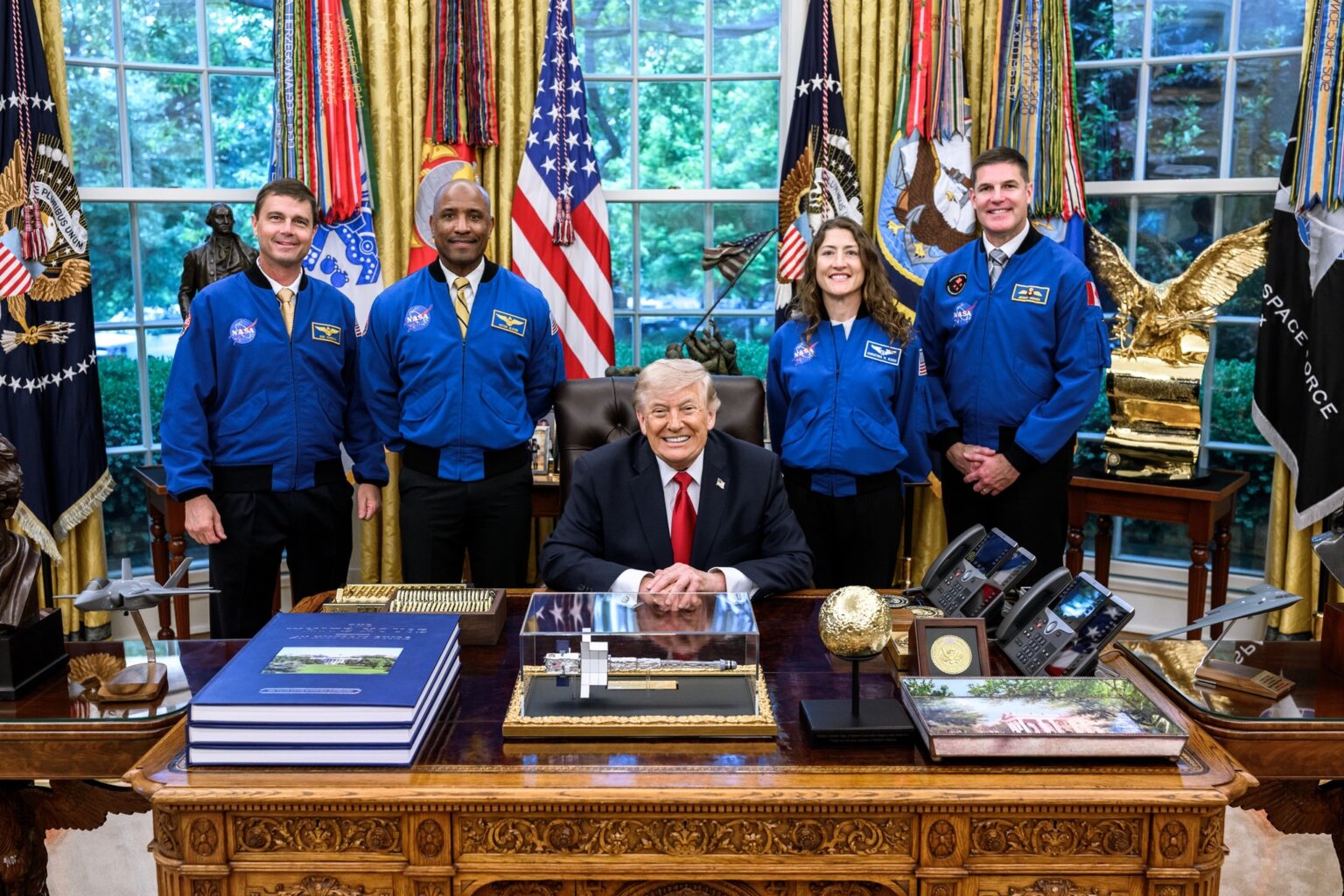 U.S. President Donald Trump with the Artemis II astronauts in the Oval Office of the White House following their historic flight around the Moon. Source: White House
The scene of the meeting was symbolic: placed on the famous table were a gold-plated model of the Moon, a gift from NASA Administrator Jared Isaacman, and a detailed scale model of the Space Reactor-1 Freedom rocket. The president expressed his admiration for the team’s courage: “I don’t know how they do it. I wouldn’t want to do it, but it takes people like this to make our country great.”
UFOs and bases on the Moon
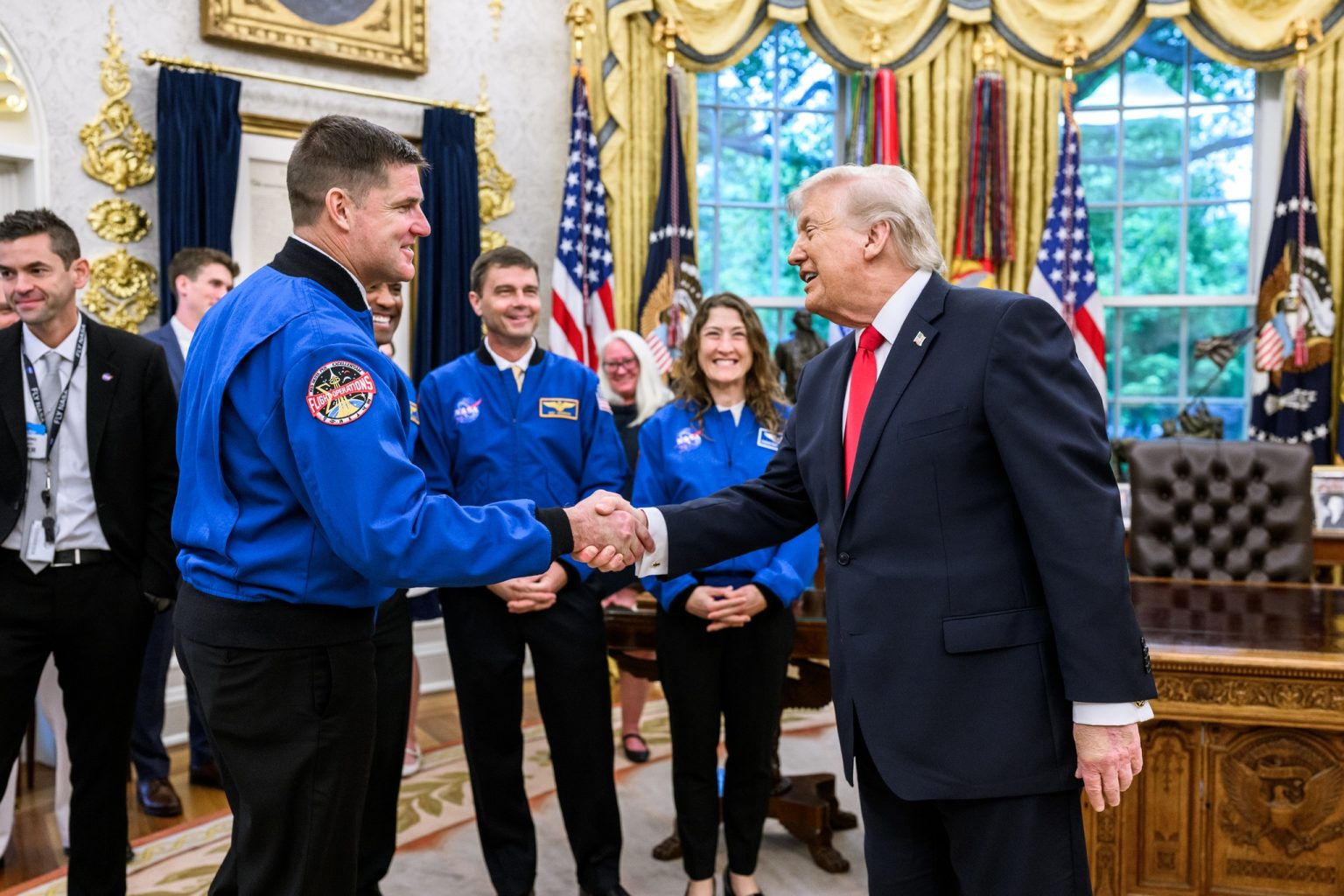 U.S. President Donald Trump greets Artemis II mission commander Reid Wiseman in the Oval Office of the White House. Source: White House
During the press briefing, the focus shifted to humanity’s future endeavors in space and government initiatives. Trump recalled the creation of the Space Force during his first term and unexpectedly confirmed his intention to release classified UFO documents.In addition, he expressed optimism about the prospects of a new manned mission to the Moon in the near future, while avoiding making any definitive promises: “We don’t like to say definitely, because then you say, ‘Oh, we failed,’ So we have a good shot. We’ve authorized it.”
For his part, Jared Isaacman shared the space agency’s specific schedule. According to him, the launch of the ambitious Artemis III mission is scheduled for late 2027, and the astronauts’ triumphant return to the lunar surface is expected as early as 2028. He also emphasized that NASA headquarters would remain in Washington, as being located in the capital provides the program with strategic advantages.
A scientific triumph overshadowed by geopolitics
In today’s world, as is often the case, pure science has not been able to completely escape the political context. The meeting quickly turned into a chaotic press conference. While the astronauts stood nearby with carefully neutral expressions, the president answered questions about the conflicts in Iran and Ukraine, the Supreme Court ruling, and disputes with the former FBI director.
A similar contrast was observed during the Artemis II mission. The historic moment on April 6, when the spacecraft reached an unprecedented distance from Earth after flying around the far side of the Moon, was partially overshadowed in the media by the president’s sharp political statements regarding the situation in the Middle East.
Next stop—Mars
Despite the challenging political climate, the United States’ space achievements remain a source of undeniable pride. While watching the historic launch of the mission alongside Secretary of State Marco Rubio, Trump called the flight a striking demonstration of the nation’s technological leadership.
In congratulating the astronauts on their remarkable achievement, the president clearly outlined the ultimate goal of the current phase of space exploration: “We’ll be doing it again and then, next step, Mars!”
According to CNN