
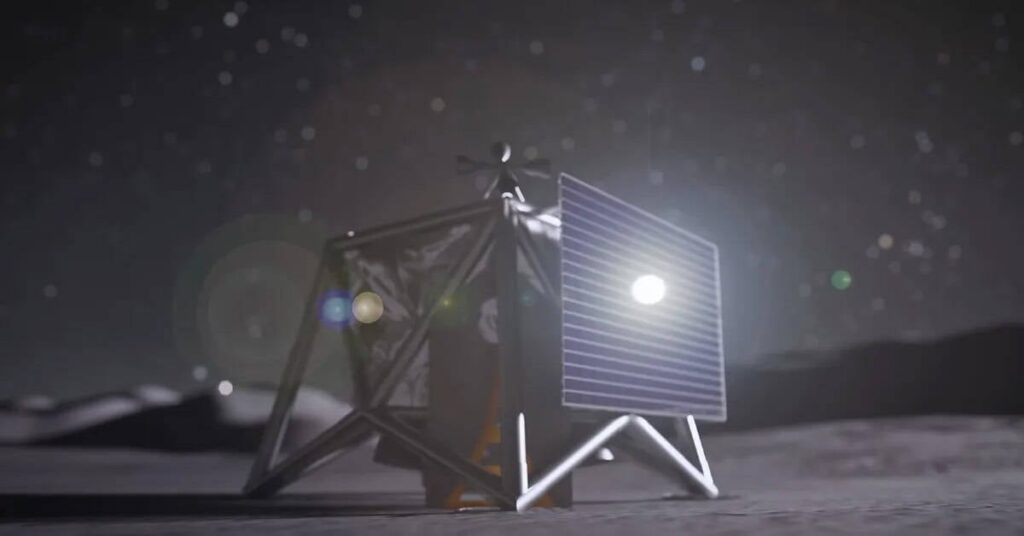
Before humans set foot on the Moon again, NASA is preparing to send something far more daring ahead of them — a swarm of autonomous drones designed to leap across one of the most dangerous and unexplored regions in space. Under the MoonFall Project, these high-tech drones will hop across the lunar south pole, mapping terrain, probing hidden areas, and gathering critical data long before astronauts arrive. Read on to discover how this scouting mission is leveraging cutting-edge mobile phone technology and private sector muscle to ensure that when astronauts finally return to the lunar surface, they aren’t flying blind.
NASA’s MoonFall Project takes lunar exploration to new heights
Deep within the Jet Propulsion Laboratory (JPL) in Pasadena, California, Ray Baker is heading up the ambitious MoonFall Project. The plan is to deploy a specialized team of four high-tech drones to explore the moon’s mysterious south pole.
These aren’t your typical backyard drones; they are “hoppers” designed to navigate the moon’s punishing terrain. According to Baker, the mission has a clear deadline and a massive scope. “Our goal is that each drone can cover a range of roughly 30 miles [50 kilometers],” Baker told Space.com, “and get that done by the end of 2028.”
Standing on the shoulders of Mars history
The MoonFall team isn’t starting from scratch. They are drawing inspiration from the legendary Ingenuity helicopter, which defied expectations by completing 72 flights on Mars.
“We get to stand on their shoulders,” Baker explained. “We’re going to marry our success from Ingenuity, all that knowledge, all that skill and success, and couple that with an industry capability. We’re going to get this done.”
By combining NASA’s flight expertise with the rapid innovation of the private space sector, the mission aims to be faster and more efficient than ever before. Baker notes that the burgeoning space industry has “a lot of capability and that’s something that we’re going to heavily lean into and leverage, along with our JPL capabilities.”
Mapping the Moon in high definition
To get the job done, each of the four drones will be packed with ten specialized cameras and various scientific sensors. This 40-camera swarm will capture the Moon’s rocky surface in stunning detail. By stitching these images together, NASA will create a comprehensive, high-resolution map of the lunar landscape. This unprecedented view is essential for:
Safety: Identifying the best landing spots for future Artemis astronauts.
Infrastructure: Determining where to build the first permanent lunar base hardware.
Smart tech for a harsh world
Much like the Ingenuity helicopter, which used everyday electronics similar to those found in smartphones, these lunar drones are built to be smart. They feature advanced hazard detection systems that allow them to think on their feet.
As they hop from one location to the next, the drones will constantly scan the ground below. Baker notes that when they approach a new spot, each drone will “appraise what it can see and plop down at the safest local area,” ensuring the mission continues even in the most treacherous lunar environments.
Fast-tracked MoonFall Project moves closer to reality
NASA isn’t wasting any time getting its new fleet of lunar scouts off the ground. According to project Baker, the MoonFall Project is moving at a sprint to meet its ambitious goals.
The first major hurdle is choosing the right teammates. NASA is currently vetting private companies to help build and manage the fleet. “We’re looking forward to selecting our industry partners and getting this done. It’s going to be a really exciting ride,” Baker said. “By June of this year we’re hoping to have our major partners selected.”
While the paperwork is being finalized, the physical work has already begun. Prototype hardware for the drones is either already built or currently being assembled. Here’s a rough schedule leading up to the launch
Late 2026: “Captive carry” tests will begin, where project hardware is attached to other vehicles to verify that the navigation and control sensors work perfectly.
Summer 2027: The team will move into the final assembly and rigorous testing of the spacecraft.
2028: The drones will be delivered to the launch site for their one-way trip to the lunar south pole.
This timeline is incredibly tight by traditional space exploration standards, but the team is confident. As Baker puts it, the mission is designed for speed and efficiency. “It’s going to be fast-paced. We believe we can do it,” he said.
How MoonFall Project could cut lunar exploration costs significantly
While the exact price tag for the MoonFall Project hasn’t been finalized, NASA’s strategy is clear: explore more of the Moon without breaking the bank.
“NASA is still working out details of cost and budget, so we can’t provide those details just yet,” Baker explained. “But we’re confident that, in partnership with industry, JPL has the skills and the technology to deliver on schedule.”
One of the biggest money-savers for MoonFall Project is how the drones actually reach the surface. Traditionally, landing on the moon requires a massive, complex, and expensive propulsion system to touch down gently. MoonFall skips a major part of that expense by deploying the drones while they are still descending.
According to Baker, this mid-descent release avoids the high cost and technical risk of building a dedicated landing craft for each scout. Instead, these agile drones are released to find their own way down, significantly lowering the mission’s overall complexity.
NASA is also saving money by acting more like a manager than a manufacturer. Instead of building every nut and bolt in-house, the agency is leveraging the booming private space industry. “The mission will leverage industry capabilities for the transfer and braking stage as well as the drones’ mechanical and propulsion systems,” Baker added.
This partnership model allows NASA to:
Reduce Financial Risk: By using existing commercial technology.
Increase Frequency: Launching more missions for the same budget.
In short, MoonFall is proving that the future of lunar exploration isn’t just about going further—it’s about going smarter.
Source: Space.com