

HAMPTON, VIRGINIA- NASA has taken delivery of its new Boeing 777-200ER flying laboratory at Langley Research Center after the aircraft completed a check flight and a three-hour ferry from Waco (ACT), Texas.
The widebody, formerly operated by Japan Airlines (JL) as JA704J, underwent extensive structural modifications by L3Harris and its partner Yulista before arriving ahead of schedule.
The 777 now becomes the largest airborne research platform in NASA’s fleet, succeeding the agency’s retired Douglas DC-8. NASA originally purchased the aircraft in December 2022 for less than $30 million after it had been in storage in Southern California since 2020. Its first science mission is planned for January 2027, TWZ reported.
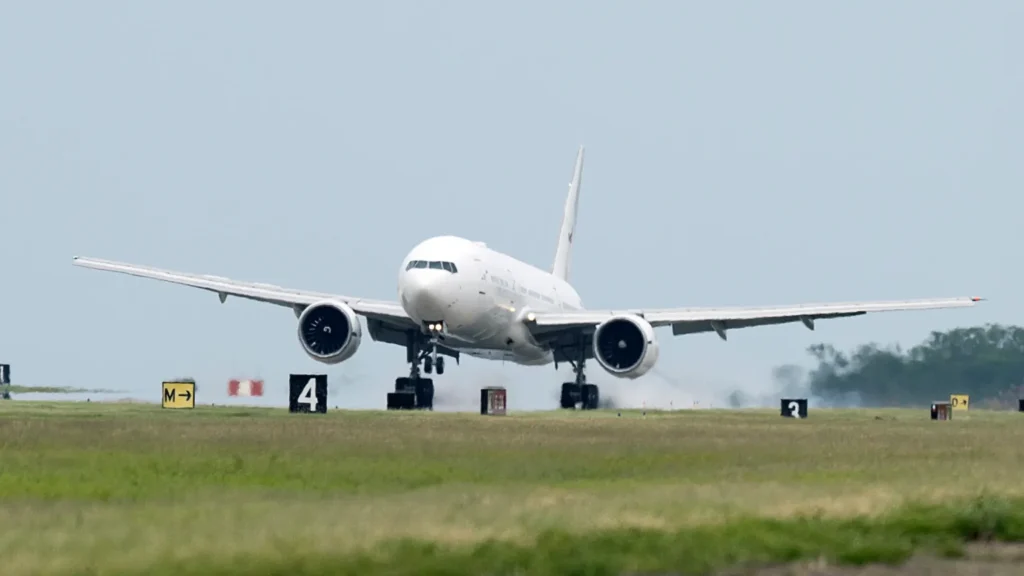 Photo: NASA
NASA Receives Modified 777
L3Harris completed major structural modifications on the 777 at its Waco facility after the aircraft arrived there in January 2025.
The company used advanced engineering techniques, including 3D scanning and specialized installation tooling, to accelerate the program and deliver ahead of the original timeline.
The modification scope covered several critical areas. Nearly 35,000 precision holes were drilled into the belly of the aircraft to accommodate remote-sensing instruments mounted through new fuselage ports.
Cabin windows were enlarged to serve as viewports for scientific sensors. Wiring harnesses running through the fuselage now connect operator workstations to instruments such as LIDAR and infrared imaging spectrometers.
The aircraft also received new power, data, and communications systems alongside dedicated research stations. While L3Harris and Yulista handled the structural work, NASA and HII are performing research station integration and wiring upgrades in the cabin.
Yulista specializes in integrated modernization, sustainment, and mission support for defense and aerospace customers.
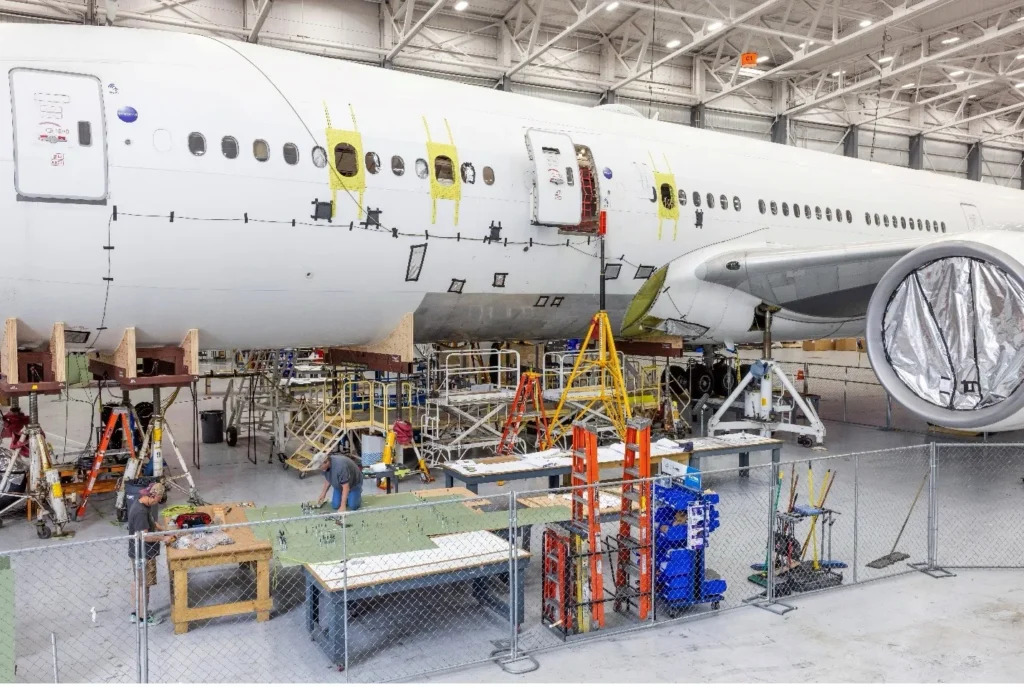 Photo: L3Harris
Significant Capability Upgrade Over the DC-8
The 777 represents a substantial step up from the 1969-vintage DC-8 across every performance metric. The Boeing widebody accommodates between 50 and 100 onboard operators, compared to the 45 researchers and flight crew that typically flew aboard the Douglas jet.
Its useful payload of 75,000 pounds is more than double the DC-8’s 30,000-pound capacity for scientific instruments and equipment.
Mission endurance sees an equally notable improvement. The 777 can conduct missions of up to 18 hours at a maximum altitude of 43,000 feet.
DC-8 missions typically lasted between six and 10 hours. This extended range and endurance open up possibilities for longer and more comprehensive data-gathering campaigns.
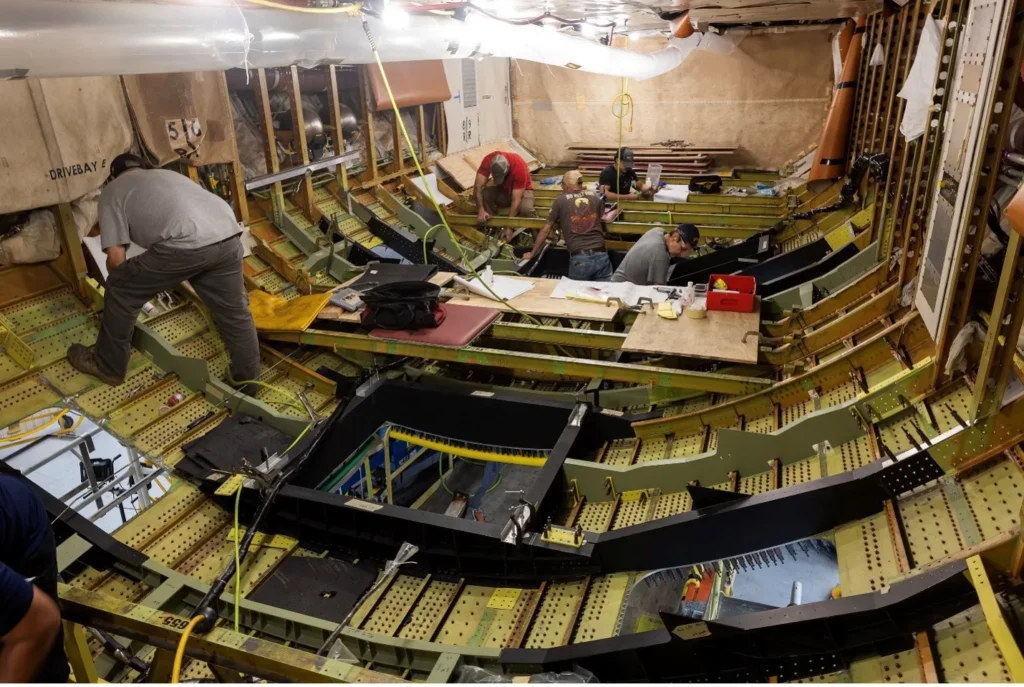 Photo: L3Harris
First Science Mission: The NURTURE Experiment
The 777 is scheduled to fly its first science mission in January 2027 as part of the North American Upstream Feature-Resolving and Tropopause Uncertainty Reconnaissance Experiment (NURTURE).
The campaign will focus on studying high-impact winter weather events, including severe cold air outbreaks, wind, snow and ice storms, and hazardous seas.
NURTURE will be an extensive operation, with data collection planned across North America, Europe, Greenland, and the Arctic and North Atlantic Oceans.
The NURTURE payload has already been installed alongside the general modification work completed in Waco.
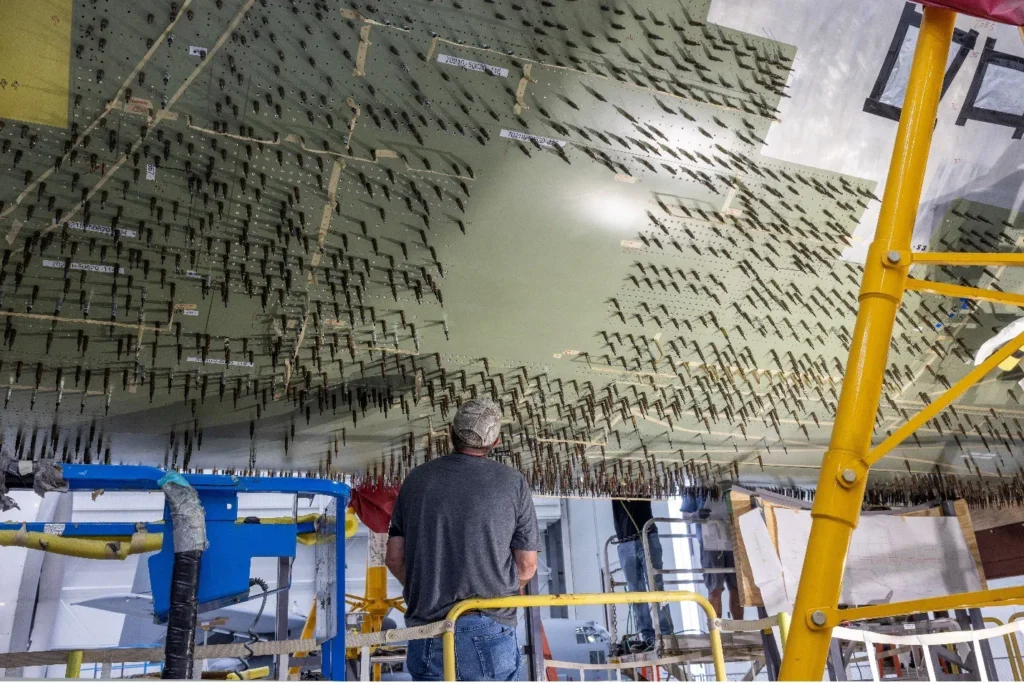 Photo: L3Harris
Broad Earth Science Mission Portfolio
The 777 will primarily serve airborne science campaigns, gathering Earth science data using onboard sensors to monitor activities and phenomena across the globe. Mission areas include studying polar ice fields, monitoring wildfires, and conducting atmospheric research using remote sensing and gas sampling instruments.
A NASA spokesperson confirmed that the aircraft will also support other mission requests as availability permits, similar to the DC-8’s operational model.
The DC-8’s mission spectrum covered sensor development, satellite sensor verification, telemetry data retrieval, optical tracking for space vehicle launch and re-entry, and research studies of Earth’s surface and atmosphere.
Derek Rutovic, program manager for the Airborne Science Program at NASA Headquarters, noted that the 777 will collect data to improve understanding of the Earth system.
Kirsten Boogaard, the NASA 777 program manager at Langley and former deputy program manager of the DC-8 program, highlighted the aircraft’s ability to bring together more partners, educational opportunities, and instruments for stronger data collection.
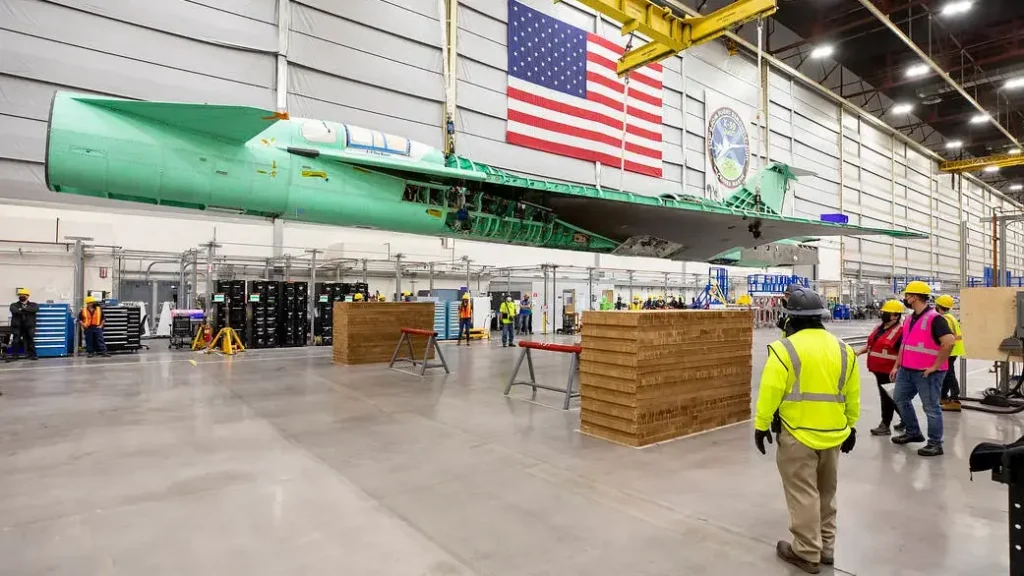 Photo: NASA
NASA’s Fleet Modernization Continues
The arrival of the 777 continues a broader modernization and rationalization of NASA’s test aircraft fleet.
Recent retirements include the DC-8 and the Stratospheric Observatory for Infrared Astronomy (SOFIA), a flying telescope housed in an adapted Boeing 747SP that was retired in 2022. The 777 now serves as the centerpiece of NASA’s airborne science capabilities going forward.
Stay tuned with us. Further, follow us on social media for the latest updates.
Join us on Telegram Group for the Latest Aviation Updates. Subsequently, follow us on Google News