
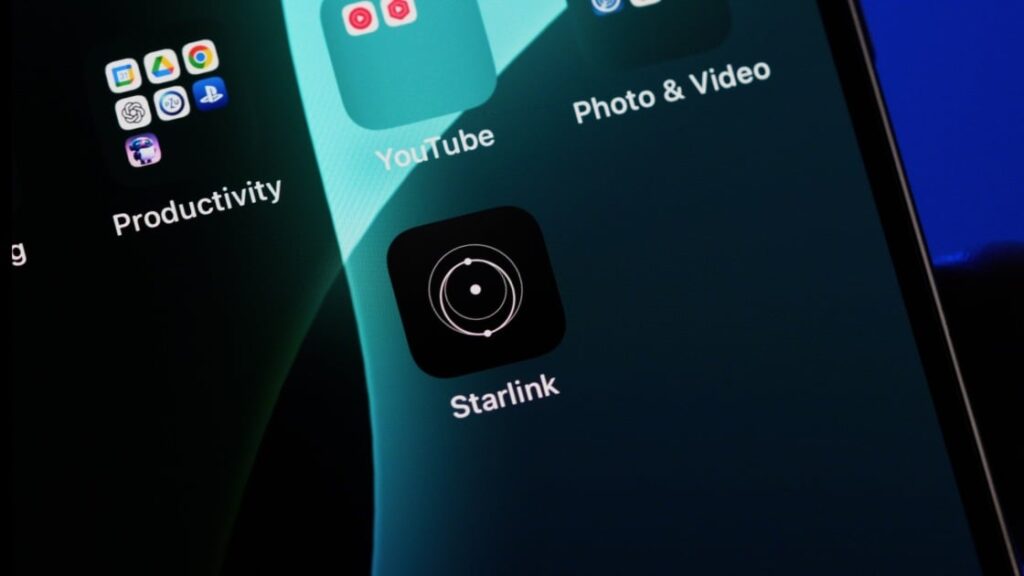
SpaceX is seeing significant growth in the US for its Starlink mobile app, suggesting its aggressive discounts for satellite internet are attracting new users.
Reuters first reported the news, citing research from Boston-based Apptopia, which tracks mobile app performance. In Q1, global downloads and monthly active users for the Starlink app more than doubled year-over-year.

(Credit: Apptopia)
“Global downloads in 1Q26 reached 2.8 million, roughly 4.5x the level from two years earlier, and full-year 2025 downloads totaled 7.9 million, up 84% from 2024,” the company said.
Apptopia also noted that “domestic (US) downloads spiked 223%” year-over-year during the quarter. “Domestic downloads of 1.2 million in 1Q26 were the highest single-quarter print ever recorded, up 47% from the prior quarter.” In addition, the Starlink app saw its monthly active users in the US increase nearly 150% year-over-year.

(Credit: Apptopia)
The numbers give a glimpse of Starlink’s growth as SpaceX has been offering discounts and expanding its retail presence through new partnerships.
In July, SpaceX revealed that its satellite internet service had topped 2 million active customers in the US. It’s unclear how much the service has grown in the States since then, but globally, Starlink hit 10+ million active customers in February, up from 5 million a year earlier. SpaceX might reveal exact figures for the US market as part of regulatory filings for its IPO.
In the meantime, Apptopia’s data shows that the US remains the largest single market for the Starlink app, at roughly 37% of active users, but says, “Latin America is rapidly closing the gap.”
Recommended by Our Editors
For example, Brazil saw the highest year-over-year growth in monthly active users, jumping 450%. The market “now accounts for 13% of the global user base, up from under 5% a year ago,” Apptopia says. Brazil and Argentina combined now represent over 22% of the Starlink app’s active users in Apptopia’s tracking.
Still, the Starlink app isn’t growing everywhere. “Canada’s user base has flatlined for three quarters, well below its mid-2023 peak. Germany cratered over 50% from its 2Q25 high, suggesting either competitive pressure or regulatory friction,” Apptopia noted. We also wonder if backlash to SpaceX CEO Elon Musk, particularly in Canada, may have played a role.


Working Off the Grid With Starlink Roam

Get Our Best Stories!
Your Daily Dose of Our Top Tech News

Sign up for our What’s New Now newsletter to receive the latest news, best new products, and expert advice from the editors of PCMag.
Sign up for our What’s New Now newsletter to receive the latest news, best new products, and expert advice from the editors of PCMag.
By clicking Sign Me Up, you confirm you are 16+ and agree to our Terms of Use and Privacy
Policy.
Thanks for signing up!
Your subscription has been confirmed. Keep an eye on your inbox!
About Our Expert

Michael Kan
Principal Reporter
Experience
I’ve been a journalist for over 15 years. I got my start as a schools and cities reporter in Kansas City and joined PCMag in 2017, where I cover satellite internet services, cybersecurity, PC hardware, and more. I’m currently based in San Francisco, but previously spent over five years in China, covering the country’s technology sector.
Since 2020, I’ve covered the launch and explosive growth of SpaceX’s Starlink satellite internet service, writing 600+ stories on availability and feature launches, but also the regulatory battles over the expansion of satellite constellations, fights with rival providers like AST SpaceMobile and Amazon, and the effort to expand into satellite-based mobile service. I’ve combed through FCC filings for the latest news and driven to remote corners of California to test Starlink’s cellular service.
I also cover cyber threats, from ransomware gangs to the emergence of AI-based malware. In 2024 and 2025, the FTC forced Avast to pay consumers $16.5 million for secretly harvesting and selling their personal information to third-party clients, as revealed in my joint investigation with Motherboard.
I also cover the PC graphics card market. Pandemic-era shortages led me to camp out in front of a Best Buy to get an RTX 3000. I’m now following how the AI-driven memory shortage is impacting the entire consumer electronics market. I’m always eager to learn more, so please jump in the comments with feedback and send me tips.