
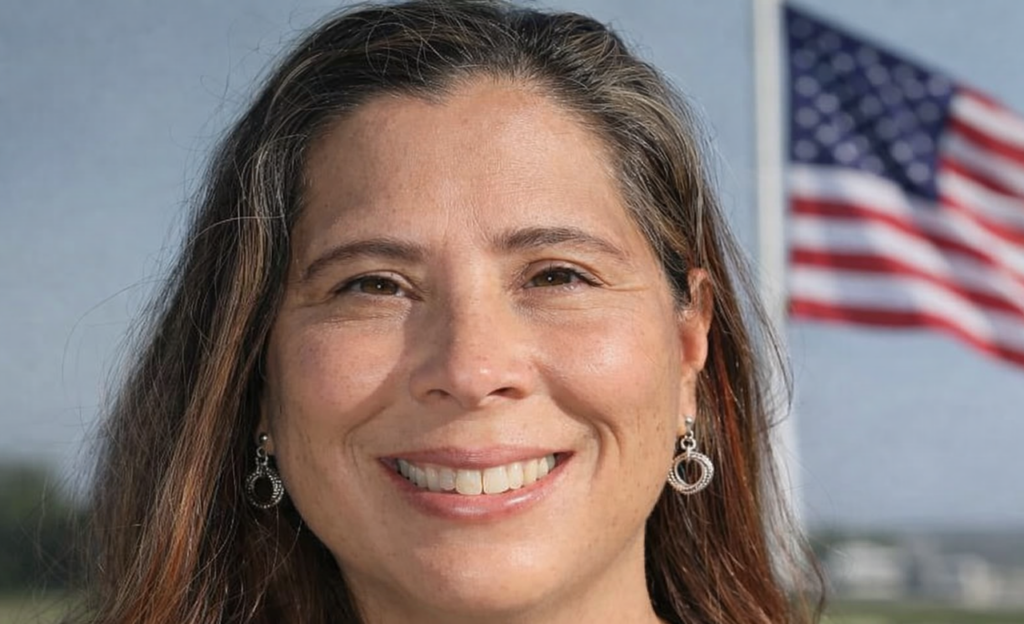
In the landscape of contemporary space exploration where the most visible names are often those of astronauts floating in zero gravity the story of Liliana Villarreal is built from a different vantage point: one less visible, yet equally decisive the precise moment where a mission ends and its most delicate challenge begins, bringing astronauts safely back home.
From Cartagena to the Core of Space Engineering
Liliana Villarreal was born in Cartagena, Colombia, a city where the horizon is defined by the sea rather than rockets. Yet it was there that an early fascination with space began to take shape one that would eventually lead her to one of the nerve centers of global science: the Kennedy Space Center, the operational heart of NASA.
Her story is not one of immediate ascent, but of formative migration. She moved to the United States at an early age, around ten years old a transition that not only reshaped her environment but also gave her access to an educational system where aerospace engineering shifted from distant aspiration to tangible possibility.
That journey, common in many Latino success stories, became the foundation of a career that would solidify years later. In 2007, she officially joined NASA, beginning a professional trajectory that now spans more than two decades within the agency.
The Engineer Behind Critical Systems
From the outset, Villarreal held not a symbolic role but a deeply technical and structural one. For over fifteen years, she has contributed to key programs such as the International Space Station and later to the development of the Space Launch System (SLS) and the Orion spacecraft two central components of the United States’ renewed lunar architecture.
Her work on Artemis I, the first mission in the modern effort to return to the Moon, was particularly strategic. She served as flow deputy, responsible for coordinating the integration, assembly, and testing of the rocket and spacecraft prior to launch a process demanding precision, systems thinking, and real-time decision-making.
This is not a minor operational role. It sits at the intersection of engineering, logistics, and high-stakes execution, where any error could jeopardize years of work and billions of dollars.
The Critical Role in Artemis: Where the Mission Ends
It is within Artemis II, however, that her role becomes even more critical. Villarreal has been appointed landing and recovery director—one of the most sensitive positions in any crewed mission.
In this role, she leads the teams responsible for recovering both the astronauts and the Orion spacecraft after splashdown in the ocean. This involves not only technical coordination but also the ability to respond to emergency scenarios, trajectory deviations, or mission aborts.
Her responsibility extends beyond ideal conditions. It includes contingency planning, rescue operations, and high-complexity maritime procedures where every minute can determine the survival of the crew.
In practical terms, her work defines the final chapter of each mission the moment when exploration ceases to be purely technological and becomes a human recovery operation.
Why Was She Chosen?
At NASA, positions are not assigned based on symbolic narratives but on verifiable trajectories. Villarreal’s selection reflects a combination of accumulated experience, technical expertise, and leadership under pressure.
Her background in systems integration, her deep knowledge of Orion, and her experience in critical operations positioned her as a natural candidate to lead one of the most delicate phases of the Artemis program.
She is not a media figure, but a process engineer one who understands how every component functions and how to respond when something fails. That capability is indispensable in missions where there is no margin for error.
The Mission That Redefines a Career
As of April 2026, Artemis II remains in preparation. Yet Villarreal’s role is already clearly defined within a mission that will mark humanity’s return to the vicinity of the Moon after more than half a century.
In this context, she will not travel to space. But her work will be essential in ensuring that those who do can return safely a reminder that space exploration depends not only on those who launch, but also on those who wait on Earth.
Beyond Individual Achievement
Liliana Villarreal’s story is not only about personal success, but about what it represents: a Colombian engineer who has positioned herself within one of the most complex scientific programs in the world, in a field historically dominated by men and non-Latino profiles.
Her presence at NASA is not anecdotal it is structural. It reflects a quiet transformation in which global talent is being redistributed, challenging traditional geographies of knowledge.
A Life Dedicated to Closing the Loop of Exploration
Ultimately, Villarreal does not design the launch nor does she take part in the lunar landing. But she holds something just as critical in her hands: the return.
In a field obsessed with going farther, her work is a reminder that the true success of a mission is not measured solely by the distance traveled, but by the ability to come back.
And it is there in that critical moment when the capsule meets the ocean and uncertainty turns into action where the story of this Colombian engineer gains its full weight. Not as a media figure, but as one of the people ensuring that space exploration remains, above all, a human endeavor in the United States.