
The European Space Agency’s Juice mission – its Jupiter Icy Moons Explorer – is currently on its way to Jupiter and set to arrive there in 2031.
Once there, Juice will explore the gas giant’s large icy moons for signs of life in the liquid oceans hidden beneath their frozen crusts.
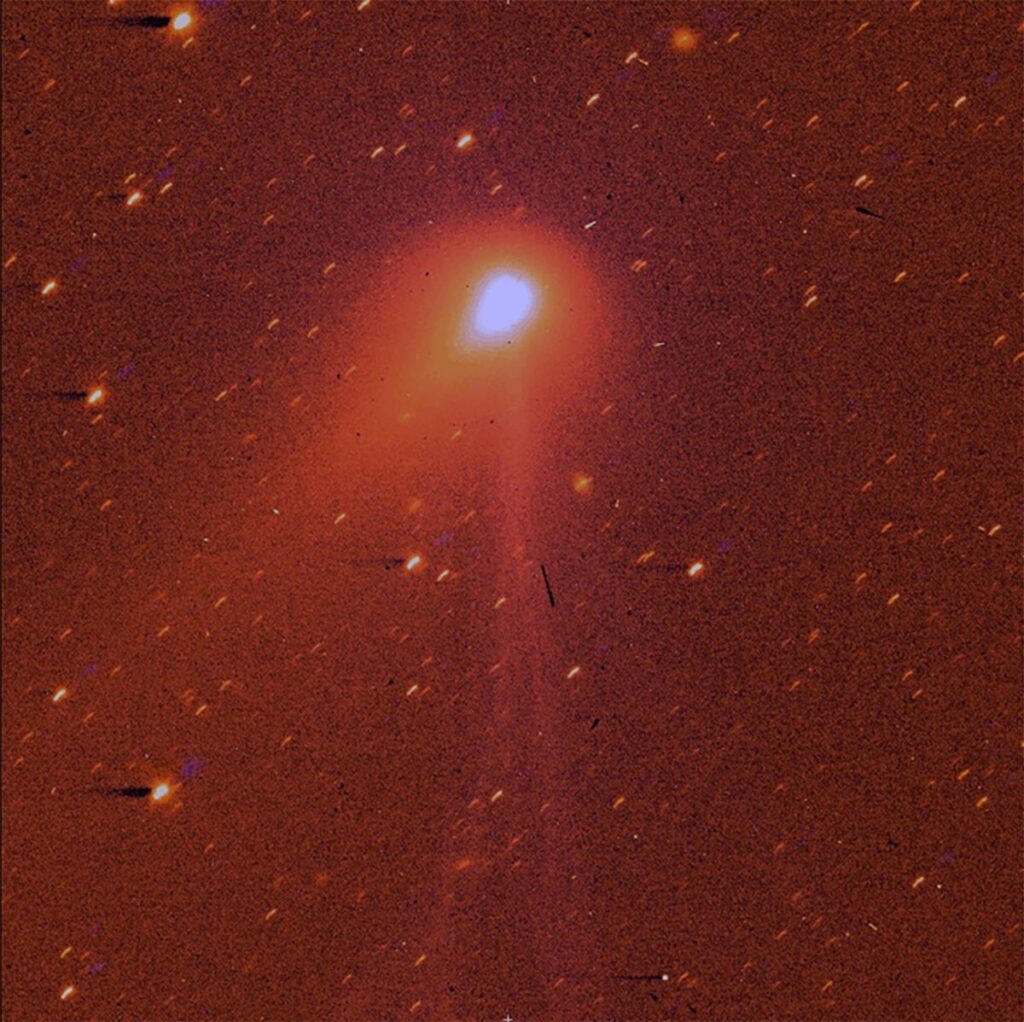
But in November 2025, mission scientists got Juice to analyse a very different source of water: that of the vapour streaming from comet 3I/ATLAS as it flew close to the Sun.
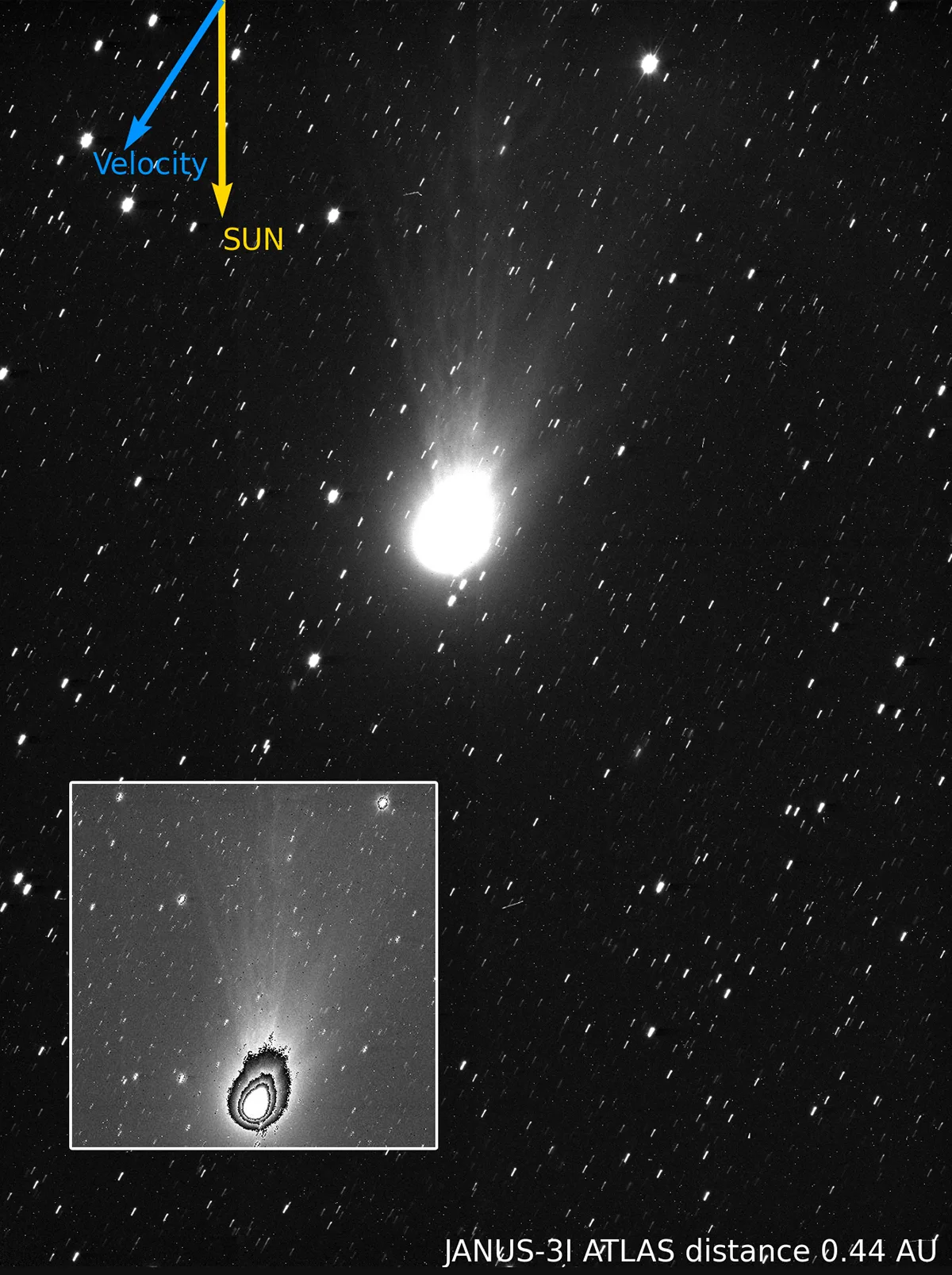 Image of comet 3I/ATLAS on 6 November 2025, captured by ESA’s Juice spacecraft’s JANUS science camera. Credit: ESA/Juice/JANUS
3I/ATLAS and its solar close approach
Comet 3I/ATLAS is an interstellar comet that was discovered on 1 July 2025.
It’s ‘interstellar’ because it formed in a different part of the Galaxy, beyond our Solar System. It’s one of only three such bodies ever discovered.
The comet entered our Solar System from deep space, then flew past Earth and the Sun, and is now on its way out of the Solar System. Once it exits our Solar System, it will be gone from our view forever.
 Credit: NASA/Goddard/LASP/CU Boulder
3I/ATLAS is thought to be at least 7 billion years old, making it potentially the oldest comet ever discovered.
In late October 2025, 3I/ATLAS made its close approach to the Sun, zooming past the star at the centre of our Solar System, and heating up as it did so.
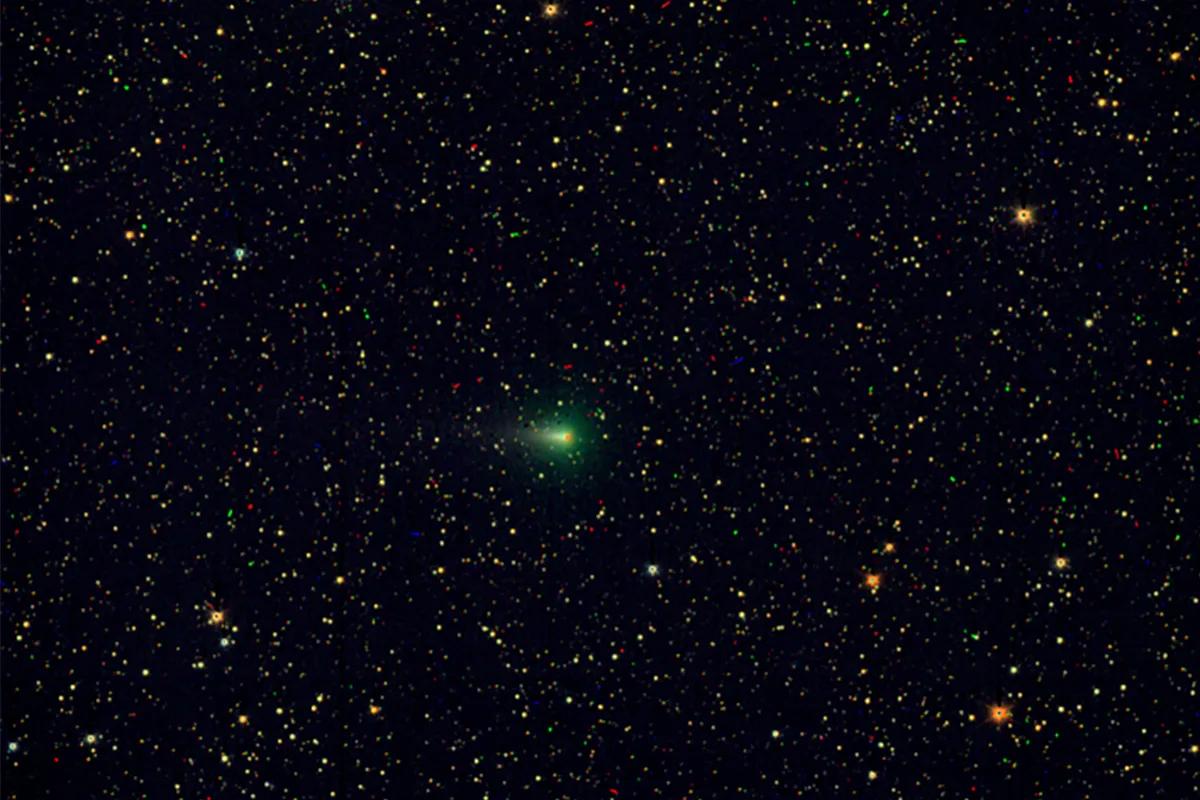 A red-green-blue image of 3I/ATLAS taken by the ESA Juice spacecraft’s science camera, JANUS, from more than 180 million km away. Credit: ESA/Juice/JANUS, Livio Agostini
Juice sees 3I/ATLAS’s powerful outburst
In November 2025, the Juice spacecraft observed interstellar comet 3I/ATLAS just after the comet’s approach to the Sun.
Comets are made up of dust and ice, and when they pass close to our Sun, that ice sublimates into vapour, causing a fuzzy coma to appear around the comet’s head and a trail to sweep behind it.
The European Space Agency mission operations team turned on five of Juice’s science instruments to gather data on how the active comet was behaving as it flew by our Sun.
It took three months to receive that data, and now scientists are working on analysing the data to learn more about the comet.
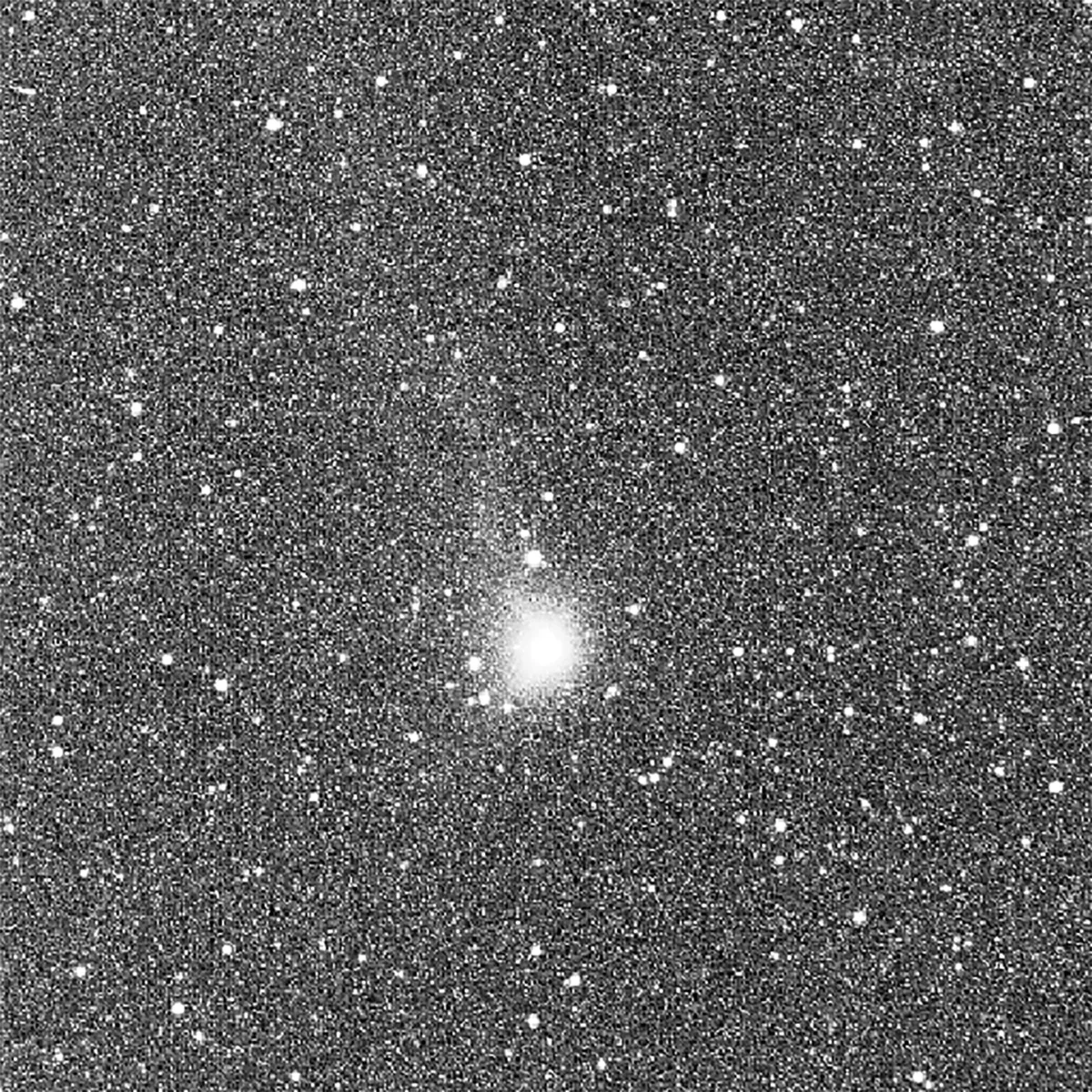 A single frame image of comet 3I/ATLAS captured by the European Space Agency’s Juice mission. Credit: ESA/Juice/NavCam
They found that, on 2 November 2025, four days after 3I/ATLAS made its closest approach to the Sun, the comet was spewing out 2,000kg of water vapour every second.
That’s the same as 70 Olympic swimming pools per day, according to the science team.
They say the amount of water vapour leaving 3I/ATLAS is “not exceptional”, but is more than seen in some comets when they approach the Sun.
The Juice spacecraft then detected 3I/ATLAS again on 12 and 19 November 2025 as it was moving away from the Sun.
By 12 November, the team say, the amount of water vapour released by 3I/ATLAS had not reduced significantly.
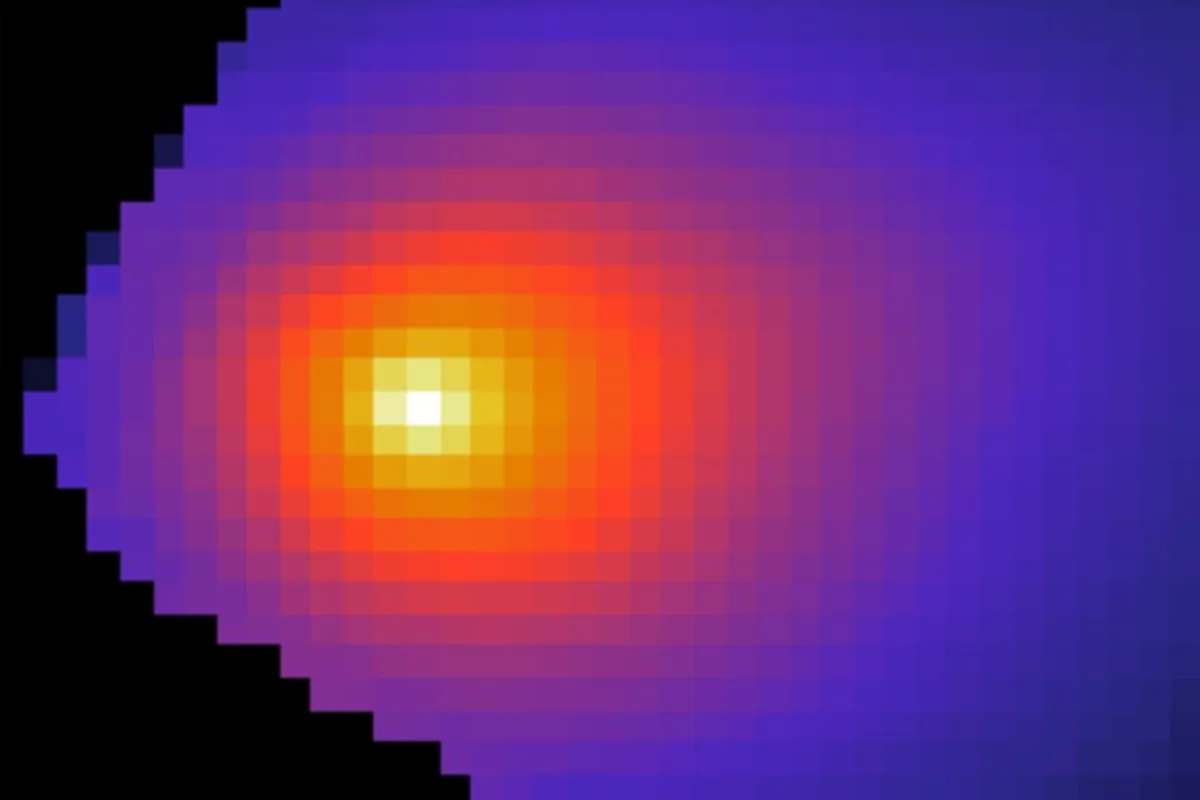 The James Webb Space Telescope observed interstellar comet 3I/ATLAS on 6 August 2025 with its Near-Infrared Spectrograph instrument. Credit: NASA/JWST
Spewing water towards the Sun
The Juice spacecraft’s Submillimeter Wave Instrument detected water vapour coming from 3I/ATLAS, and that most of it was released from the Sun-facing side of the comet.
Scientists say it appears much of the water vapour is not coming directly from the comet’s nucleus, i.e. the solid part. Instead, it’s coming from icy dust grains that have escaped into the coma.
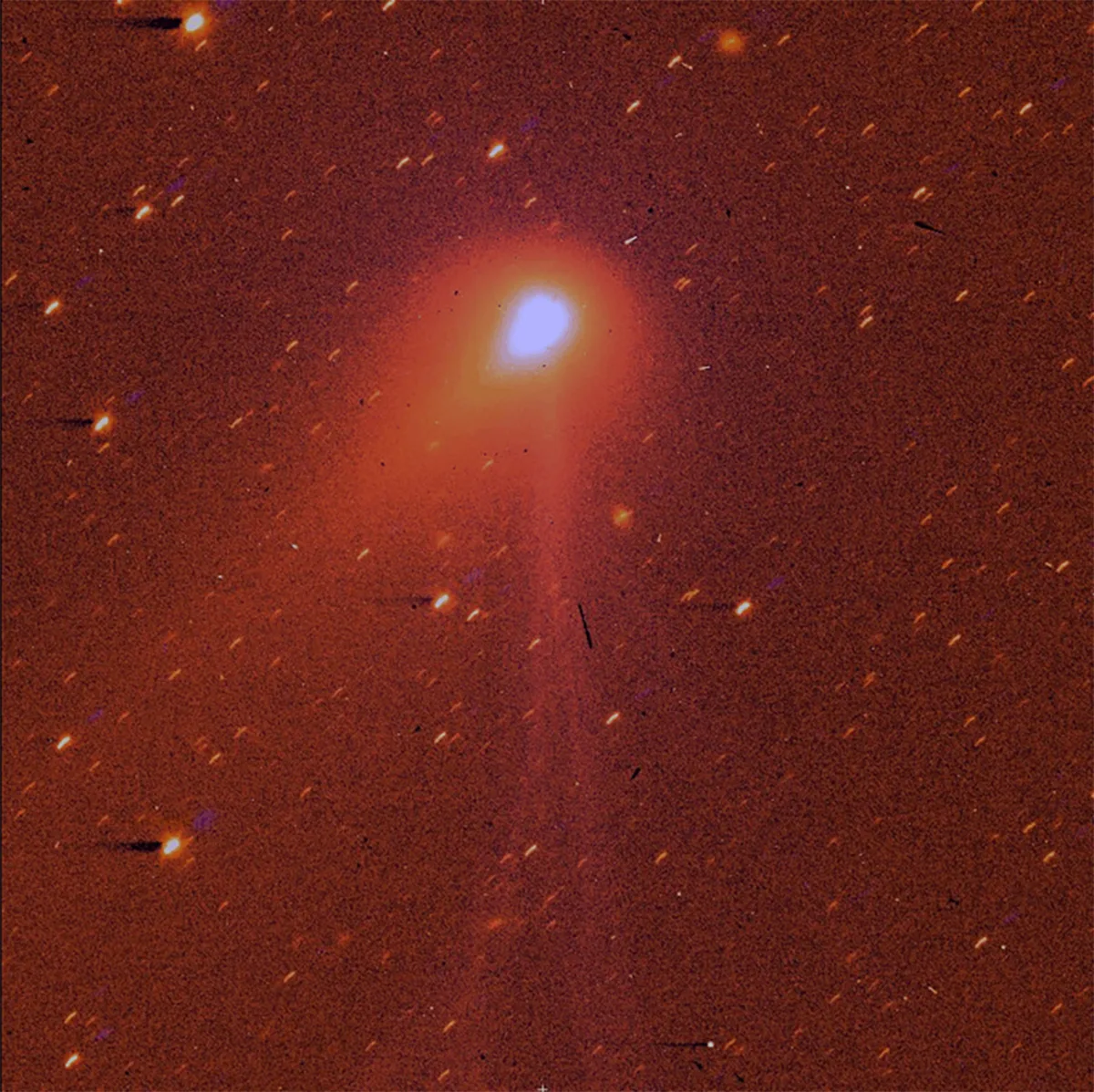 Comet 3I/ATLAS, as seen by the European Space Agency’s Juice spacecraft. Credit: ESA
What’s more, this data can tell the team more about the type of environment in which 3I/ATLAS formed.
The science team have been comparing how much ‘light water’– normal H2O – has been coming from 3I/ATLAS with how much ‘semiheavy water’ (HDO), the latter having been measured by the European Southern Observatory’s ALMA telescopes in Chile and the James Webb Space Telescope.
They say this ratio can give them information about how and where an object formed.
The ratio is extremely high in 3I/ATLAS, which could be an indication that it was born in a cold, ancient corner of the Galaxy and was exposed to a lot of ultraviolet radiation from young stars.