

 NASA’s Space Launch System rocket launches carrying the Orion spacecraft with NASA astronauts Reid Wiseman, commander; Victor Glover, pilot; Christina Koch, mission specialist; and CSA (Canadian Space Agency) astronaut Jeremy Hansen, mission specialist on NASA’s Artemis II mission, Wednesday, April 1, 2026, from Operations and Support Building II at NASA’s Kennedy Space Center in Florida. NASA’s Artemis II mission will take Wiseman, Glover, Koch, and Hansen on a 10-day journey around the Moon and back aboard SLS rocket and Orion spacecraft launched at 6:35pm EDT from Launch Complex 39B. Photo Credit: NASA/Bill Ingalls
From Massachusetts to California, thousands of American workers and hundreds of manufacturers power NASA’s return to deep space.
For the first time since 1972, humans have returned to deep space. And, with each of the 695,081 miles that the Orion spacecraft travels in its 10-day journey around the moon and back, the Artemis II mission showcases the marvels of American manufacturing. Moreover, testing that manufacturing is a primary objective for the mission, which serves as a stepping stone to establishing the moon as a foundation for crewed missions to Mars.
Though the Orion is primarily built by contractor Lockheed Martin and the bulk of the spacecraft’s welding took place at NASA’s Michoud Assembly Facility in New Orleans, La., a constellation of hundreds of suppliers nationwide contributed to both the Orion and the materials used by the Artemis II crew.
Here’s a snapshot of just a few of the U.S. manufacturers who’ve had a hand in the historic Artemis II mission.
Artemis II Spacesuits
Made by the David Clark Company in Worcester, Mass., the Artemis II crew’s spacesuits are tailored to each astronaut’s anatomy and are designed to sustain life for up to six days with systems for air, food, water and waste management built into them.
This is far from just a cool suit to float around in. The bright orange spacesuit is actually called the Orion Crew Survival System and keeps the Artemis II crew safe during launch, entry and landing by sustaining a personal atmosphere around their bodies. The crew will also use the suits if there’s an emergency event.
 From right to left, NASA astronauts Reid Wiseman, commander (not pictured); Christina Koch, mission specialist; Victor Glover, pilot; and CSA (Canadian Space Agency) astronaut Jeremy Hansen, mission specialist are seen as they depart the Neil A. Armstrong Operations and Checkout Building to board their Orion spacecraft atop NASA’s Space Launch System (SLS) rocket at Launch Complex 39B, Wednesday, April 1, 2026, at NASA’s Kennedy Space Center in Florida. | Photo Credit: (NASA/Aubrey Gemignani)
As one of the many objectives of the Artemis II mission, the crew will practice putting their suits on and off in zero gravity and confirm its performance for long-duration survival.
For the David Clark Company, which dates back to 1941, the manufacturer’s opportunity to contribute to the Artemis II mission feels special even though its protective equipment has been part of much of America’s past space history, including the pressure suit worn by X-1 rocket plane test pilots who broke the sound barrier and first explored high-altitude flight.
“It’s an extreme honor,” the company’s chief technologist, Shane Jacobs, told CBS News Boston about their Artemis II spacesuit contribution. “It’s also definitely something that weighs on all of us, is thinking about these crew members that we’ve gotten to know.”
Orion’s Windows
 NASA astronaut and Artemis II Commander Reid Wiseman peers out of one of the Orion spacecraft’s main cabin windows, looking back at Earth, as the crew travels towards the Moon. | Photo courtesy of NASA
Rayotek, which was acquired by McDanel Advanced Materials in 2024,made all the window panes for the Orion. It’s a tall order, considering the extreme conditions the spacecraft must endure, including radiation exposure, microgravity and rapid temperature fluctuations.
Each window is several layers thick to protect against micrometeroids as well as bacteria and mold. However, as with everything on a rocket, the weight of the glass is a serious consideration, and an issue that McDanel Senior Program Manager for Aerospace and Defense Solutions Ramsey Benhusen flags for future NASA missions to Mars, when reducing weight will be even more critical. However, the company will reportedly provide windows for “at least the first five Artemis missions.”
Benhusen told Payload magazine:
“Imagine you work your whole life to become an astronaut, and you have to look through a computer screen to see outside,” said Ramsey Benhusen, a senior program manager for aerospace and defense solutions at McDanel. “Of course they want to look through a window to see what it looks like with their own eyes. It’s a privilege only they will have.”
Orion’s Switch Controls
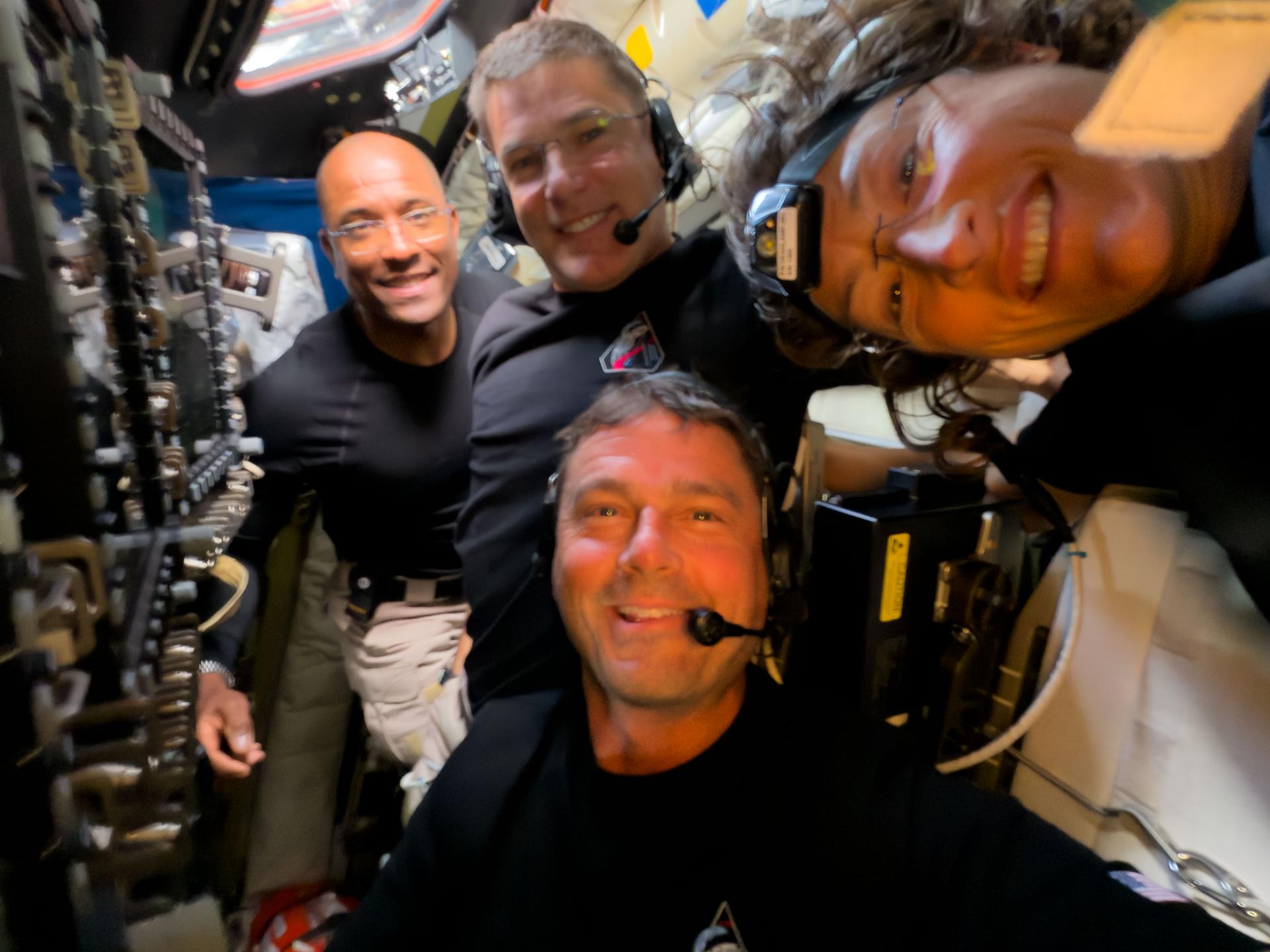 (April 6, 2026) – Midway through their lunar observation period, the Artemis II crew members – Reid Wiseman, Victor Glover, Christina Koch, and Jeremy Hansen – pause to turn the camera around for a selfie inside the Orion spacecraft. | Photo courtesy of NASA
OTTO Engineering in Carpentersville, Ill., designed and built 17 unique switch controls for use on the Orion — a project they launched eight years ago. Fittingly, the company, which manufactures controls for everything from critical medical equipment to helicopters, was founded in 1961, the same year that the first human entered space.
In addition to firing the Orion’s rockets and steering its shuttle, OTTO Engineering’s switch controls the spacecraft’s food heaters.
OTTO Engineering Chairman Tom Roeser, whose father founded the company, told NBC Chicago: “It’s the American dream. You can, in a little town of Carpentersville 40 miles outside of Chicago, find enough capable talent to design and manufacture products of this complexity.”
High-performance Materials and Parts
From Sacramento, Calif., Tecma contributed thousands of parts. The CNC and precision machining company primarly provides products for the aerospace and defense industries and has been a part of 98 space programs, including providing “24 sets of ‘guillotine cutter’ assemblies that helped the LUNAR LANDER of the Apollo 11 mission separate Stage I from Stage II, allowing the astronauts to lift-off from the moon’s surface and return to earth.”
Elmet Technologies of Euclid, Ohio, also manufactured a variety of the high-performance materials and precision-machined parts used in the Orion.
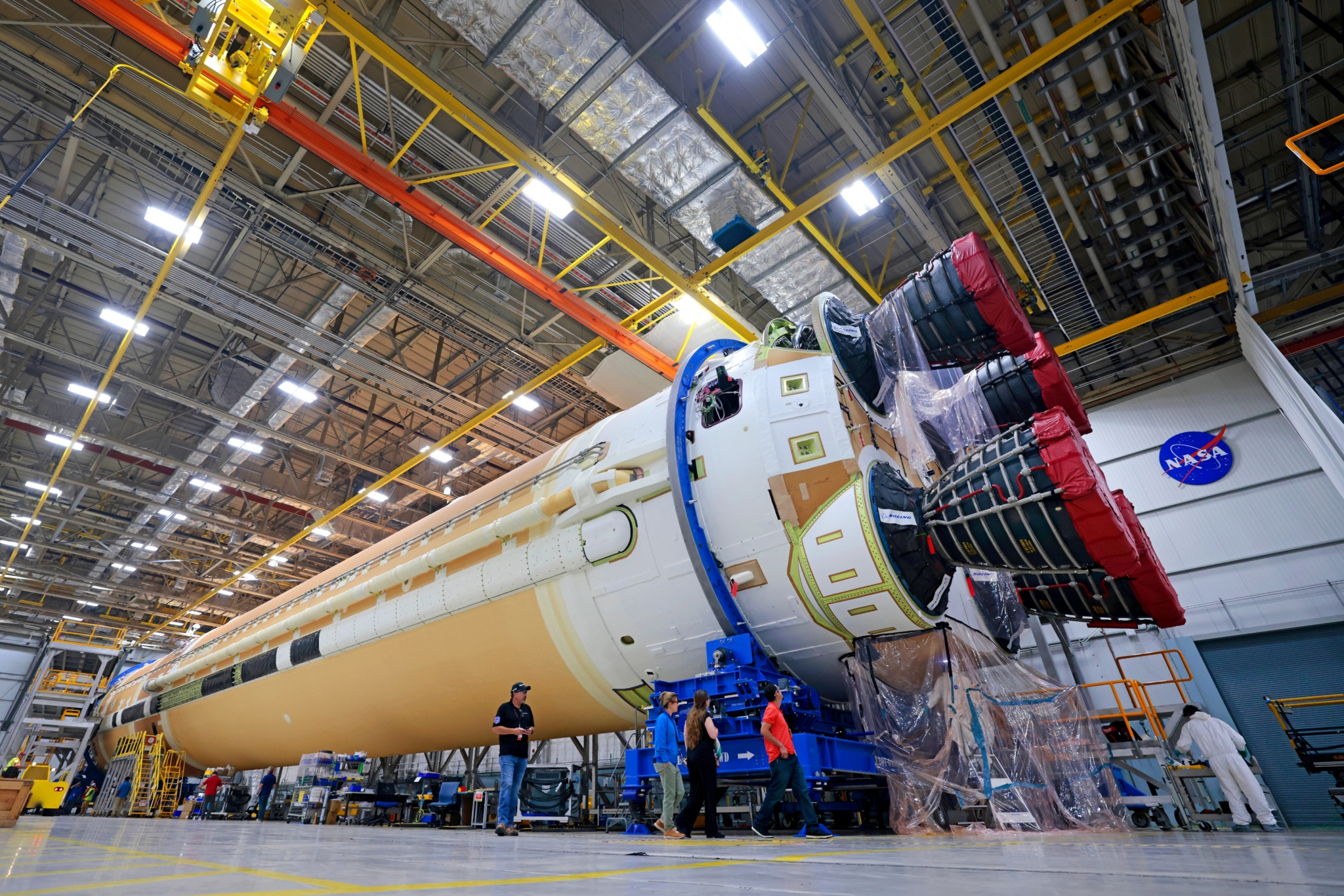 Photos courtesy of NASA
Four astronauts entered deep space on April 2, but they took thousands of American factory workers with them. The importance of the manufacturing supply chain that the Artemis II mission has energized is not lost on the Artemis II crew.
Artemis II Mission Specialist Christina Koch said in a press conference:
“The thing I love about the moon is that it’s not just a beacon for exploration and this platform of possibilities for incredible missions like this, but it has benefits. That’s actually why we’re racing towards it. Those benefits are really wide in nature. You have everything from innovation, technology development, not only for future missions going deeper into the solar system, but technologies as it comes back to Earth. You have inspiration. A whole generation of people starting this pipeline of STEM workers and manufacturers and operators that are excited to see what you can do when you work hard and come together as a team.”
As humanity stretches from Earth to the moon and then to Mars, America’s ever-growing galaxy of highly skilled manufacturers and workers will make each mission possible.
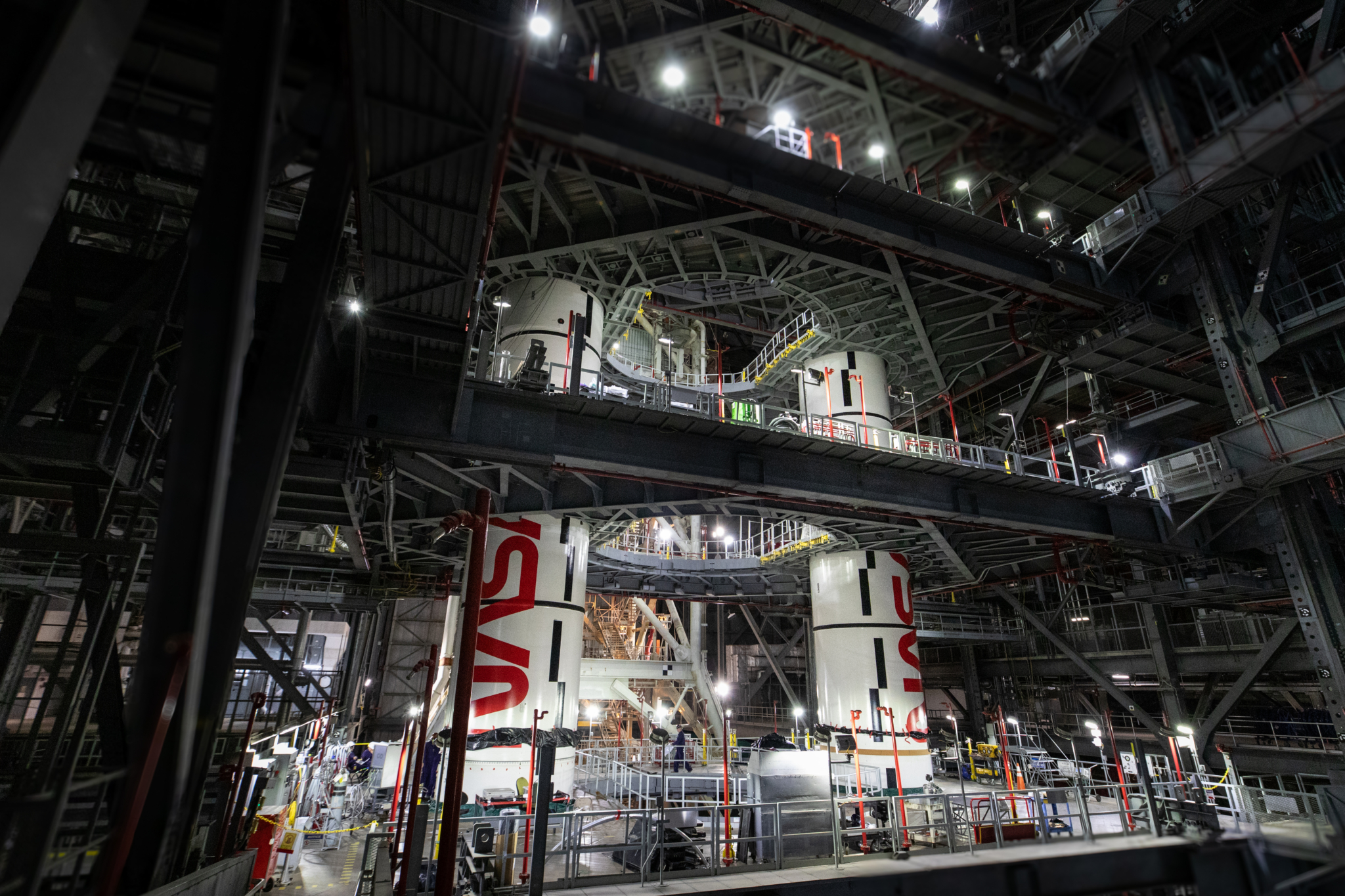
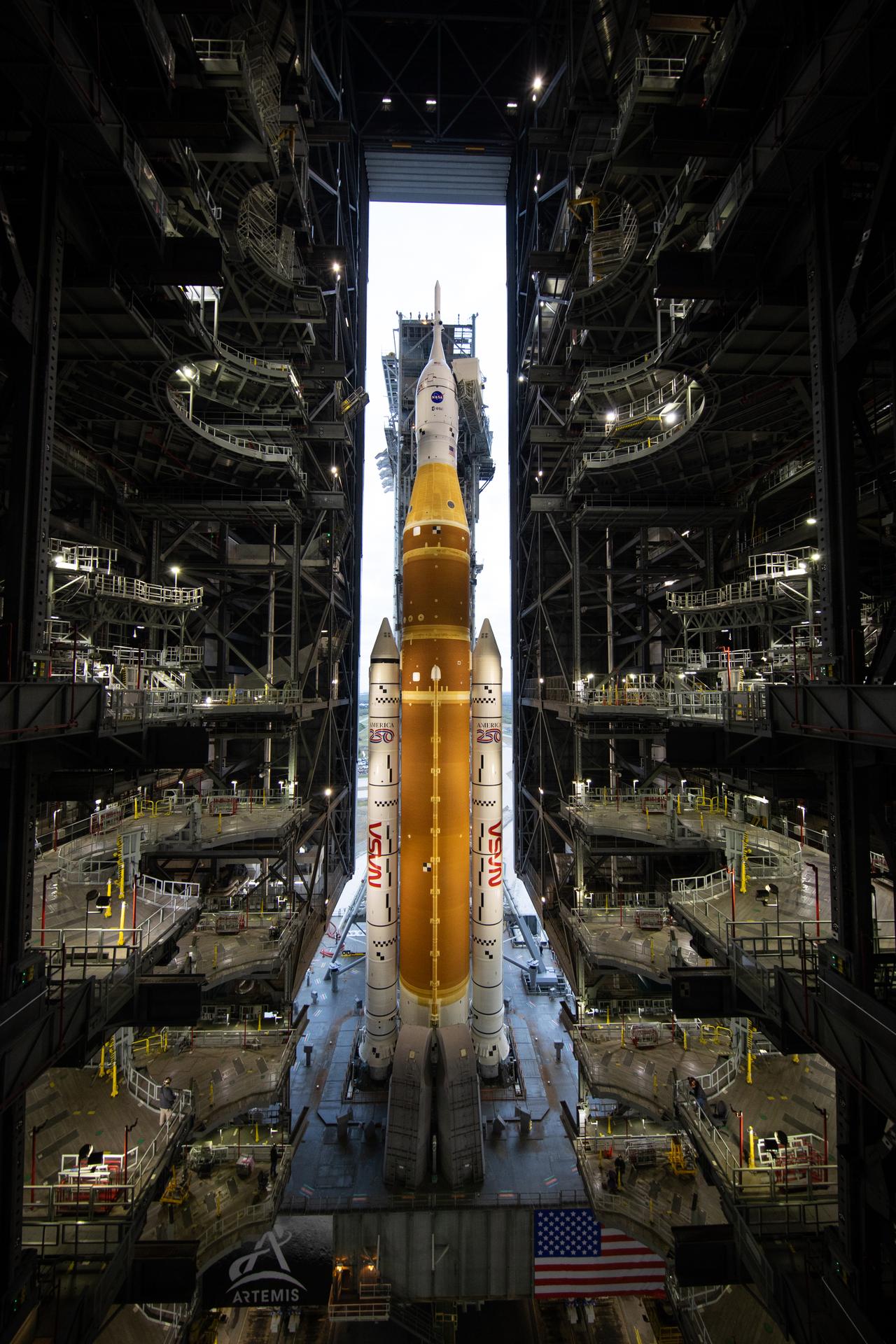
 Photos courtesy of NASA