
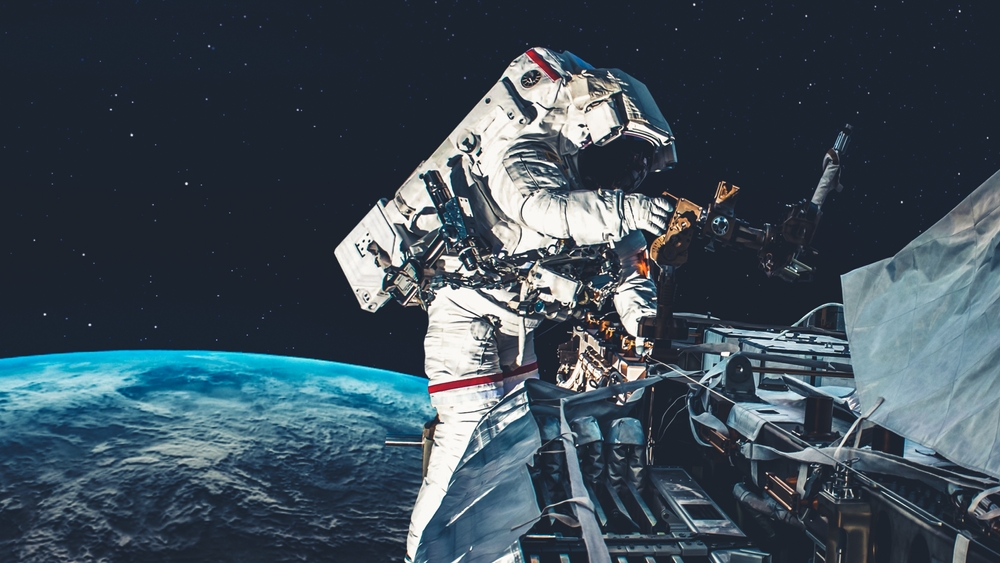
A new International Space Station (ISS) experiment aims to improve understanding of the risks of long-duration spaceflight ahead of future Moon missions.
British researchers are preparing to send microscopic worms into orbit in a compact laboratory designed to examine the effects of space on the human body, as international efforts to return astronauts to the Moon accelerate.
The experiment, developed by teams at the University of Exeter and the University of Leicester with backing from the UK Space Agency, will be launched today at 1:50 pm BST aboard a cargo spacecraft departing from Kennedy Space Center.
Once deployed, it will expose living organisms to the combined stresses of microgravity, radiation and vacuum – conditions that continue to challenge human spaceflight.
Space Minister Liz Lloyd highlighted the importance of the project: “It might sound surprising, but these tiny worms could play a big role in the future of human spaceflight.
“This remarkable mission – backed by government funding – shows the ingenuity and ambition of UK space science, using a small experiment to tackle one of the biggest challenges of long‑duration space travel: protecting human health.
“As we prepare for a new era of exploration, including future missions to the Moon, research like this will help astronauts stay healthy and return home safely. It’s a great example of how we’re driving innovation to grow the economy and keep the UK at the forefront of future technologies.”
A biological testbed in orbit
At the centre of the mission is a shoebox-sized device known as the “Petri Pod,” engineered to function as a self-contained life sciences platform.
The unit houses multiple sealed chambers containing Caenorhabditis elegans, a millimetre-long nematode worm widely used in biomedical research due to its genetic similarities to humans.
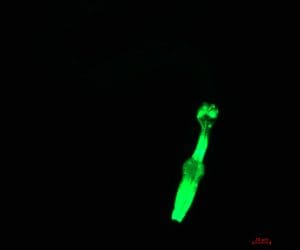
Scientists will remotely monitor the organisms from Earth, tracking physiological changes through imaging systems that combine fluorescent markers and standard optical techniques.
The system will also record environmental variables such as temperature, pressure and radiation exposure throughout the mission.
Initially stored inside the ISS, the device will later be positioned externally using a robotic arm. This placement allows the experiment to experience the full intensity of the space environment for up to 15 weeks.
Addressing the risks of long-duration space missions
The study is designed to contribute to a growing body of research into the effects of space travel on living systems, particularly as space agencies plan extended missions beyond low Earth orbit.
Microgravity is known to trigger muscle atrophy, bone density loss and fluid redistribution in astronauts, while prolonged exposure to cosmic radiation raises the risk of DNA damage and cancer.
Vision impairment and cardiovascular changes have also been documented during long stays in orbit.
By observing how simple organisms respond at a cellular and molecular level, researchers hope to identify biological pathways affected by these stressors.
Such insights could inform countermeasures to protect astronaut health during missions to the Moon and, eventually, Mars.
Supporting future lunar ambitions
The timing of the experiment aligns with renewed international momentum in lunar exploration.
The recent crewed Artemis II mission underscored the need to better understand how extended time in space alters human biology, particularly as agencies consider establishing a sustained presence on the Moon.
Long-duration space missions will require astronauts to remain healthy not only during transit but also while living and working in reduced gravity environments for extended periods. Data from compact, cost-efficient experiments like this could help shape those strategies.
Miniaturisation and cost efficiency
Beyond its scientific objectives, the project demonstrates a shift toward smaller, more economical space-based research platforms.
The Petri Pod integrates life-support conditions, such as controlled air volume, temperature regulation and nutrient delivery, within a highly compact structure.
This approach enables complex biological studies to be conducted without the need for large-scale infrastructure, potentially lowering barriers to future experiments in orbit.
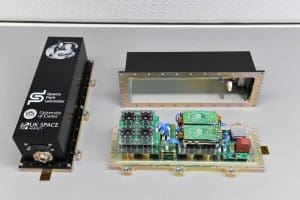 Petri-Pod
Dr Tim Etheridge, from the University of Exeter, added: “NASA’s Artemis programme marks a new era of human exploration, with astronauts set to live and work on the Moon for extended periods for the first time.
“To do that safely, we need to understand how the body responds to the extreme conditions of deep space.
“By studying how these worms survive and adapt in space, we can begin to identify the biological mechanisms that will ultimately help protect astronauts during long-duration missions, and bring us one step closer to humans living on the Moon.”
Data expected to inform future human spaceflight
Researchers involved in the mission expect the first datasets and images to be transmitted back to Earth shortly after deployment. If successful, the platform could be adapted for more advanced biological investigations in space.
As human spaceflight moves toward longer and more distant missions, experiments of this kind are increasingly central to understanding and mitigating the effects of space on the human body.