
We will get a view of a rare comet called as C/2025 R3 (PANSTARRS) and the Lyrid meteor shower this month.
But that isn’t the only cool event to look for in the skies over New England. This is the season to view the Milky Way.
And you won’t need any fancy telescopes or binoculars to see it.
Just look up.
The best time to see the Milky Way is generally from March to September in Massachusetts, according to Capture the Atlas.
Here’s how to see the Milky Way this spring.
When is peak viewing for the Milky Way?
Though the Milky Way is generally always visible from Earth, certain times of year are better for stargazers to catch a glimpse of the band of billions of stars.
The center of the Milky Way, which is referred to as “the core,” is best visible beginning in June across the Northern Hemisphere, when it’s “visible as a faint band of hazy light arching across the sky all night, according to NASA scientist Preston Dyches.
What time of night is the Milky Way visible?
The Milky Way is generally visible from sunset to sunrise, or when it’s darkest outside, according to Capture the Atlas.
Typically, the sky is darkest from about midnight to 5 a.m. You can check sunrise and sunset times at your location using the website Time and Date.
New moon phase ideal for Milky Way viewing
While the moon can help illuminate the landscape, too much light coming from Earth’s natural satellite will drastically reduce the Milky Way’s visibility, according to Capture the Atlas.
Why is it called the Milky Way?
The Milky Way got its name because from our perspective on Earth, it appears as a faint, milky band of light stretching across the sky.
A new moon phase will begin Wednesday, March 18 – meaning a few days before then and into late March, there will be far less celestial light for the Milky Way to contend with in order to make itself widely visible.
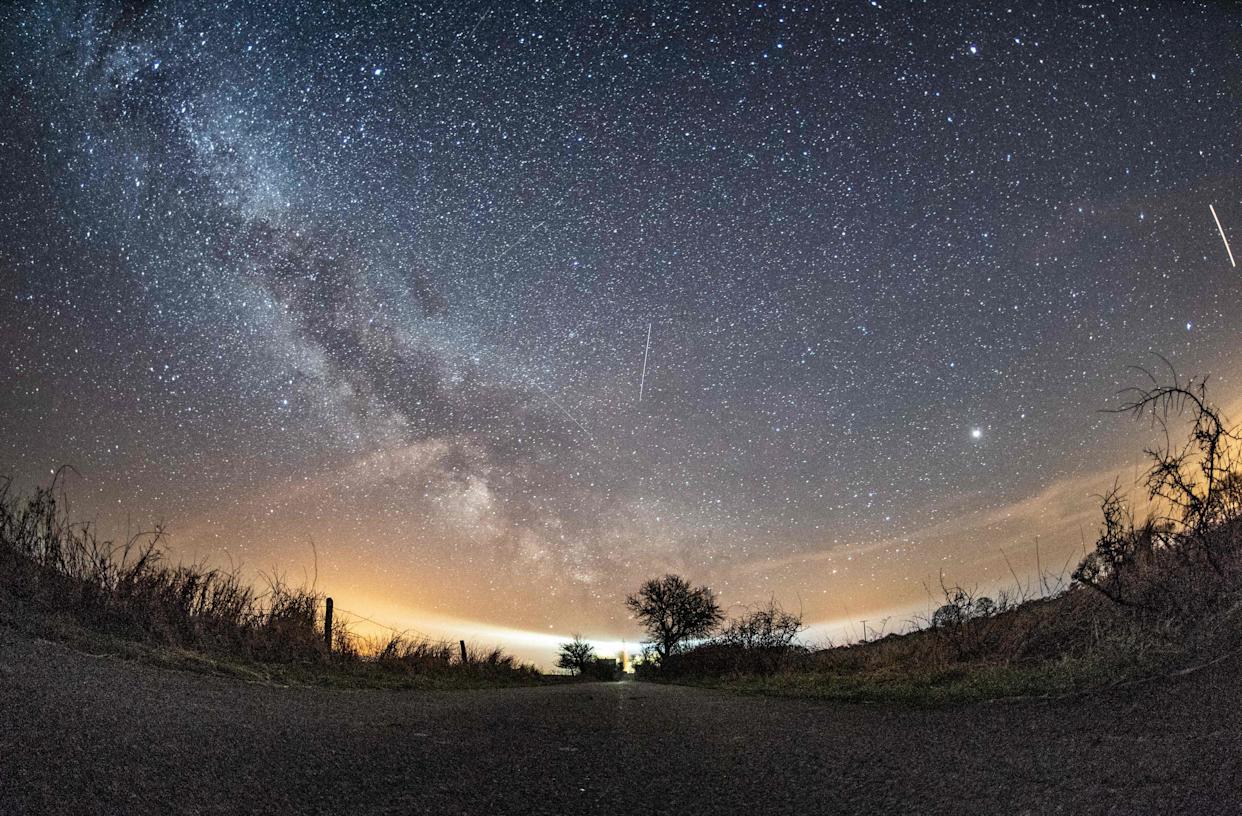
A skyward shot of the Milky Way, which stargazers will be able to see well in the coming months.
Tips for seeing the Milky Way
Stargazers can observe the Milky Way by looking for the Summer Triangle, a shape formed by three bright stars that spans across the Milky Way, according to science news website, Live Science.
In the Northern Hemisphere, the Milky Way rises in the southeast, travels across the southern sky and sets in the southwest, according to Weather.com.
This article originally appeared on wickedlocal.com: Look up at night to see the Milky Way. Here’s the best time to see it