
Back to Article List
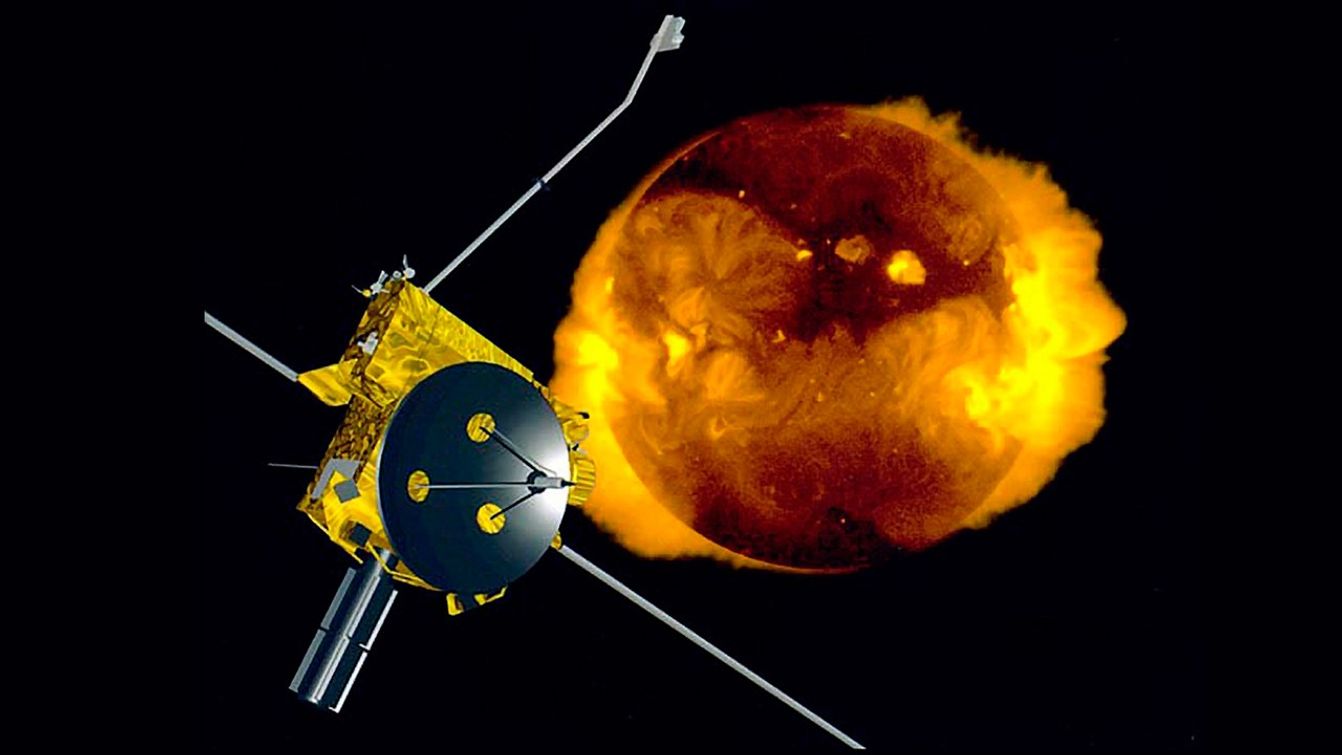
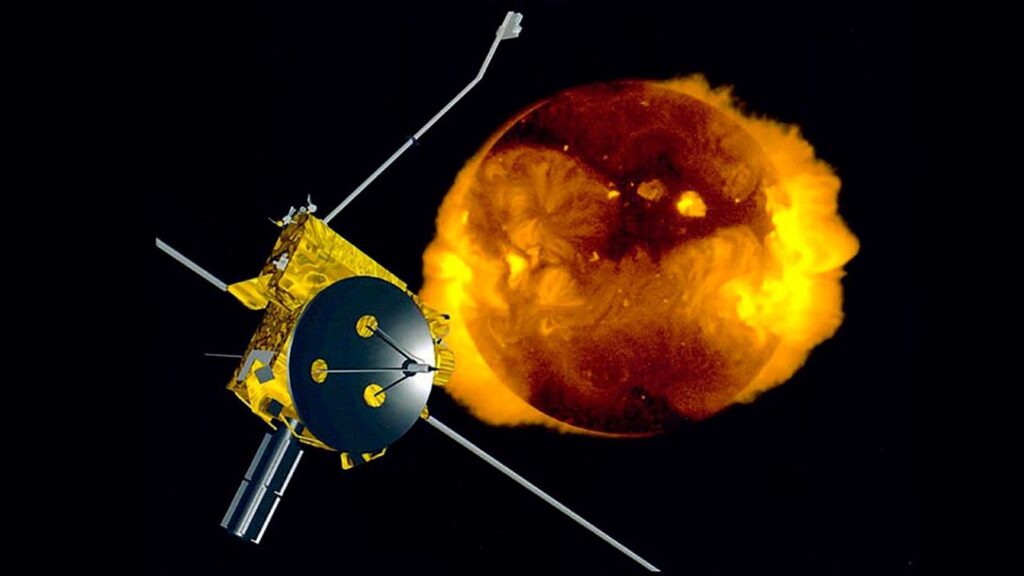
This artist’s impression shows Ulysses near the Sun, its mission focus. The probe’s encounter with Comet Hyakutake was pure happenstance. Credit: ESA/NASA
On April 6, 2000, the European Space Agency announced that its Ulysses spacecraft, which observed the Sun and returned data on its magnetic fields, solar winds, and cosmic rays, had inadvertently flown through the tail of Comet Hyakutake. The probe was millions of miles from Hyakutake’s visible head, making the encounter a complete surprise, a happy accident, and a revelation of the true scale of comets’ tails. Hyakutake would hold the record for the longest comet tail – estimated at over 300 million miles (over 500 million kilometers) – until 2020, when data from Cassini revealed that Comet 153P/Ikeya-Zhang had a tail over 600 million miles (over 1 billion km) long.