
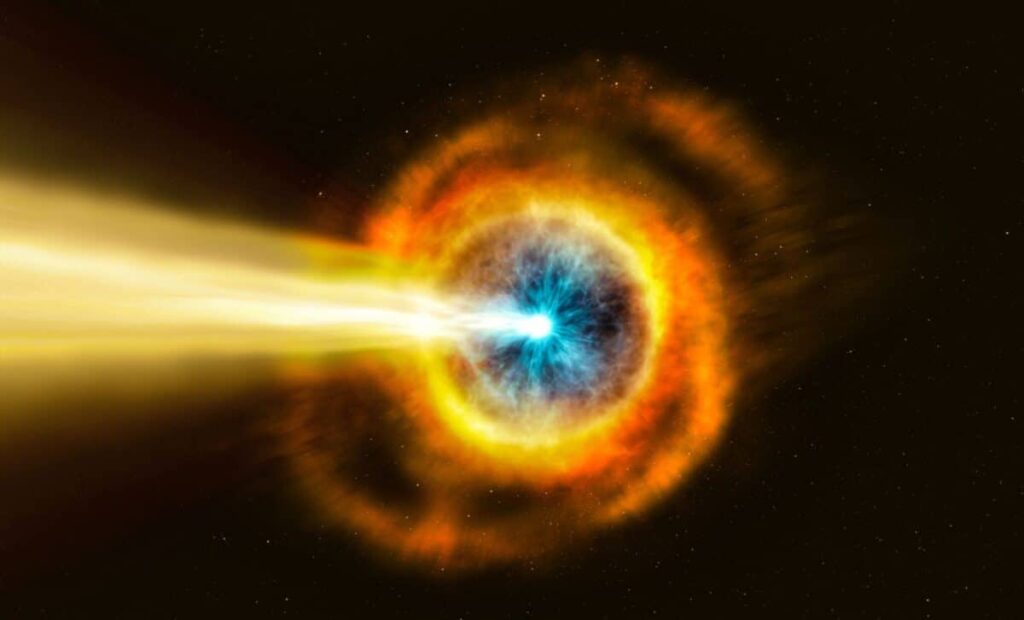
Astronomers believe they may have observed a “dirty fireball” star explosion for the first time. This potential discovery was made through the detection of a powerful X-ray flash by the Einstein Probe telescope.
Stars much bigger than our Sun don’t live forever. When they run out of fuel, they collapse in on themselves, often causing dramatic explosions. These supernova-like events can lead to the formation of black holes, which then emit powerful radiation, sometimes in the form of gamma-ray bursts. But there’s another type of explosion that may have finally been seen. It’s called the “dirty fireball,” and it could provide answers to long-standing questions about stellar death.
What Is a ‘Dirty Fireball’ Explosion?
A “dirty fireball” is a type of explosion that occurs when a massive star collapses and forms a black hole, sending a burst of radiation through the star’s outer layers. Unlike the cleaner, more focused radiation in gamma-ray bursts, dirty fireballs are theorized to involve a more disordered release of energy, with a significant presence of heavy elements.
“It’s a very exciting prospect,” said Rhaana Starling of the University of Leicester. “[Dirty fireballs] have been theorised to exist since the 90s, but there hasn’t really been any compelling evidence for them.”
While gamma-ray bursts have been observed numerous times, a dirty fireball explosion has remained a theoretical concept since it was first proposed more than 30 years ago. The recent X-ray flash, called EP241113a, detected by the Einstein Probe aligns with predictions made by scientists about how such an explosion would appear.
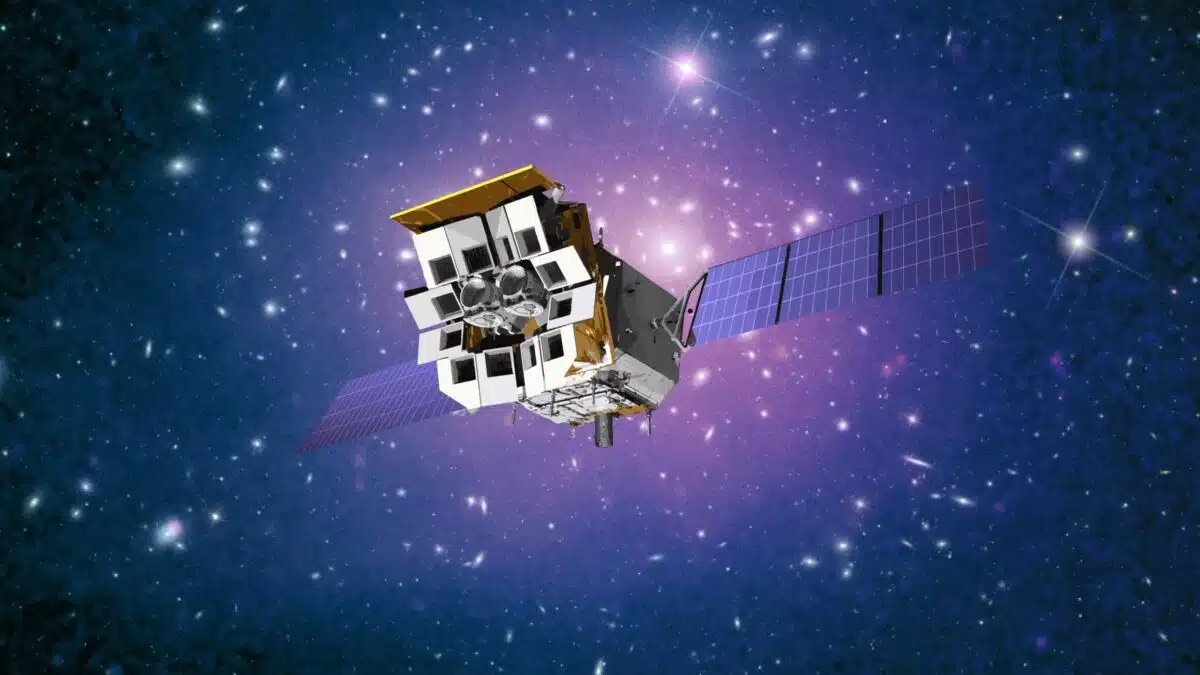 The Einstein Probe telescope, exploring the cosmos to uncover high-energy phenomena. Credit: Chinese Academy of Sciences
A New Era in High-Energy Space Discovery
The Einstein Probe telescope, is designed to detect high-energy events in the universe. When it spotted a powerful X-ray flash, scientists took notice. The prepint publication arXiv explained that this flash had characteristics that aligned with the dirty fireball explosion theory, leading many astronomers to believe they may have finally observed the phenomenon.
According to New Scientist, the flash observed had unusual features, including its intensity and the pattern of radiation, which matched what scientists expected from a dirty fireball. This gives researchers more confidence in the idea that what they’ve seen is indeed the long-theorized explosion.
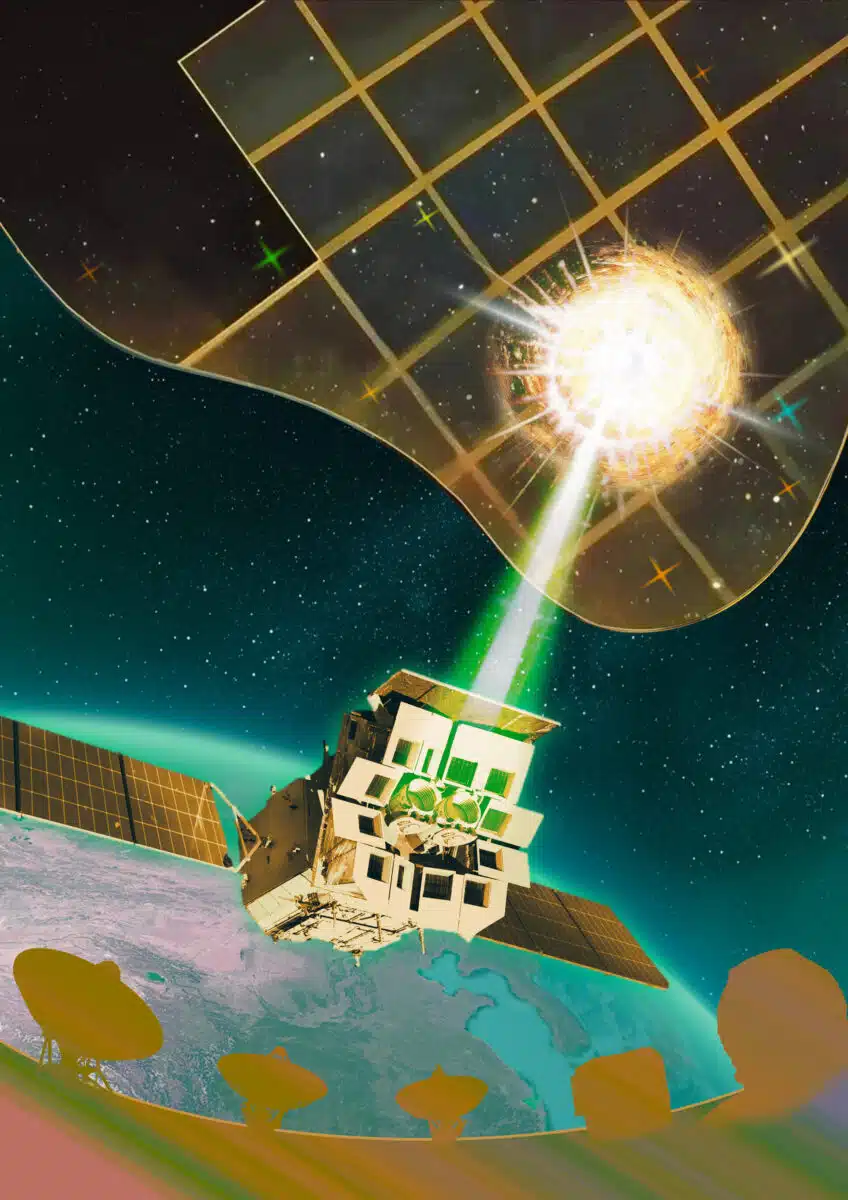 The Einstein Probe telescope capturing an intense burst of energy from deep space. Credit: ESA
A Pivotal Discovery in Astrophysics
If confirmed, this dirty fireball explosion could give scientists new insights into how stars die and how black holes form.
When a massive star collapses, it can either create a supernova or become a black hole, and the process can be chaotic and violent. The X-ray flash could provide clues about the heavy elements released during this process.
“If it’s a black hole, then we are able to then get a more complete picture of black hole formation across the universe,” noted Starling.
The discovery would also help scientists study the role of radiation and heavy elements in the universe’s most extreme events. If we observe more of these explosions, it could help explain how our universe is truly structured.