
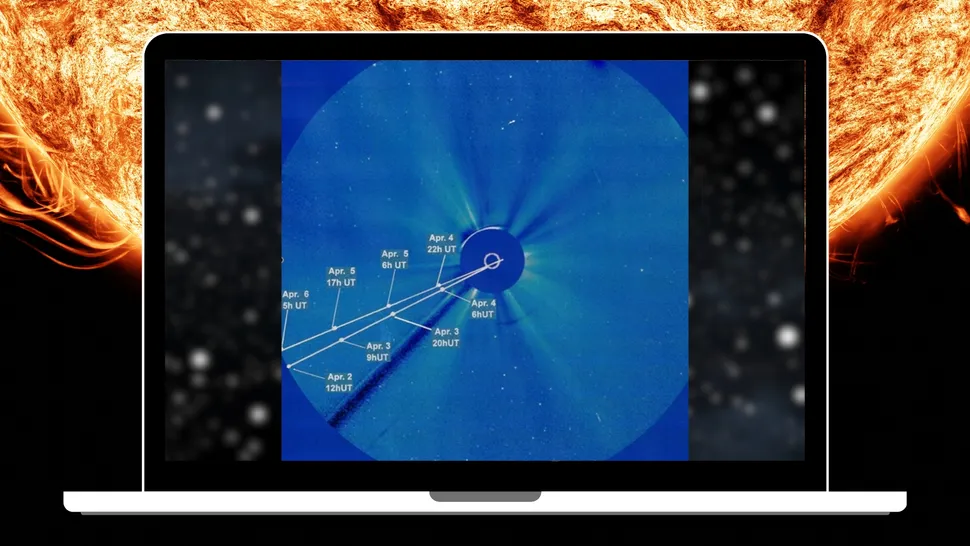
On April 4, сomet C/2026 A1 (MAPS) reaches its perihelion. It belongs to the Kreutz meteor shower and will therefore pass very close to our sun. The SOHO solar observatory will be able to determine whether it breaks up in the process.
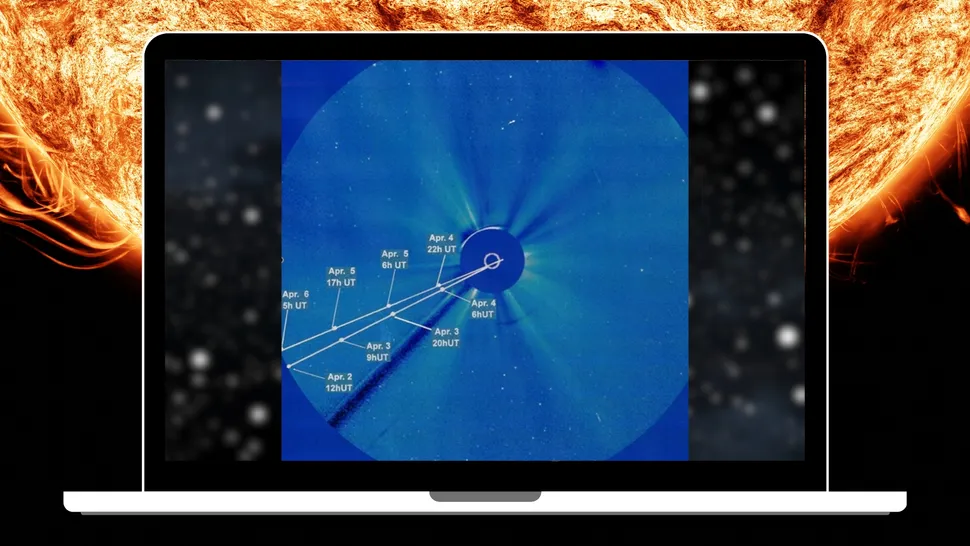 Comet C/2026 A1 (MAPS). Source: www.space.com
Comet C/2026 A1 (MAPS)
In the coming days, astronomers and all sky enthusiasts will have the chance to witness a fascinating phenomenon—the disintegration of a comet. However, to do this, they need access to images from the SOHO solar observatory.
Comet C/2026 A1 (MAPS) was discovered back in January. It has remained barely visible in the sky so far, but telescopes have been monitoring it. Thanks to this, we know that on April 4 it will pass through perihelion—that is, the point in its orbit closest to the Sun.
However, one special feature of C/2026 A1 is that it belongs to the so-called “sungrazers.” Its distance from the Sun at perihelion will be only 161,000 km, which is significantly less than the distance from Earth to the Moon. And, like many members of the Kreutz family to which it belongs, this “tailed star” may not survive such trials.
SOHO Observatory
In any case, C/2026 A1 is already showing increased activity. Whether it will break apart or not will be visible in the images from the SOHO solar observatory. It entered the field of view of its coronagraph, the instrument used to observe the Sun’s atmosphere, 8:00 a.m. EDT (1200 GMT) on April 2.
All images of C/2026 A1 taken by the SOHO observatory will be available there. If the comet breaks apart as it passes by on April 4, this will become apparent immediately after a four-hour period, until it is no longer visible behind the Sun. Although it’s also possible that this will happen before the comet gets close to it.
According to phys.org