
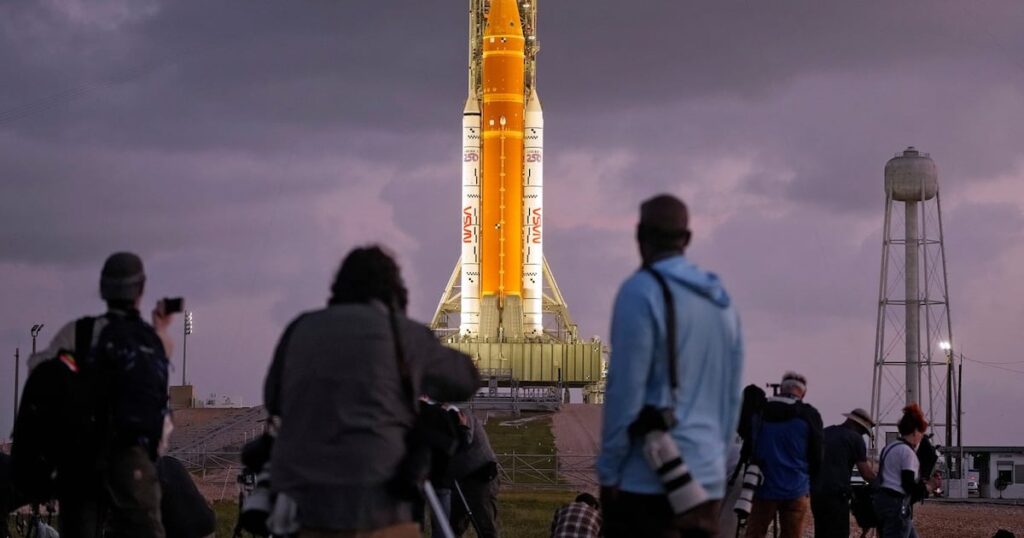
Mike Greenley, CEO of MDA Space, joins BNN Bloomberg to discuss MDA and NASA’s Artemis II launch.
NASA’s Artemis II launch is a historic day for humanity, which will see humans journey toward the moon for the first time in 50 years.
But it is also a landmark moment for Canada, which is providing critical technology for the program.
“It’s really the opening of a new phase,” for the Canadian economy, says Mike Greenley, CEO of MDA Space.
His company is currently building Canadarm3, an AI robotic arm, under a $1 billion contract from the Canadian Space Agency (CSA) to help with Artemis program. It is expected to launch no earlier than 2029.
By contributing the Canadarm3 robotic system to the project, Canada secured opportunities for lunar science, technology demonstrations, and two astronaut flights, according to the CSA.
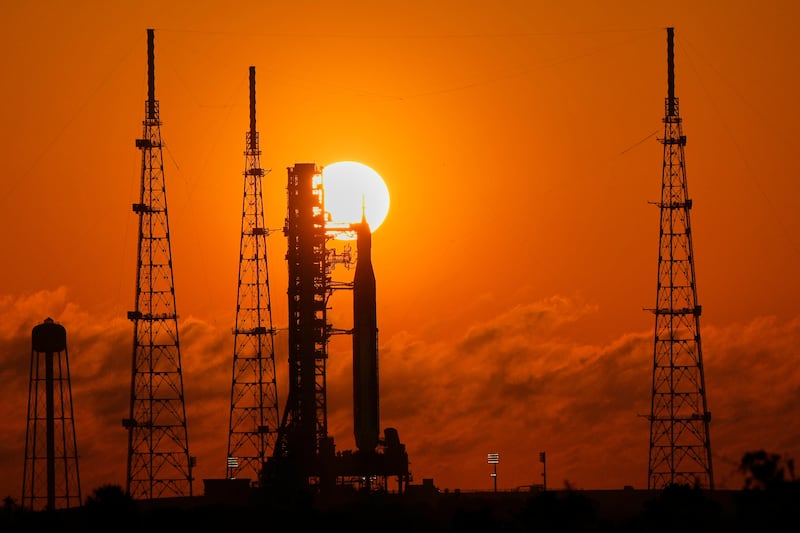 NASA Artemis Moonshot NASA’s Space Launch System rocket with the Orion spacecraft set for the Artemis 2 mission is seen on Launch Complex 39B at sunrise at the Kennedy Space Center, Tuesday, March 24, 2026, in Cape Canaveral, Fla. (AP Photo/John Raoux)
This makes it an important step in “opening up the return to the moon,” and “the establishment of living and working on the moon,” Greenley said from Florida, ahead of the space launch at the Kennedy Space Center Wednesday evening.
NASA says the goal of the nearly 10-day mission is to serve as the first crewed test flight for deep-space exploration systems. The Artemis II is expected to take humans farther away from Earth than any of its previous missions.
The four-person crew includes Canadian astronaut Jeremy Hansen. Astronaut Jenni Gibbons was appointed as the official backup, to secure a Canadian seat in case Hansen cannot go.
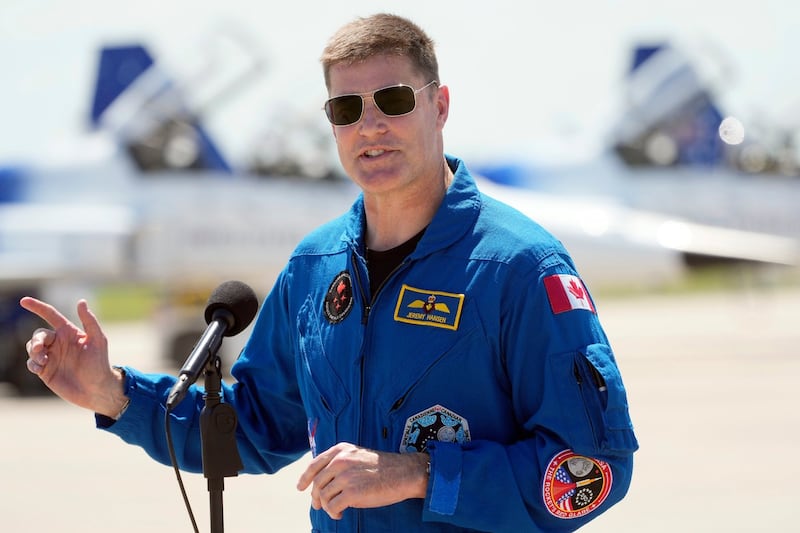 Artemis 2 crew member Mission Specialist Jeremy Hansen, of Canada, speaks to the media after the crew’s arrival at the Kennedy Space Center Friday, March 27, 2026, in Cape Canaveral, Fla. (AP Photo/Chris O’Meara) Artemis 2 crew member Mission Specialist Jeremy Hansen, of Canada, speaks to the media after the crew’s arrival at the Kennedy Space Center Friday, March 27, 2026, in Cape Canaveral, Fla. (AP Photo/Chris O’Meara)
“With this group going out around the moon today, and then the next group in 2028 there’ll be two landings on the moon, with humans starting to set up living and working there,” said Greenley.
MDA Space has received significant funding for several other projects that include the $250 million extension for ISS robotics operations, and the $44.7 million initial award for the RADARSAT+ Earth observation mission.
Canada Arm review
Canada contributed to previous space missions by providing the Canadarm1 and Canadarm2 which were used on the space shuttle and international space station.
Plans for the Canadarm3 have gone through a little hiccup. While the development of the robotic arm itself is continuing, its primary planned usage has been disrupted after NASA shifted its strategy for the current Artemis II mission.
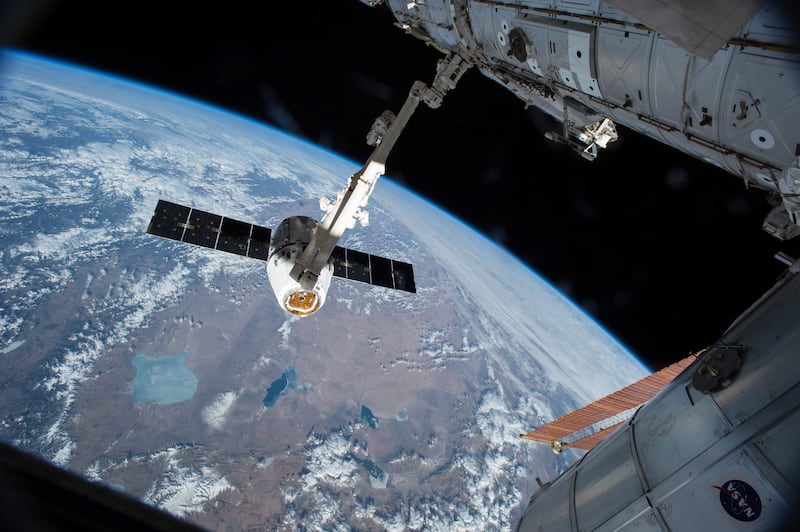 Artemis II launch FILE: The Canadarm 2 reaches out to capture the SpaceX Dragon cargo spacecraft and prepare it to be pulled into its port on the International Space Station. THE CANADIAN PRESS/AP/NASA
Greenley says his company is reviewing how it can adapt the technology developed for the space station, directly on the lunar surface, which he says is “definitely an achievable adaptation for Canada.”
“There’ll be a number of robotic needs on the lunar surface to be able to unload, manage cargo, do daily tasks, and so we’re looking at that at the moment,” said Greenley.
“Those robotic systems have been built for that and designed for that environment, in addition to dealing with things like lunar dust, for example. And so a lot of the characteristics are the same.”
Greenley said MDA Space already has technology on rovers on Mars for the last 15 years. His company is currently designing a new rover system for the European Space Agency’s mission to detect evidence of life on Mars.
The biggest change from moving from the space station down to the surface would be the impact of gravity, which would have to be managed by changing the arm’s joint strength and length for different purposes
Mars is the goal
Greenley says all the activities on the lunar surface are in preparation to be able to live and work on Mars someday.
He says going back and forth from the moon allows human beings to figure out the logistics of building a habitat elsewhere, which includes finding sustainable food sources, creating fuel, and having a base on the moon.
A whole series of technological achievements will be part of the Artemis missions, in addition to many human science achievements,” said Greenley, adding that the teams have studied human performance on the International Space Station for the last 25 years, which is being put to use.
“So the lunar program is important for the moon itself, but it’s also important to sort out all of those issues so that we can go even further away to Mars in future years,” said Greenley.