
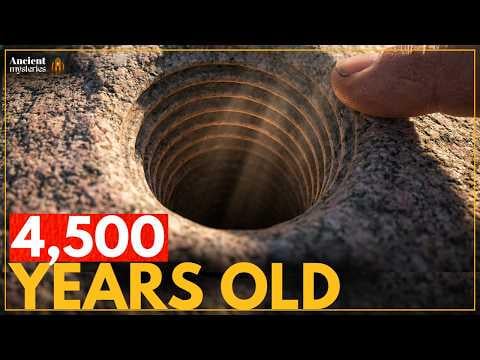
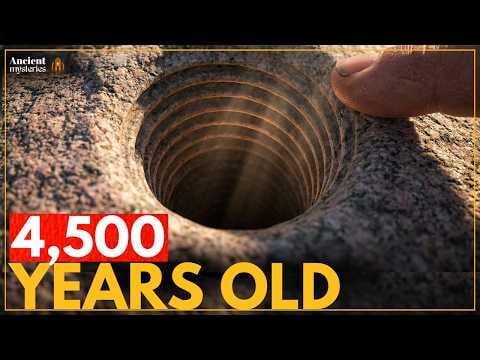
In 1995, engineer Chris Dunn examined ancient Egyptian core drill holes at Giza and measured the spiral grooves left inside. The tool cut through solid granite at a feed rate of 0.1mm per revolution, roughly 500 times faster than what modern diamond-tipped drills achieve on the same material without massive downward force.
The holes are perfectly cylindrical. The grooves are evenly spaced. And the drill cut through quartz and feldspar at the same rate, which shouldn't be possible with abrasive-based methods since those minerals have very different hardness levels.
Mainstream explanation is copper tubes with sand abrasive, but Denys Stocks' replication experiments produced irregular holes with uneven surfaces, nothing close to what's found at Giza. Petrie noted the same anomaly back in 1883.
Short video covering the evidence: https://youtu.be/gBcaNsAkY9U
by AwakenedEpochs
2 Comments
Actual experimental archaeology has reproduced these jokes using the “official techniques”. It takes a long time but the Egyptian civilization lasted over 3000 years so they had a lot of time.
Nothing to see here
What you’re describing are just engineering problems. The people that did this were master craftsmen at the top of the game spending literally years at it, studying under other artisans and masters from generation before. You say they couldn’t do it without a big weight on top? So they probably used a big weight on top.
Just because someone can’t replicate it with ten minutes of effort doesn’t mean it can’t be done, and in fact says more about us than anything else.