
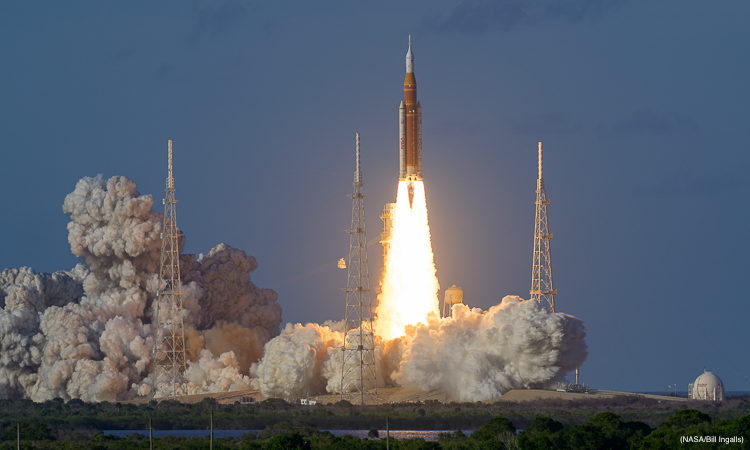
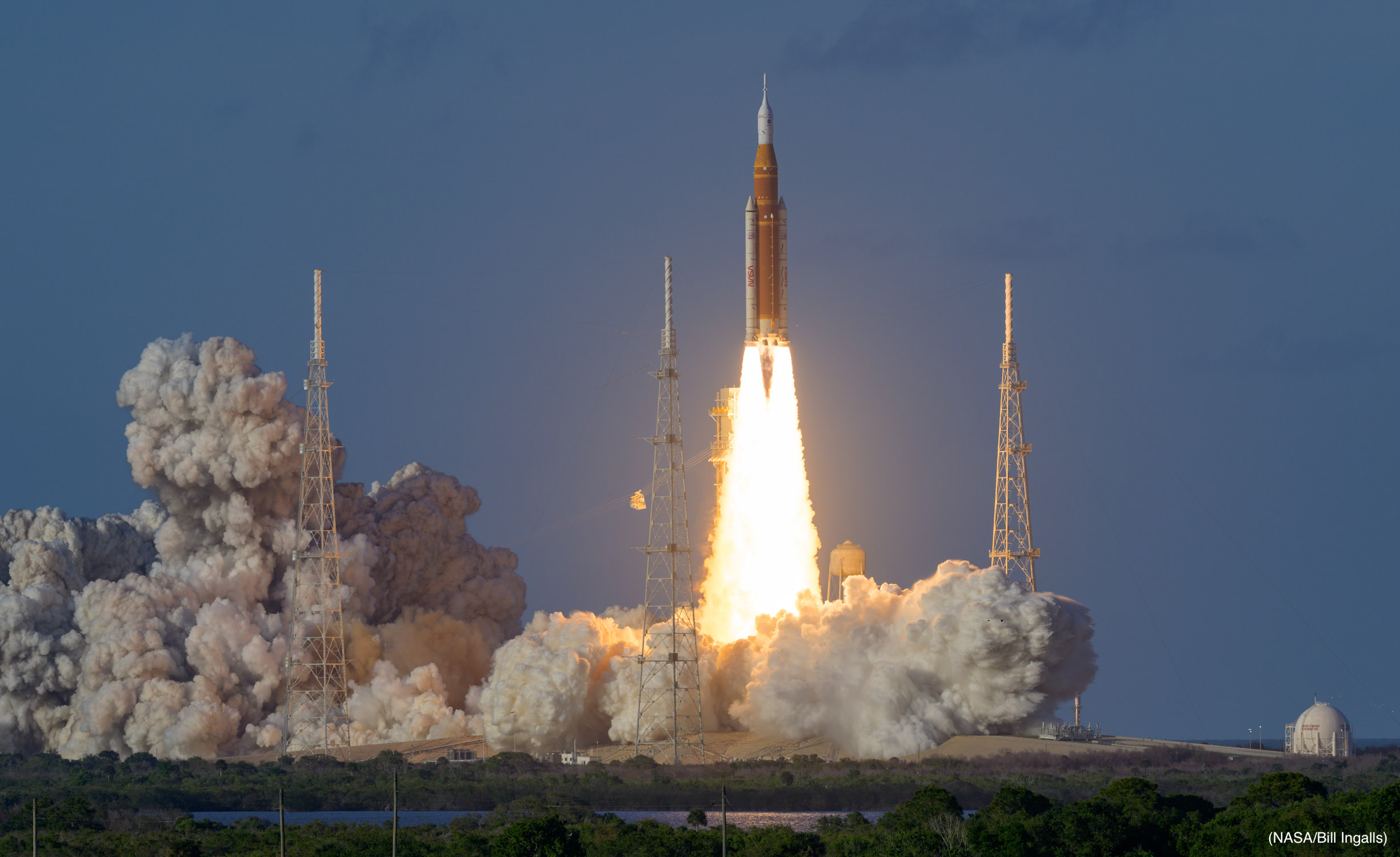
 NASA launches the Artemis II mission April 1 from the Kennedy Space Center in Florida. (NASA/Bill Ingalls)
NASA launched its Artemis II mission April 1, sending astronauts to fly around the moon on the first crewed lunar mission since the famed Apollo program ended more than 50 years ago.
“We have a beautiful moonrise and we’re headed right at it,” Commander Reid Wiseman said from the Orion spacecraft after takeoff.
Launched from the Kennedy Space Center in Florida, the 10-day Artemis II mission will carry the crew of NASA’s Wiseman, Victor Glover and Christina Koch, along with the Canadian Space Agency’s Jeremy Hansen, farther from Earth than any human has ever gone.
The mission tests systems including Orion and the Space Launch System (SLS) rocket for future missions. NASA plans to return astronauts to the moon’s surface in 2028. The U.S. space agency previously tested Orion and the SLS rocket on an uncrewed mission in November 2022.
“The first crewed Artemis flight marks a key step toward long‑term return to the moon and future missions to Mars,” NASA says of Artemis II.
Along for the ride are 5,647,889 names of people from around the world who answered NASA’s call to join the mission. The names are on a memory card zipped inside a small floating doll nicknamed Rise that serves as an indicator of zero gravity.
The Artemis II crew will spend two days in Earth’s orbit, testing systems for travel and life in space before heading to the moon. During the mission the crew will practice manually piloting Orion and conduct various other tests. Astronauts will test Orion’s environmental control and communications systems and monitor their own sleep and exercise.
The journey to the far side of the moon offers opportunities to take high-resolution, geological imagery of the lunar surface to support future landings and eventually a long-term human presence on the moon.
The mission is expected to travel 400,171 kilometers (248,655 miles) from Earth, breaking the previous record. Artemis II will rely on gravity from the moon and Earth to propel Orion on a “free return” home, with the spaceship entering the atmosphere traveling 40,000 kilometers (25,000 miles) per hour.
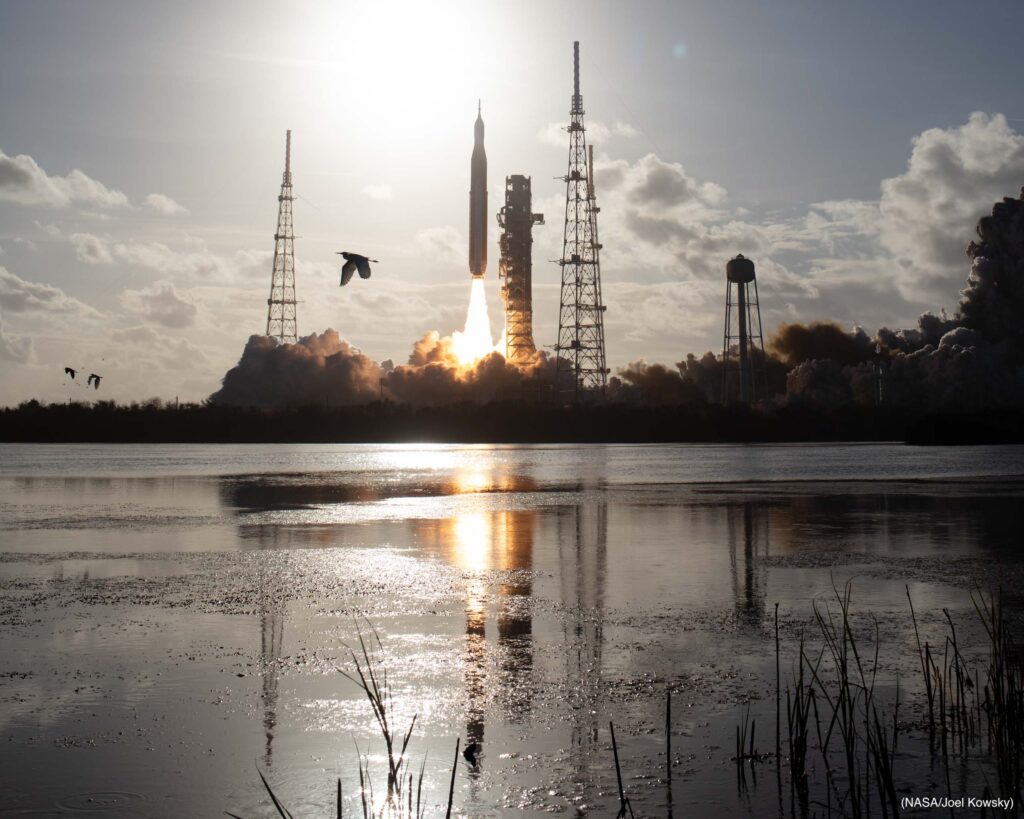 NASA’s Orion spaceship launches from Florida for a 10-day journey that will carry astronauts around the moon. (NASA/Joel Kowsky)