
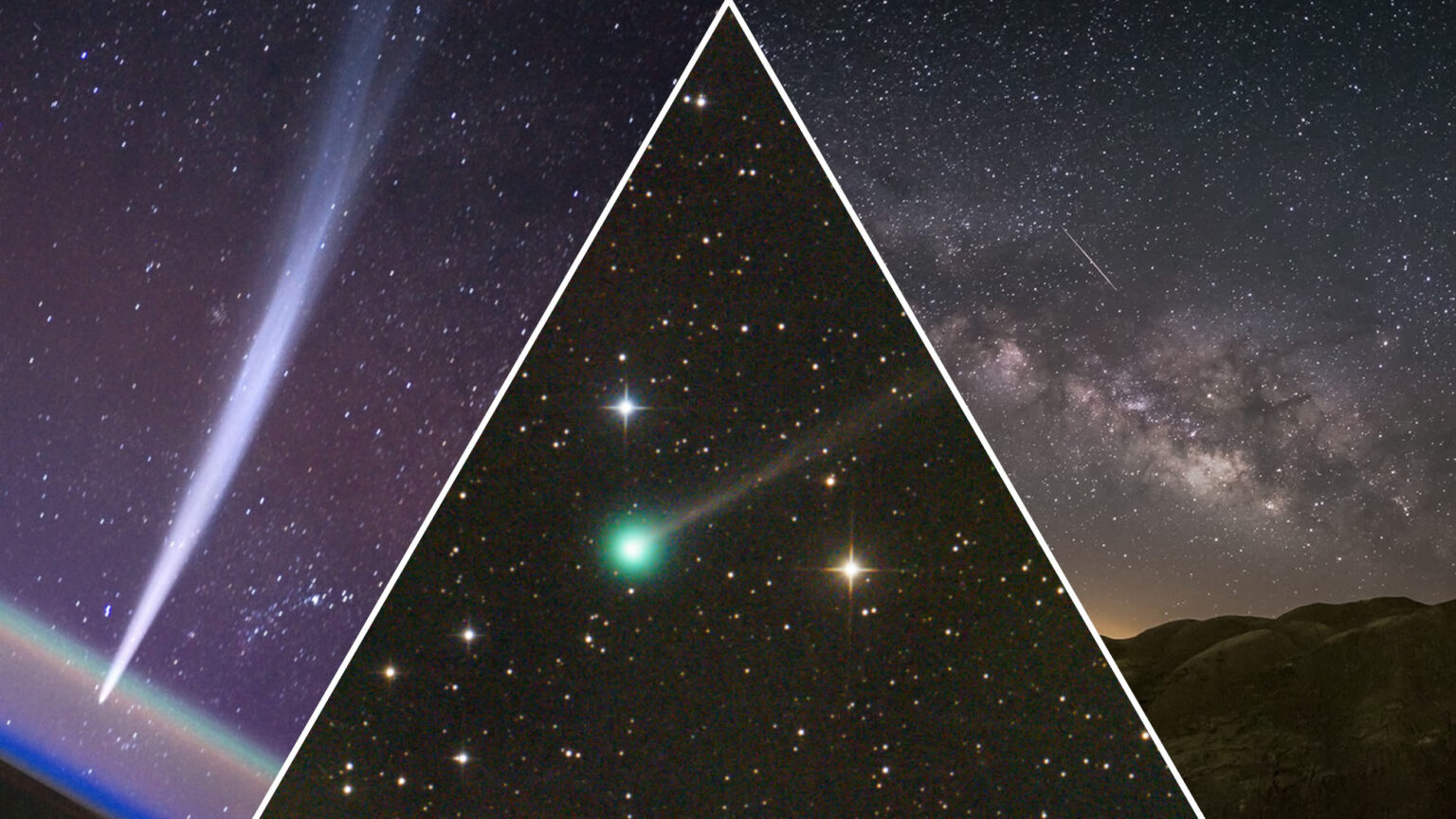
First, a sungrazer comet named C/2026 A1 (MAPS) will be flying very close to the Sun on April 4. Given its extremely close pass through the solar corona, this massive chunk of space ice might simply vapourize in the extreme heat. If it survives, though, it might become extremely bright.
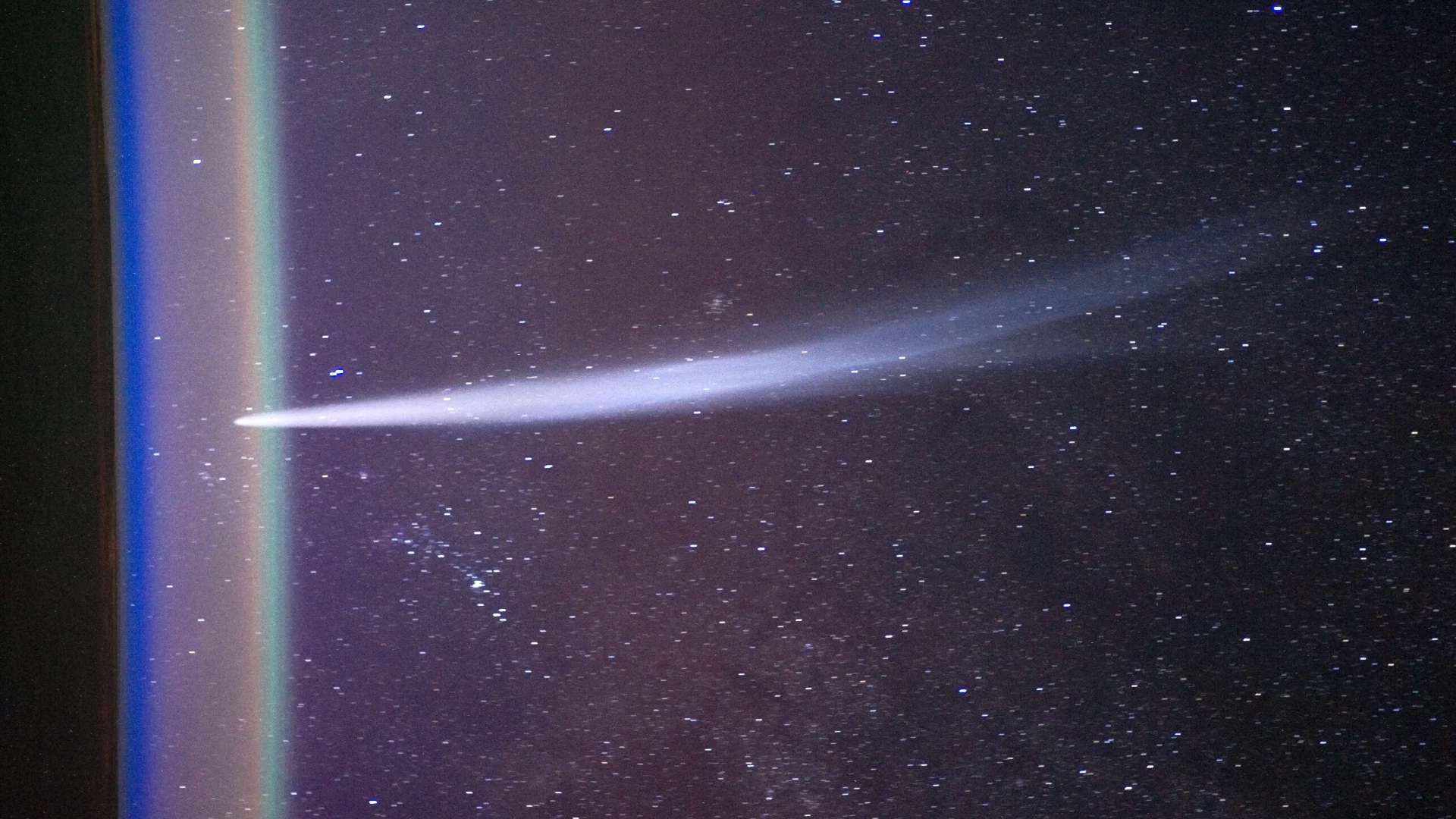
Comet Lovejoy, the last Great Comet, was captured in this photograph by NASA astronaut Dan Burbank, onboard the International Space Station on Dec. 22, 2011. (NASA)
According to the Comet Observation Database (COBS), comet MAPS is somewhere between magnitude 7 and 8 as of the end of March. That’s bright enough to see with binoculars or a telescope, if you’re in the southern hemisphere.
If it doesn’t fizzle in the days ahead, by the time it emerges from its closest pass around the Sun, on April 5, it could be bright enough to even see during the day (provided you know where to look).
In this case, it will likely be easily spotted during twilight and early evening as of that date, where it can be found low on the western horizon, around and after sunset.
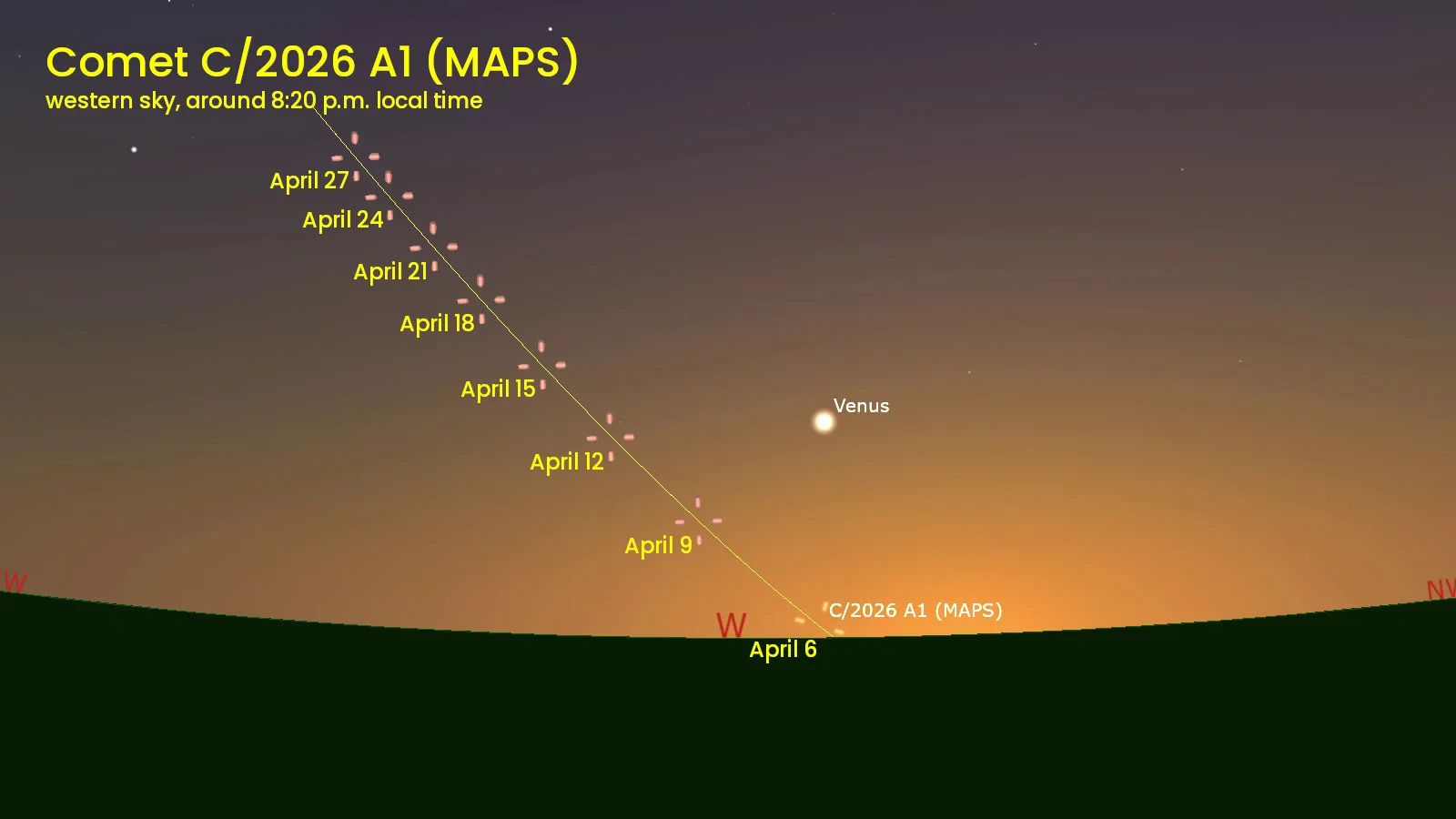
The location of Comet MAPS in the western sky at twilight, starting April 6, 2026. (Stellarium)
If it survives and for some reason does not become the next Great Comet, it can still be found in the western sky after sunset. Look later in the evening, after the Sun has completely set. Using binoculars or a telescope will help in locating it.
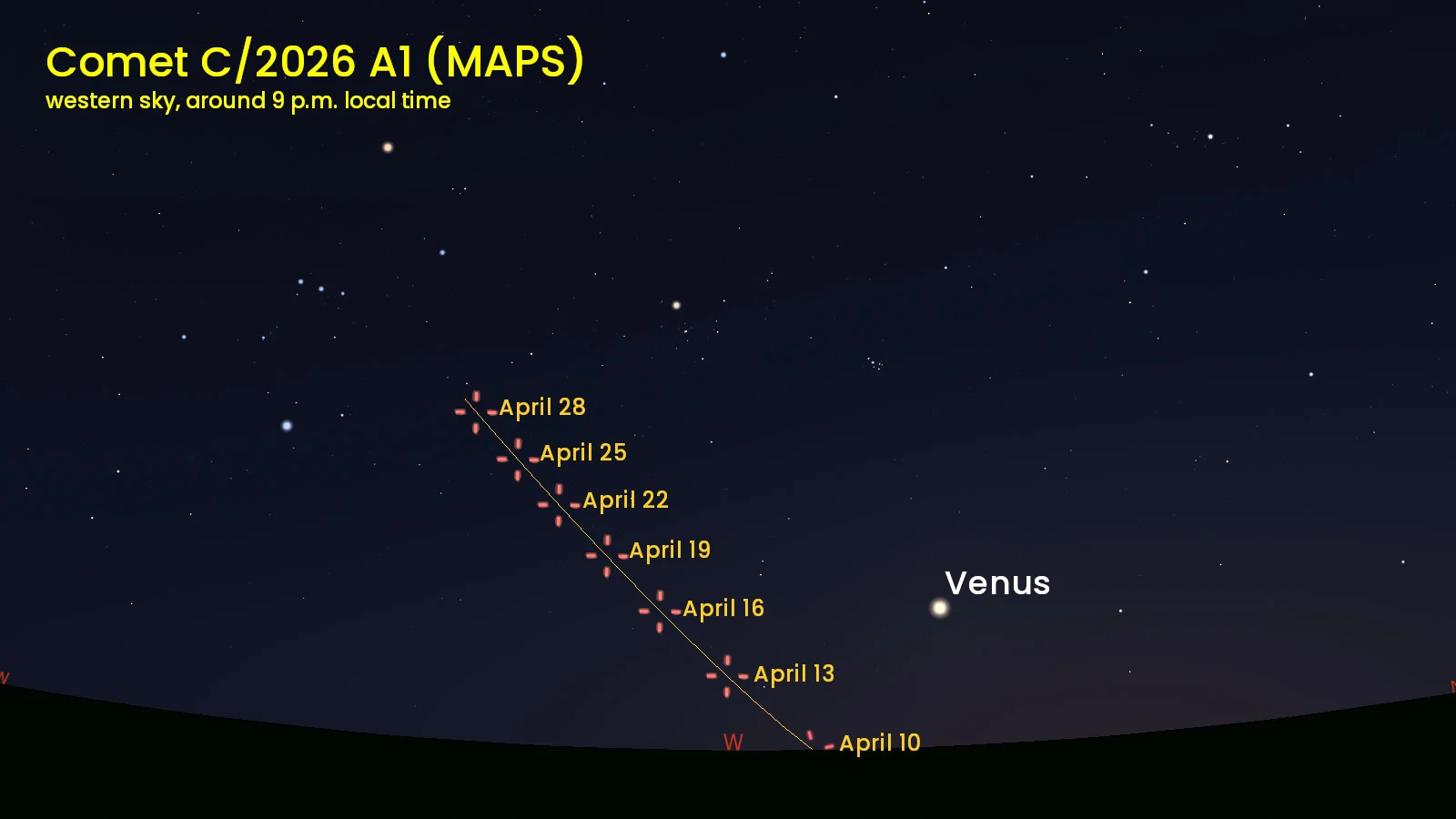
The location of Comet MAPS in the western sky, after 9 p.m. local time, starting April 10, 2026. (Stellarium)
After Comet MAPS either makes or breaks its place in history, another comet will be appearing in the eastern sky before sunrise.