
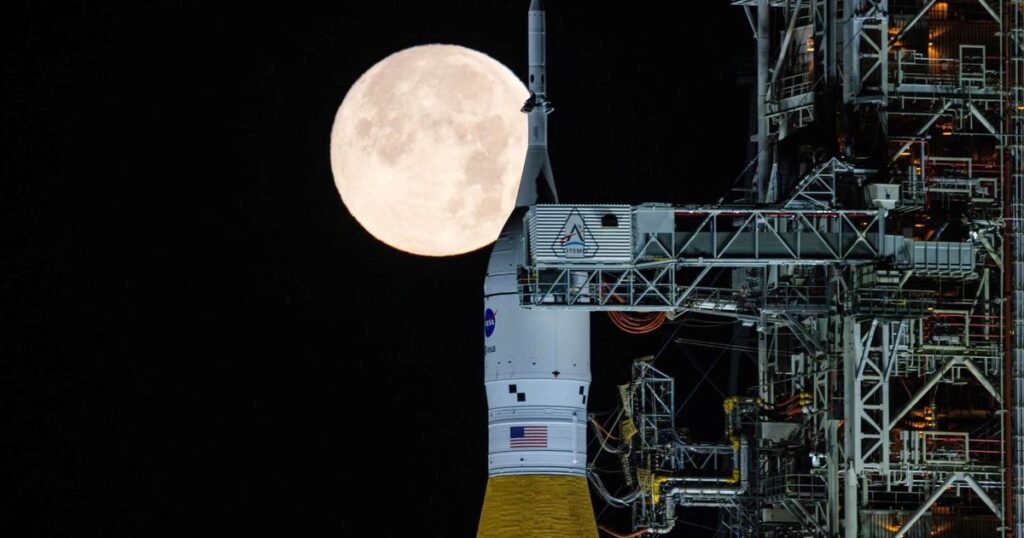
NASA’s Artemis II mission will send four astronauts, including NC State graduate Christina Koch, to the moon on Wednesday, April 1, if weather conditions are ideal. It’s humanity’s first flight to the moon since 1972.
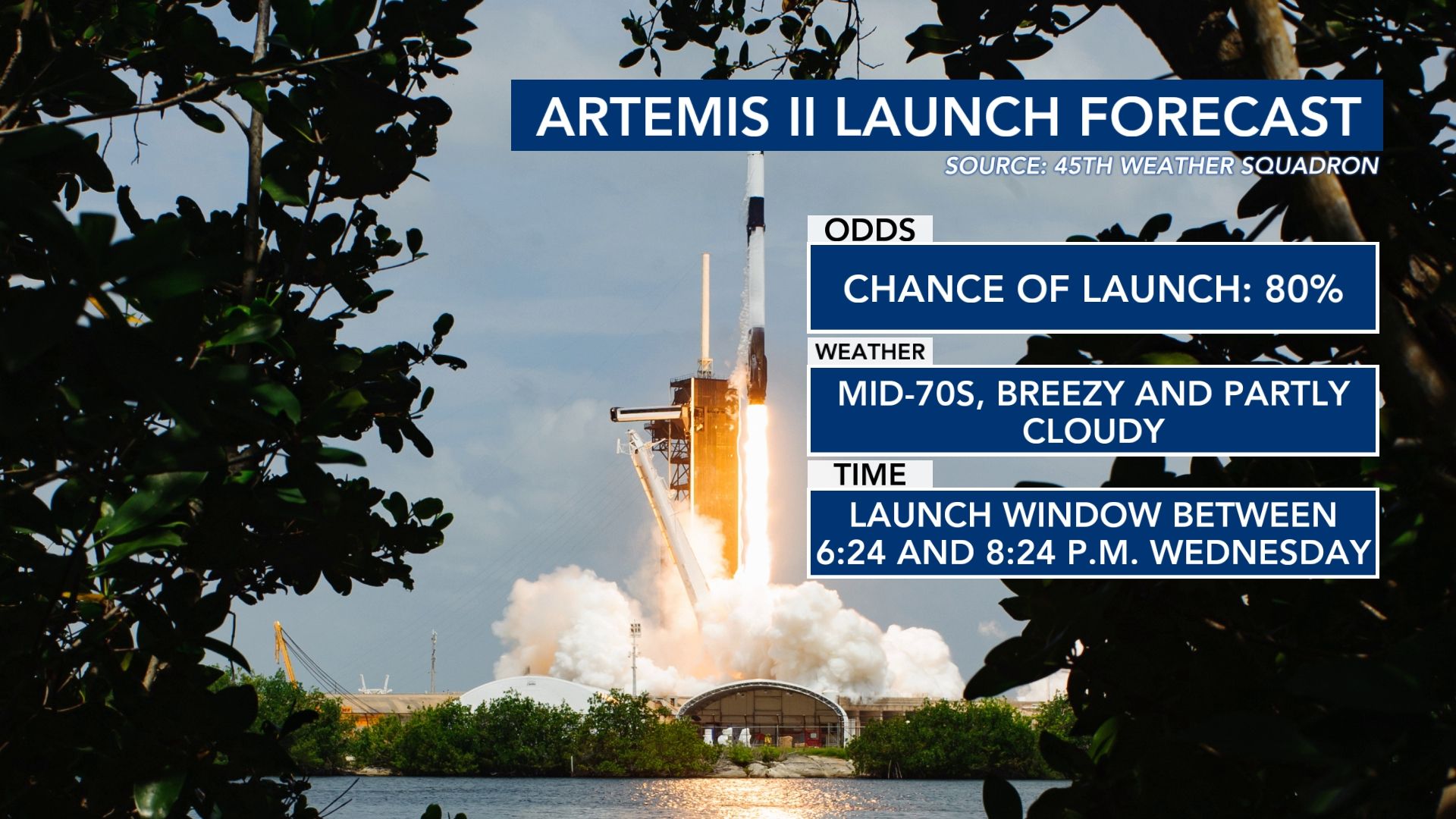
While forecasters at the 45th Weather Squadron track conditions across central Florida ahead of Wednesday’s fueling operations for Artemis II, another team is focused on a much more distant weather source. Nearly 1,600 miles away in Boulder, Colorado, scientists at the NOAA Space Weather Prediction Center are watching what is happening 93 million miles away on the Sun.
Forecasters there track solar activity, forecasting the space weather that could affect the mission. It’s a role that dates back to the space shuttle era and earlier as solar storms became part of the launch risk equation.
Read more: NASA is shooting for the moon. A guide to the Artemis II mission
More recently, space weather made headlines when Blue Origin scrubbed its NG-2 mission after multiple coronal mass ejections, or CMEs, erupted from the Sun. Those eruptions triggered a severe G4 geomagnetic storm, producing aurora visible as far south as Florida.
Geomagnetic storms can interfere with communications and navigation systems and pose a threat to spacecraft electronics. For astronauts, the stakes are even higher. As Artemis II travels beyond low Earth orbit, the crew will leave the protection of Earth’s magnetosphere for the first time since the Apollo program, increasing the radiation exposure risk.
NASA has planned for that risk. The Orion spacecraft itself is shielded. In the event of a significant solar event, the crew can shelter in a more protected of the space craft which is roughly the size of two minivans.
If needed, those protections can be fortified using techniques refined aboard the International Space Station by positioning supplies such as bags filled with drinking water for the 10-day mission around themselves, taking advantage of water’s effectiveness at absorbing harmful radiation.
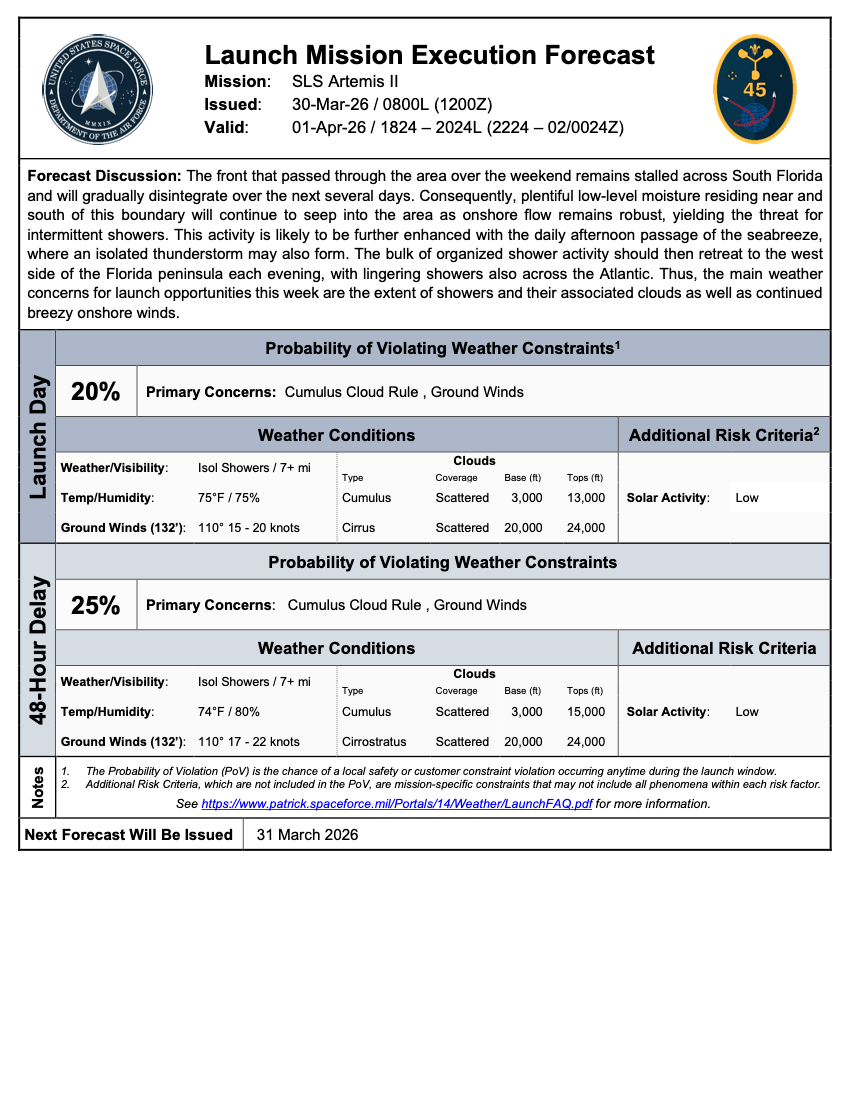
Right now, SWPC forecasters are tracking a CME observed leaving the Sun late Sunday night. A G2, or moderate, geomagnetic storm watch has been issued for Tuesday, March 31, with any aurora expected to remain confined to high latitudes in northern Canada.
Current forecasts show conditions improving ahead of launch, but the Sun can be unpredictable, and monitoring will continue through liftoff and beyond.