
Link to the science release on the University of Florida website
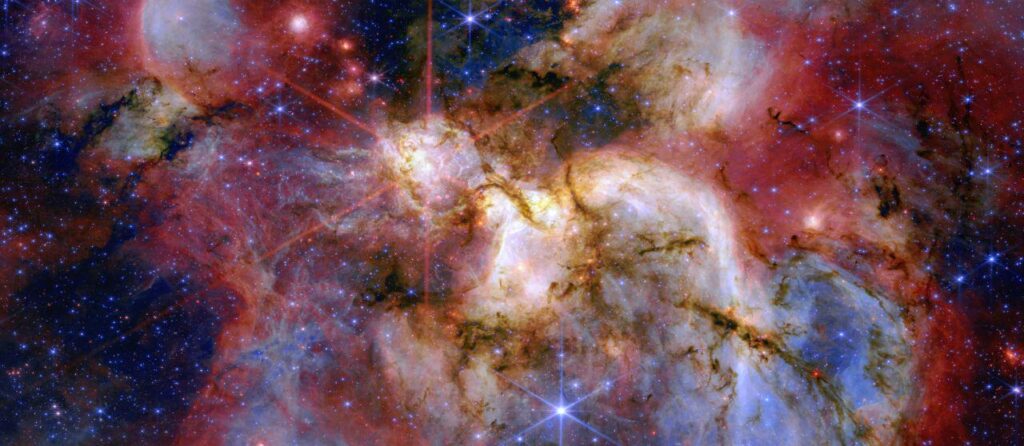
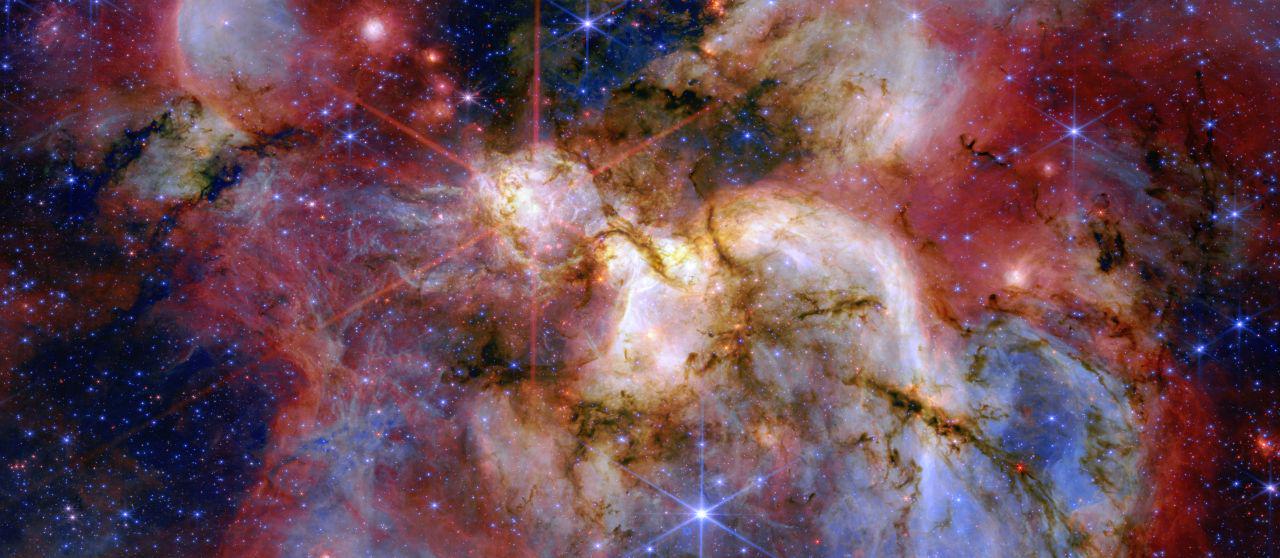
University of Florida researchers used the James Webb Space Telescope (JWST) to photograph W51, a star-forming region in our galaxy, with unprecedented clarity. The key breakthrough is JWST's ability to detect infrared light, which passes through dust clouds that block ordinary visible light. Before this, young stars in W51 were nearly impossible to study because they're still wrapped in the dusty clouds they were born from. Now, scientists can see them directly.
The images show that stars in W51 began forming within the last million years and are still actively growing — a relatively recent event on a cosmic scale. Researchers were especially interested in massive stars, which are far less understood than smaller ones like our Sun. These giant stars matter because they pump out radiation that heats surrounding gas and influences the formation of nearby stars.
The new images revealed structures never seen before, including ionized gas bubbles, dark dust filaments, and jets of material shot out by young stars. However, even JWST has limits — only a small fraction of stars visible to JWST could also be detected by radio telescopes, meaning some star formation is still completely hidden from infrared view. The team expects continued surprises as they dig deeper into the data.
Credit: NASA, ESA, CSA, Yoo & Ginsburg (UF)
Image processing: A Pagan (STScI)
by Busy_Yesterday9455