
When you buy through links on our articles, Future and its syndication partners may earn a commission.
Credit: Getty Images
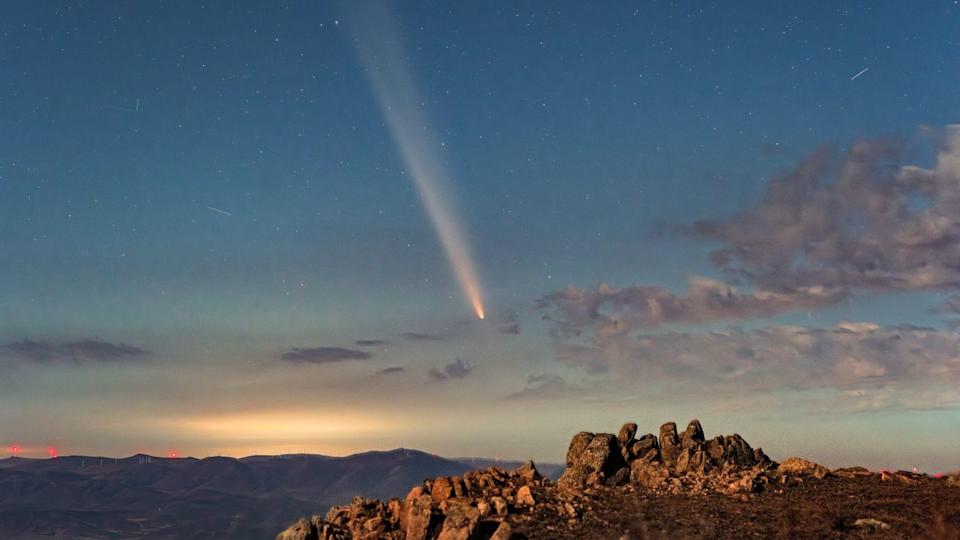
April 2026 is a month of dramatic contrasts for astrophotographers. It begins with a glowing full Pink Moon rising beside one of spring’s brightest stars and transitions into one of the best dark-sky windows of the year for imaging distant galaxies. Along the way, there’s a potentially bright sungrazing comet, delicate pre-dawn crescent moon conjunctions with Mercury and Mars, the return of the Lyrid meteor shower and striking evening pairings featuring Venus, Jupiter and the Pleiades. Here’s everything you need to know about astrophotography in April 2026:
Read: 10 must-shoot events for astrophotographers in 2026
Wednesday, April 1: Full ‘Pink Moon’ rises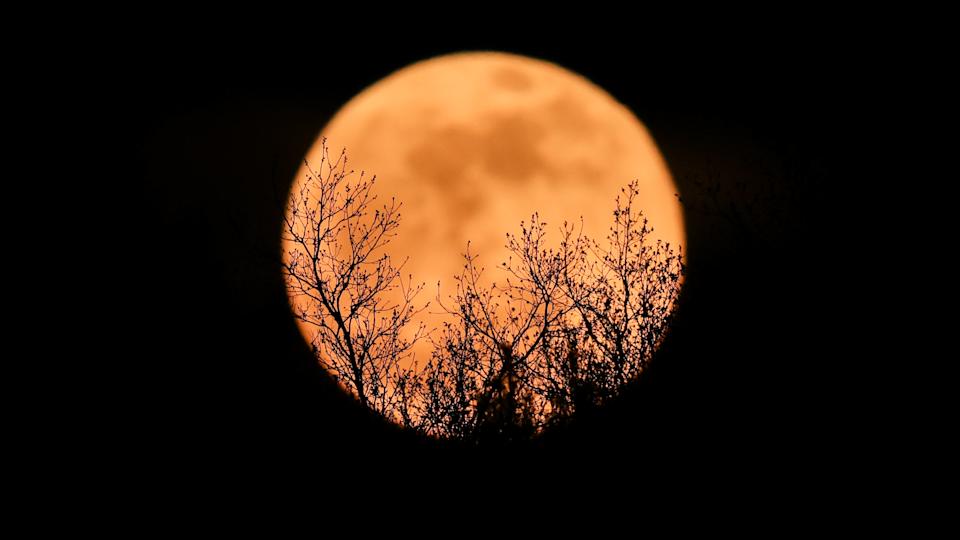
Have a go at framing April’s full Pink Moon, then focusing on the foreground | Credit: Getty Images
April begins with a full Pink Moon, officially full at 10:11 p.m. EDT (02:11 UTC). However, for photographers, the magic moment is moonrise, which across much of Europe and North America occurs close to sunset. That timing allows you to capture the moon low in the east, glowing orange through thicker layers of atmosphere.
A 300-600mm lens will get you a great close-up, but consider waiting 24 hours to see a slightly waning full moon after dark on Thursday, 2 April, appearing very close to bright blue-white star Spica. The pairing is tight enough for a 200–400mm lens to frame both in a single composition. Plan carefully using a moonrise calculator and scout a foreground subject aligned with the eastern horizon for maximum impact.
Read: How to photograph the full moon
Monday, April 6: Comet MAPS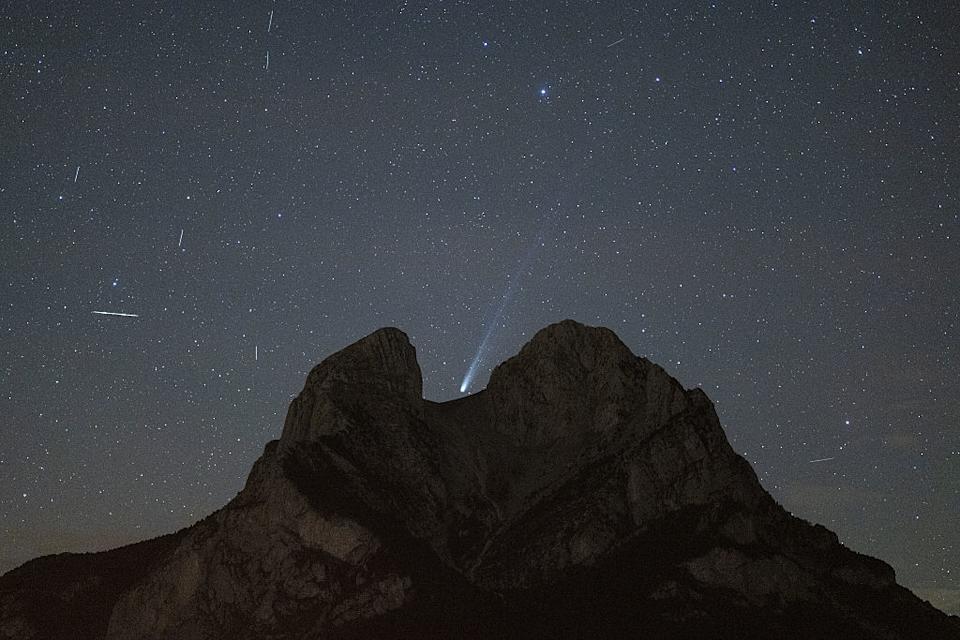
A Kreutz sungrazer may appear low in the western twilight. | Credit: Lorena Sopena / Getty Images
Comet MAPS (C/2026 A1), a Kreutz sungrazer, first discovered in January, reaches perihelion on 4 April at just 487,000 miles from the Sun’s surface — super-close!
Such comets are unpredictable, disintegrating or flaring dramatically when least expected. If it survives, look low in the west after sunset from mid-northern latitudes. Twilight will be bright, so bring binoculars and attempt wide-field twilight imaging (ISO 800-1600, 2-5 second exposures on a tripod). A clear, unobstructed horizon — and some luck — is essential.
Read: The best star tracker camera mounts
April 10-20: Dark sky window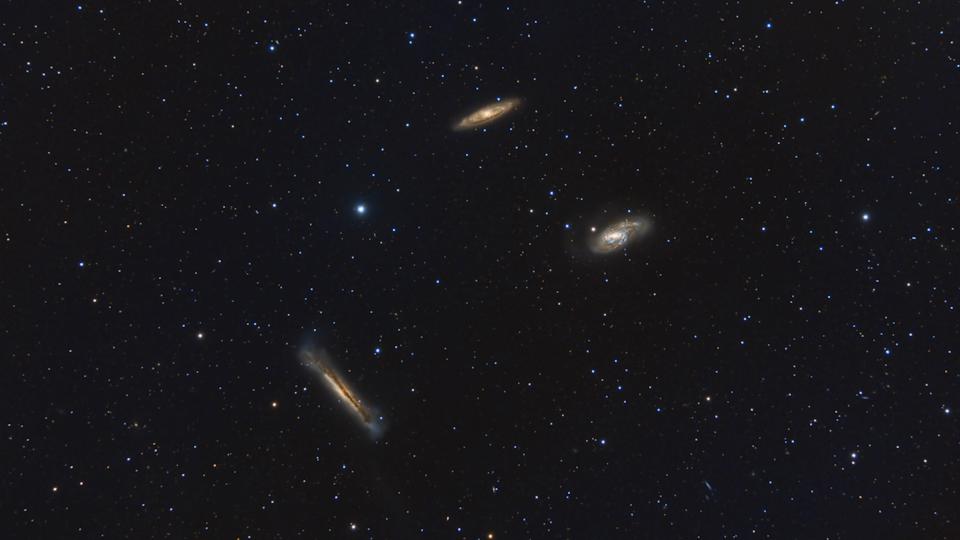
April is prime galaxy season, with targets like the Leo Triplet high in dark evening skies. | Credit: Getty Images
Tonight sees the last quarter moon rise, which means no moonlight until midnight, with a late-rising, shrinking moon assured for the next week. Even after the new moon on 17 April, the nights will be predominantly dark until early May.
Deep-sky astrophotographers will have been waiting for April. For those at mid-latitudes in the northern hemisphere, the nights are now getting shorter, but they’re rich with galaxies, including Leo Triplet (M65, M66, NGC 3628), the Sombrero Galaxy (M104), the Pinwheel Galaxy (M101), Bode’s Galaxy (M81) and the Cigar Galaxy (M82).
Read: The best cameras for astrophotography
April 13-15: Crescent moon with Mercury and Mars
The sight of a crescent moon waning as it gets closer to its new phase is always a treat for early risers, and this month it comes with a slice of planetary action. Use a 100–300mm lens and arrive early to compose before twilight intensifies:
Read: When to photograph the moon
April 18: Venus & crescent moon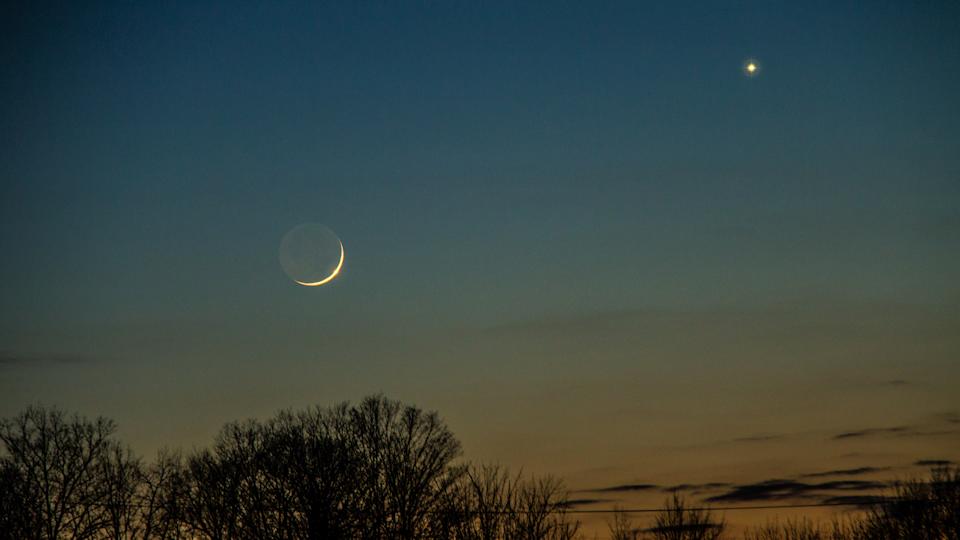
Venus and a delicate crescent moon create a striking pairing on April 18 | Credit: Getty Images
Venus is back — and it’s going to dominate as the “Evening Star” all summer. Tonight, a 4%-lit waxing crescent moon appears alongside it, though the window is short — about 30–40 minutes after sunset. The two will be separated by about four degrees, which is ideal for wide-field astro-landscape shots. Venus, shining near magnitude -3.9, will dominate the scene while Earthshine softly outlines the lunar disk. Use a tripod and bracket exposures to preserve both twilight colors and lunar detail.
Read: Astrophotography: How-to guides, tips and videos
April 19: Crescent moon, Venus & Pleiades
The 9%-lit waxing crescent moon again sits above Venus, with the sparkling Pleiades open cluster of stars between them. This is likely your final good evening view of the Pleiades (also called the Seven Sisters and M45) before they disappear into the glare of the sun. Southern Hemisphere observers may also begin to notice early meteors from the Eta Aquariids, which become active tonight.
Astrophotography shot of the month: Lyrid meteor shower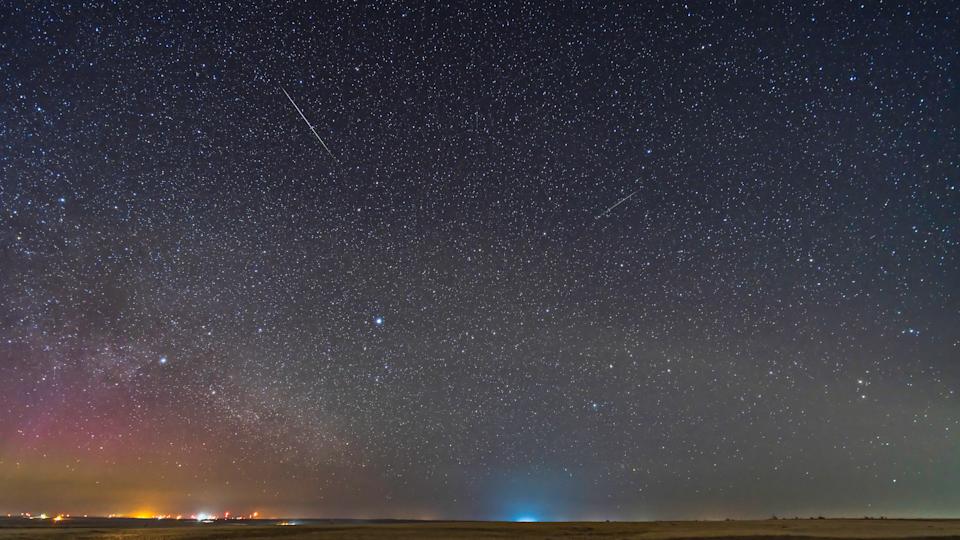
Credit: Getty Images
Active from April 16-25, the Lyrids — the first major meteor shower since January — typically produce 15-20 meteors per hour under dark skies during its peak night, which this year runs overnight from Tuesday, 21 April, through Wednesday, 22 April.
A 27%-lit waxing crescent moon sets relatively early on Tuesday evening, leaving dark conditions after midnight. The radiant lies near Vega and climbs high in the northeast after midnight, making this a good year for Lyrids. The best way to catch a Lyrid or two is to employ the tried-and-tested “lucky imaging” method: face a wide-angle lens (14–24mm) generally east or northeast, focus, use ISO 800–1600 and, crucially, 20-30 second exposures on the continuous shooting mode. Then hit go and do some stargazing … or go inside. Your work is done! All you need to do now is wait a few hours, then check your SD cards for meteors.
Read more:
• Astrophotography tools: the best camera, lenses and gear