
Image Credit: Shutterstock.
You do not need lava fields to find a truly otherworldly American landscape. Some of the strangest scenery in the country comes from gypsum, salt, sandstone, wind, ancient lakes, and millions of years of erosion doing their slow work. White Sands grew out of an ancient sea and a closed basin full of gypsum. The Great Sand Dunes rose from the interplay of wind, water, and sediment. Bryce’s hoodoos came from deposition, uplift, and erosion, while the Badlands were carved from flat-lying sedimentary layers and continue to erode today.
That is what makes these places so satisfying. They feel alien without relying on volcanoes for drama, and several are even more impressive once you understand the geologic trick behind the view. Here are 10 of the best U.S. spots where the scenery looks as though another planet briefly borrowed the landscape team and forgot to return it.
1. White Sands National Park, New Mexico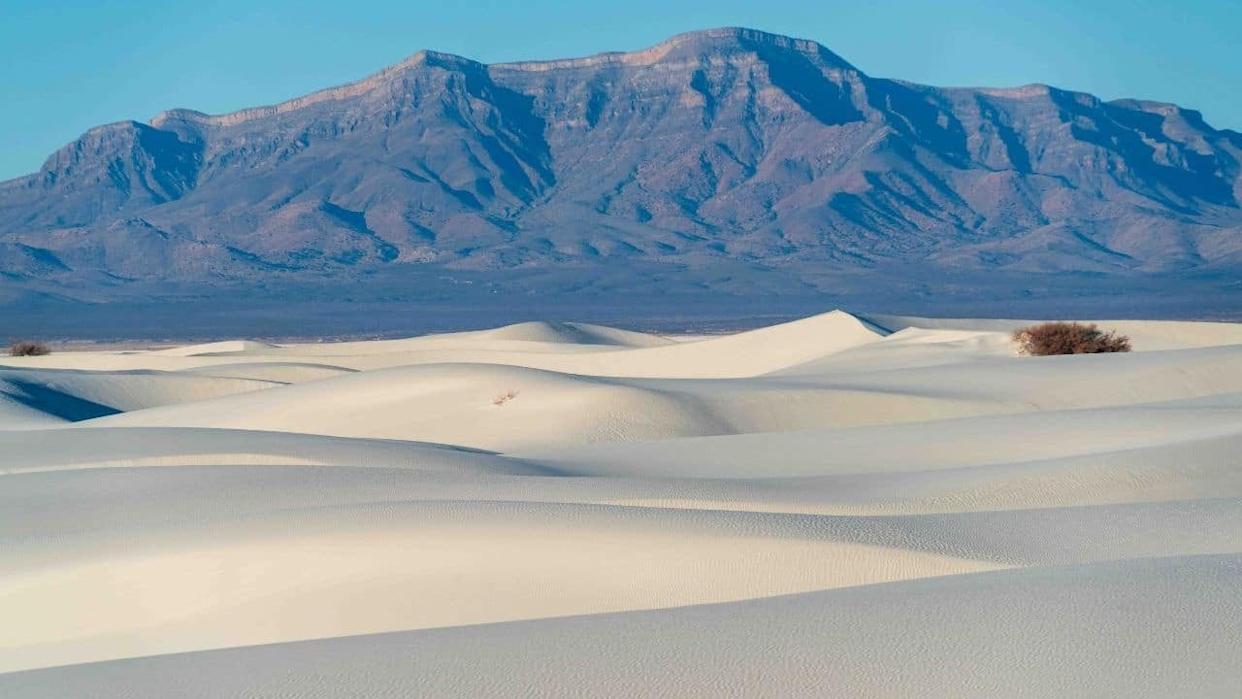
White Sands National Park in New Mexico
White Sands is the cleanest proof that a landscape can look extraterrestrial and still be geologically elegant. The National Park Service says it protects the world’s largest gypsum dunefield, a place whose story began about 280 million years ago when the Permian Sea covered the area and gypsum settled on the seafloor. Today the dunes are still being renewed in an ongoing cycle of erosion and redeposition.
What makes it feel so unreal is the color and texture. These are not ordinary tan dunes, but bright white waves of gypsum sand set inside the Tularosa Basin like a giant frozen surf break. If you want a moonlike landscape in the American Southwest, White Sands is the obvious first stop.
2. Great Sand Dunes National Park and Preserve, Colorado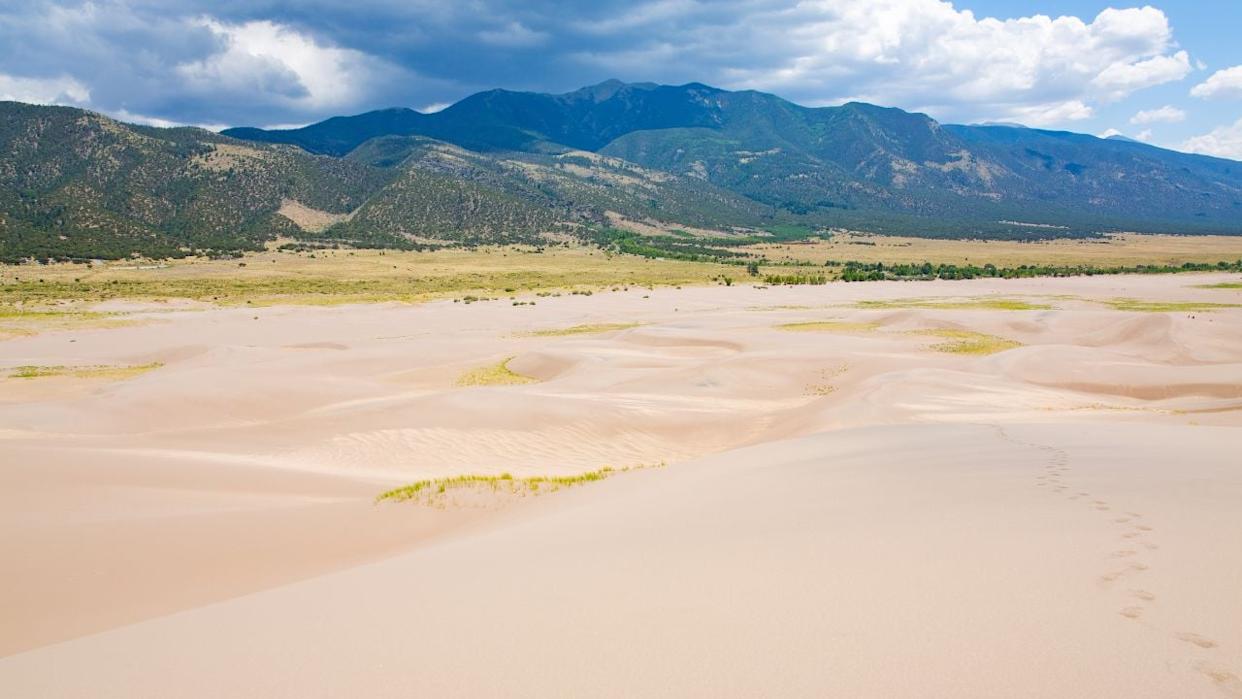
Image Credit: Shutterstock.
Great Sand Dunes looks like someone misplaced an enormous desert at the foot of the Sangre de Cristo Mountains. The National Park Service says the dunes formed through the right combinations of wind, water, and sediment, with creeks and streams bringing material into the valley and winds piling it against the bend in the mountains. The park also notes that the famous dunefield is only one part of a larger geologic system that includes the mountain watershed, dunefield, sand sheet, and sabkha.
That broader system is part of the magic. The place is not just one big hill of sand. It is a whole machine of alpine snowmelt, valley-floor sediment, seasonal creeks, and shifting wind patterns that keeps building a desert-looking landscape in a mountain setting. Visually, it is one of the strangest contrasts in the country.
3. Badlands National Park, South Dakota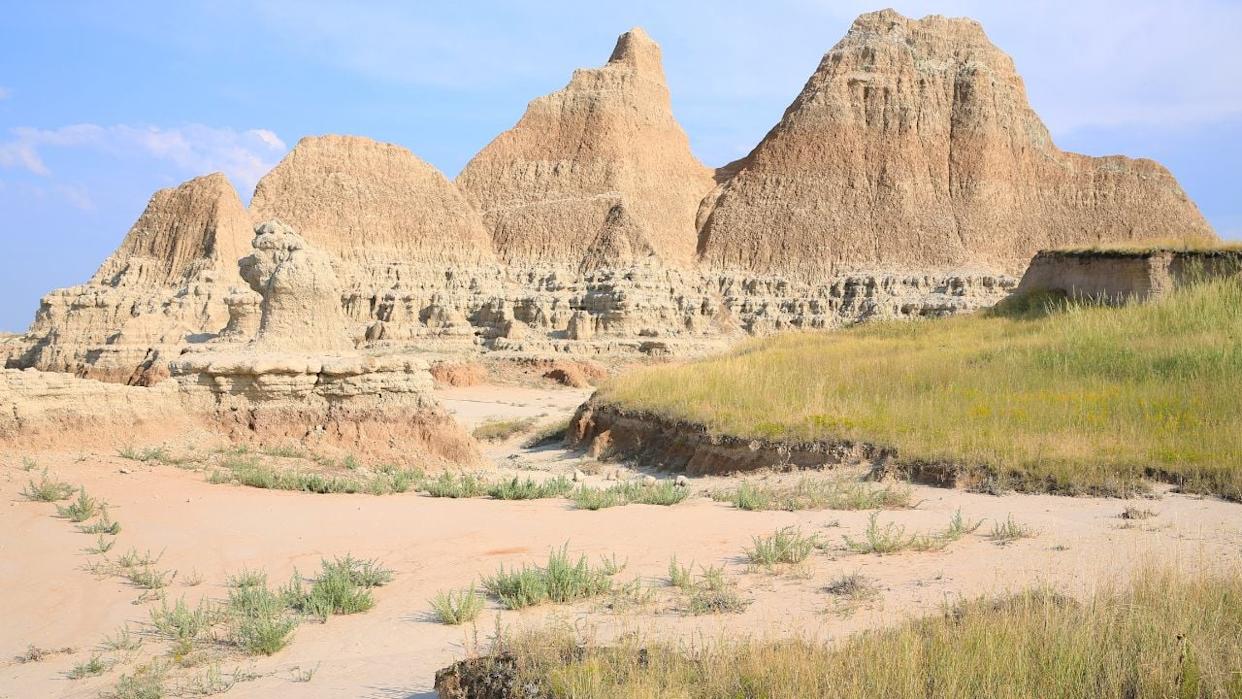
Image Credit: Shutterstock.
Badlands is what erosion looks like at its most relentless. The National Park Service says fossils found in the park range from 75 to 28 million years old and that the flat-lying formations represent classic sedimentary rock layers. One official geology page says the formations erode at roughly an inch a year, which is a wonderfully unnerving detail when you are standing in front of them.
The visual effect is superbly alien: pale ridges, striped walls, sharp gullies, and empty-looking basins that seem almost too theatrical to be natural. The Lakota name for the region, “mako sica,” translates to “bad lands,” and the terrain really does feel severe. It looks less like a postcard landscape than a warning from another planet.
4. Bryce Canyon National Park, Utah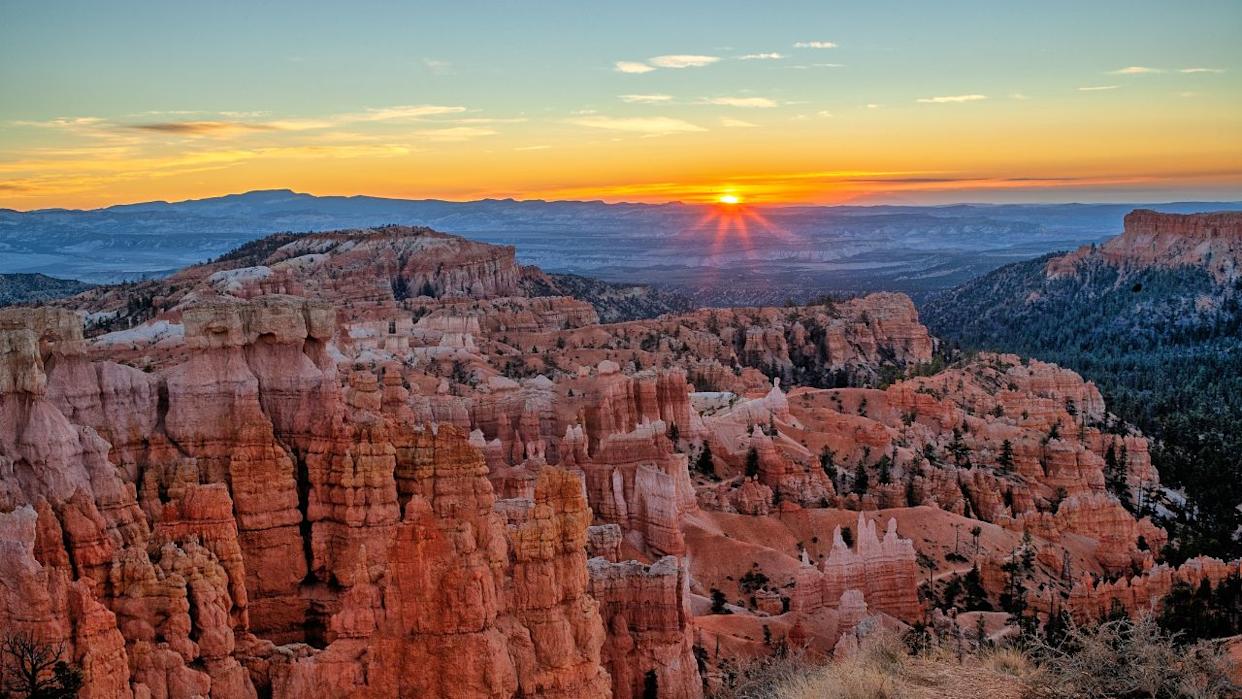
Image Credit: Shutterstock.
Bryce looks impossible the first time you see it in person. The National Park Service says the park is famous for the largest collection of hoodoos in the world, and its geology pages explain that the recipe is simple in theory but spectacular in practice: deposition of rock, uplift of the land, then weathering and erosion. The hoodoos themselves are carved mostly from the brightly colored Claron Formation.
That means Bryce earns its alien look without a drop of lava. It is a city of stone spires built by frost wedging, rain, and time, not eruptions. The result is one of the most stylized natural landscapes in the United States, as if geology briefly decided to try architecture.
5. Arches National Park, Utah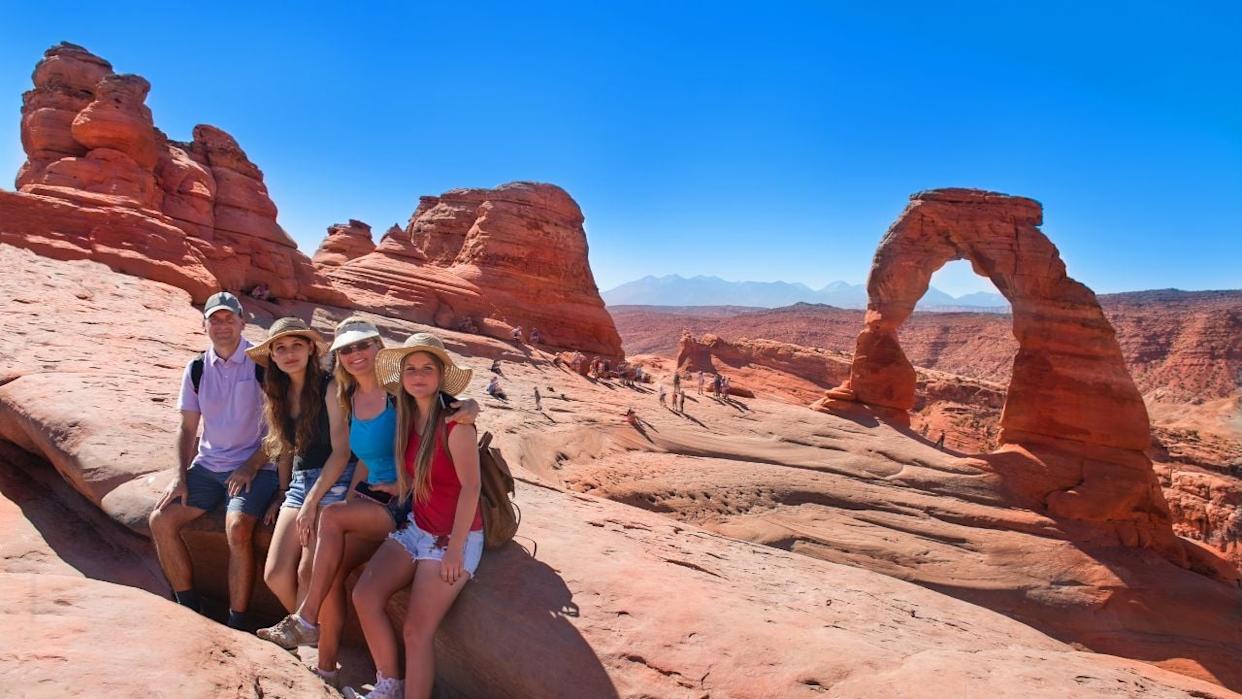
Image Credit: Shutterstock.
Arches is one of the best examples of how ordinary forces can produce extraordinary shapes. The National Park Service says the park has more than 2,000 natural stone arches, along with giant fins, pinnacles, and balanced rocks. Its geology pages explain that water is the main sculptor here: rain and snowmelt widen cracks, break off sandstone, and gradually turn fins into arches.
That process creates a landscape that feels engineered by some patient desert intelligence. The same NPS geology page explains that uplifted salt beds, fractured sandstone, water, ice, and gravity all helped shape the park’s fins and arches. So while Arches looks fantastical, the forces behind it are almost modest: cracked rock, a little water, a lot of time, and gravity waiting for its turn.
6. Monument Valley Navajo Tribal Park, Arizona-Utah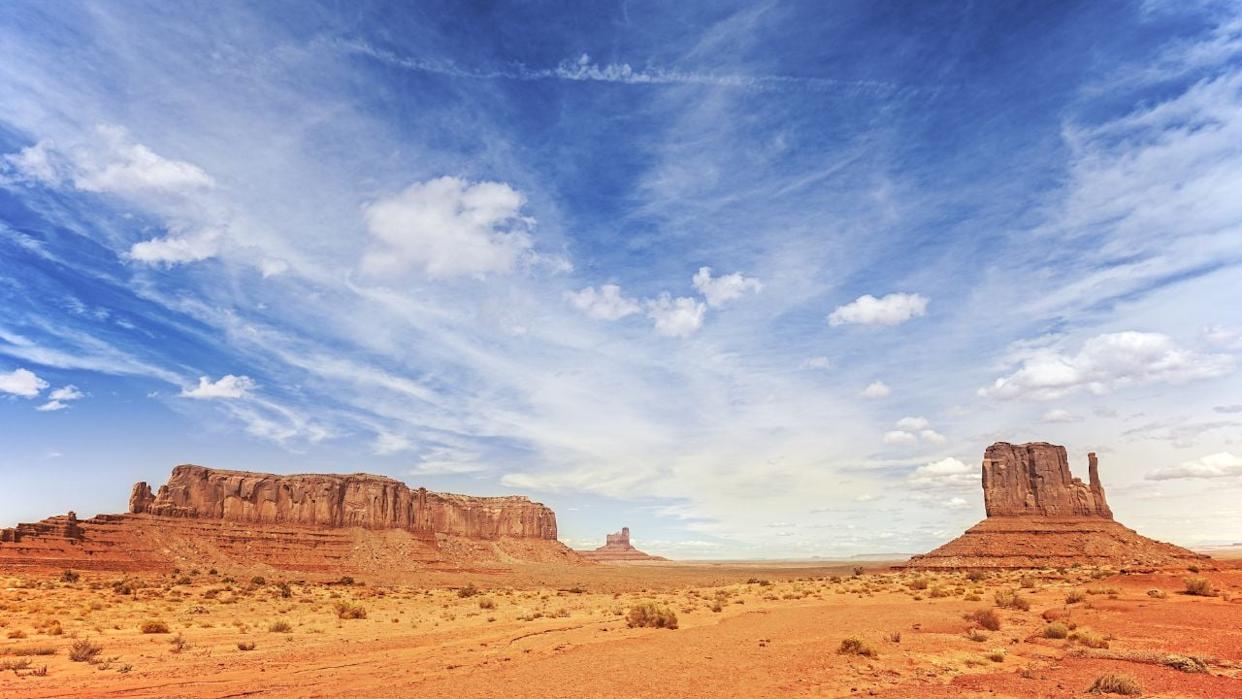
Image Credit: Shutterstock.
Monument Valley is less strange in texture than some of the others here, but it is almost unmatched in silhouette. Navajo Nation Parks describes a landscape of mesas, buttes, windblown sand, and fragile pinnacles, while Arizona’s official tourism site highlights its crimson mesas and towering sandstone buttes. It is the kind of scenery that looks so iconic people sometimes forget how geologically bizarre it really is.
Part of what makes Monument Valley feel alien is the scale and isolation of the forms. The buttes rise like gigantic remnants of a vanished stone city, and Navajo Nation Parks notes that some landmarks inside the valley are accessible through Navajo-guided tours. That adds to the sense that you are not simply looking at a pretty desert but entering a landscape with both geologic and cultural gravity.
7. Bisti / De-Na-Zin Wilderness, New Mexico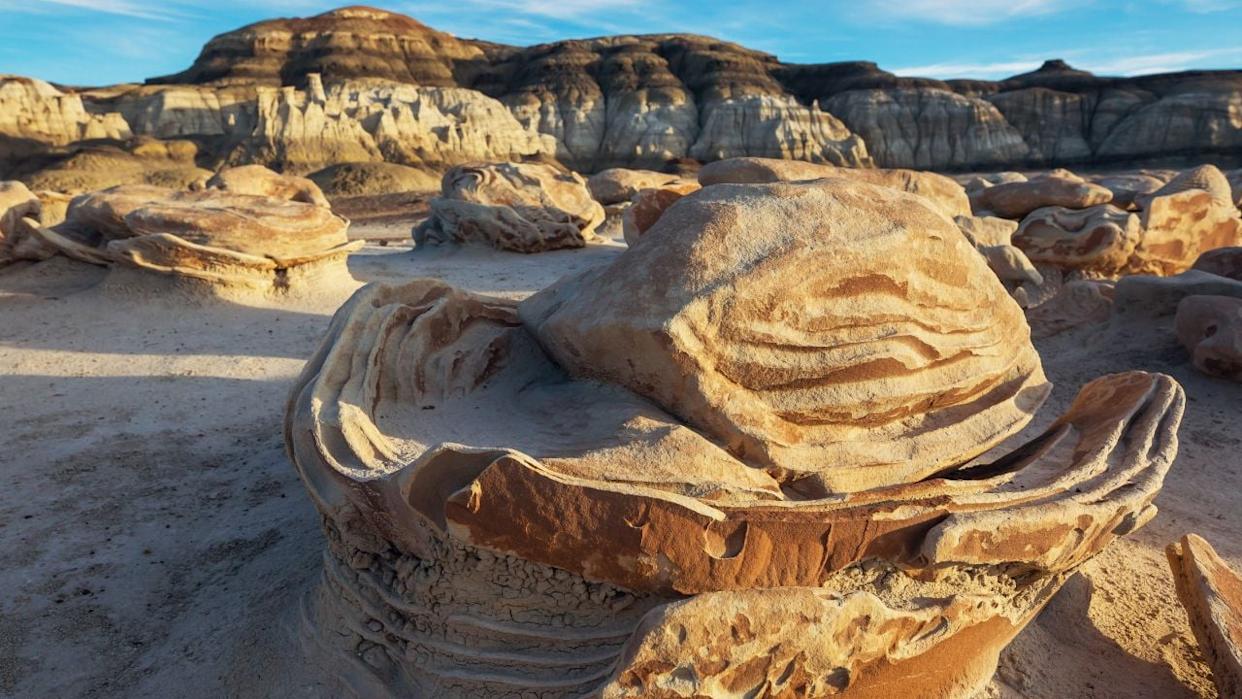
Image Credit: Shutterstock.
Bisti / De-Na-Zin feels like the place where Southwestern geology finally lets itself get weird. The Bureau of Land Management describes it as a rolling badlands landscape with some of the most unusual scenery in the Four Corners region, shaped from interbedded sandstone, shale, mudstone, coal, and silt. A separate BLM visitor page calls out eroded badlands, colorful hoodoos, petrified wood, and fossil-bearing formations dating to the Late Cretaceous.
This is where the word “alien” starts to feel almost too polite. The hoodoos, cap rocks, pinnacles, and weathered forms look less like mountains than like props from a film set built for a species with very different aesthetic tastes. It is one of the strongest places in the country for travelers who want their geology to feel slightly unsettling in the best possible way.
8. Bonneville Salt Flats, Utah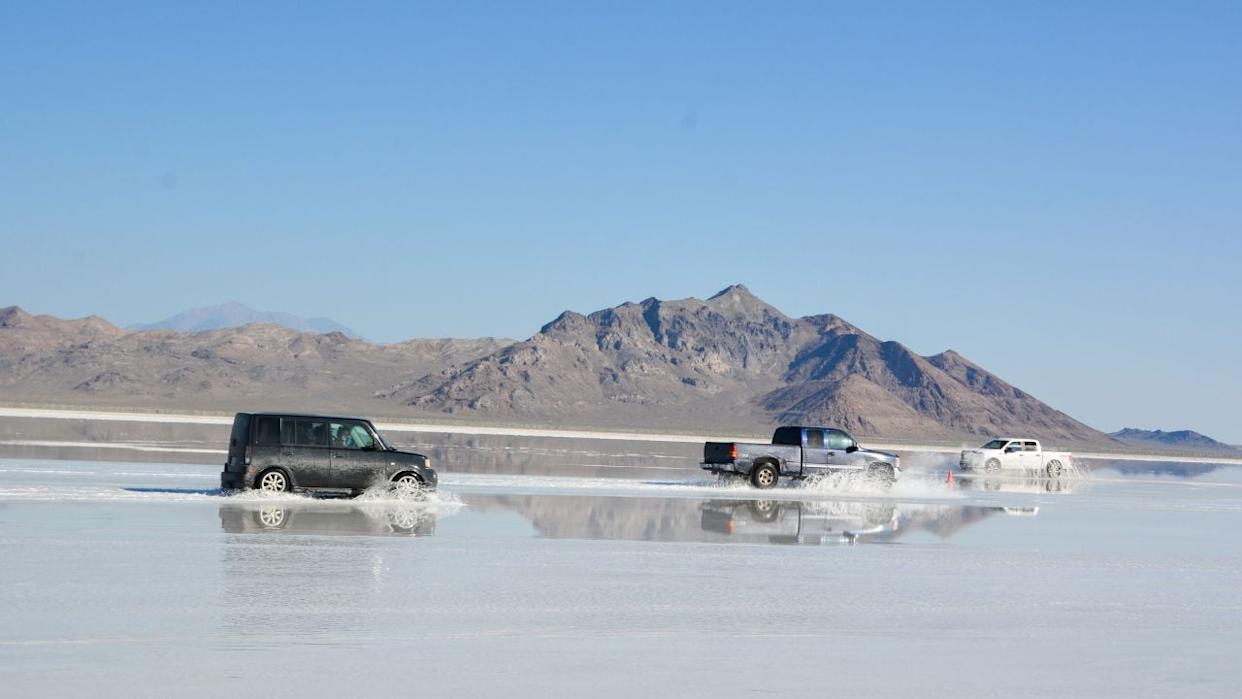
Image Credit: BLMUtah – Vehicles drive across flooded Bonneville Salt Flats, Public Domain/Wiki Commons
Bonneville is a minimalist masterpiece. The Bureau of Land Management says the Bonneville Salt Flats cover more than 30,000 acres of public land, while the Utah Geological Survey explains that the flats lie on part of the former floor of ancient Lake Bonneville, which occupied western Utah during the last ice age. As Lake Bonneville dried, the salt crust began to form.
That history matters because it explains why the place feels so stripped down and surreal. The flats are not just white ground. They are a giant remnant of an ancient lake, a hard salt crust stretched into a nearly abstract horizon. If you like your geology to look like a blank page with mountains around the edge, Bonneville delivers.
9. Coyote Buttes North, Arizona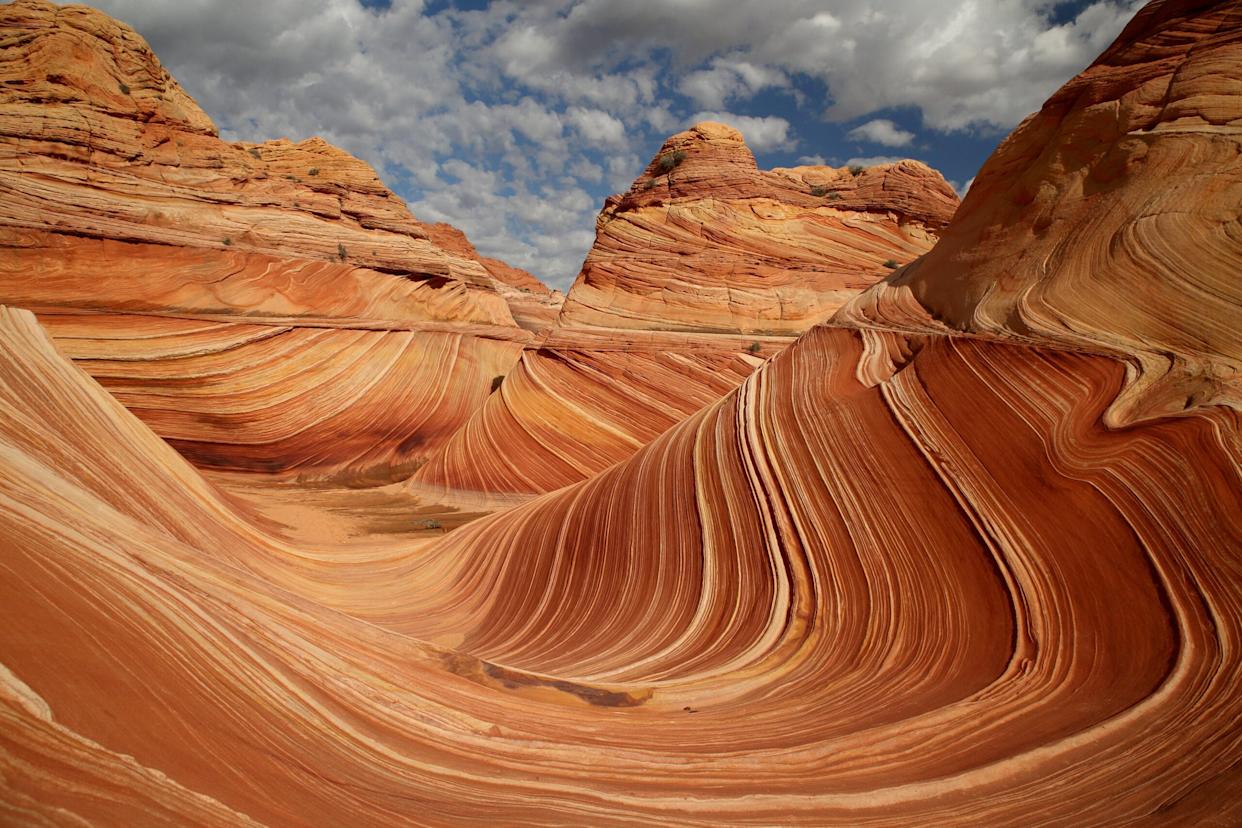
Image Credit: Shutterstock.
The Wave is one of America’s most photographed rock formations for a reason. The Bureau of Land Management says Coyote Buttes North and South contain some of the most visually striking geologic sandstone formations in the world. The same official page notes that visitation is limited through a permit system to protect the fragile wilderness area.
The beauty here is almost too polished to trust. The striped, undulating sandstone of The Wave looks hand-designed, but it is simply sedimentary rock weathered into improbably fluid lines. It is also one of the hardest places on this list to access, with both advance and daily lotteries helping keep the area from being overrun, which only adds to its reputation as a kind of geologic holy grail.
10. Petrified Forest National Park, Arizona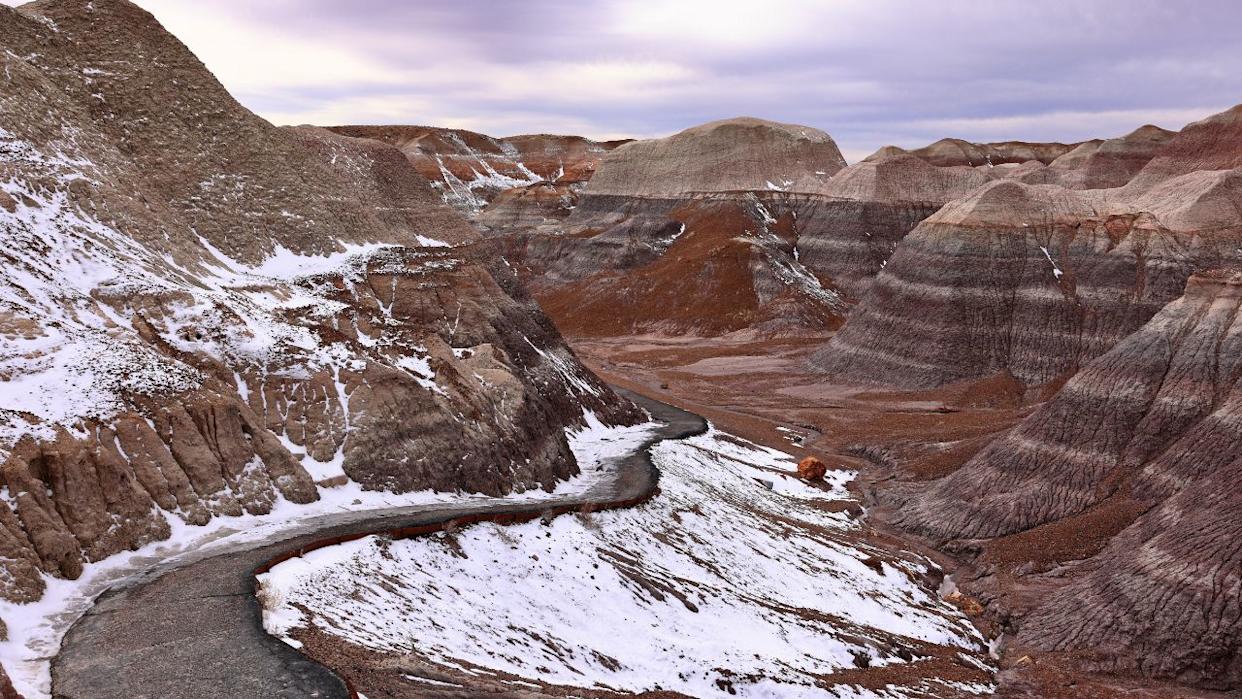
Image Credit: Shutterstock.
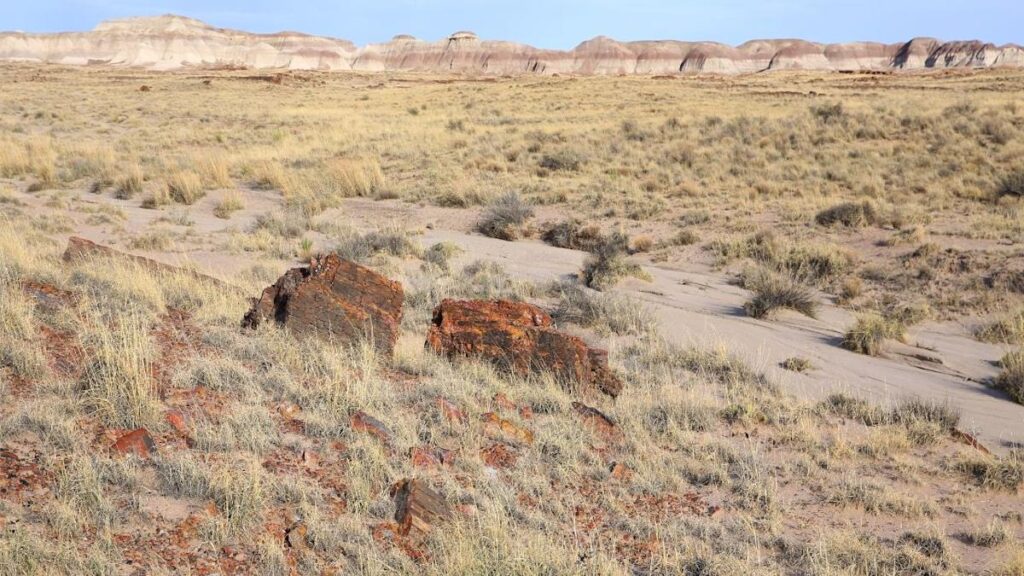
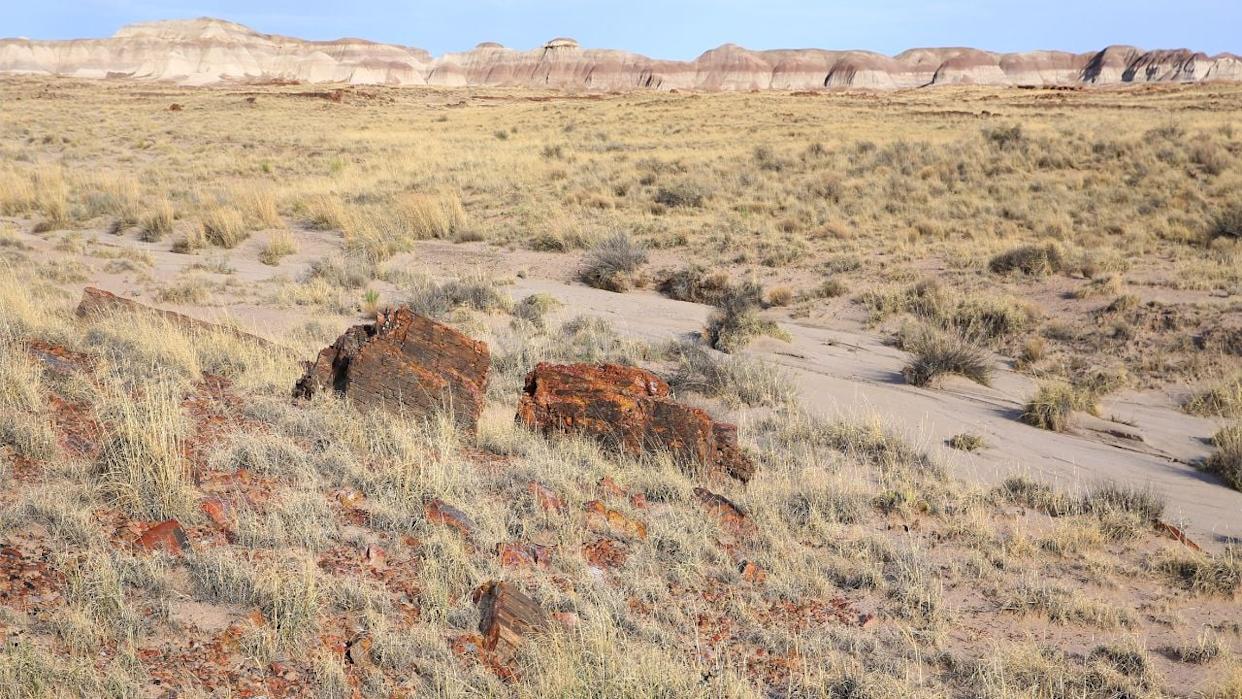
Petrified Forest gives you two alien landscapes for the price of one. The National Park Service says the park is best known for its Triassic fossils and the surreal scenery of the Painted Desert. Its geology page explains that the colorful badland hills, sculptured buttes, and flat-topped mesas of the Painted Desert are made primarily from the Chinle Formation, deposited more than 200 million years ago in river-related environments.
That combination of painted sedimentary hills and massive petrified logs makes the park feel less like one weird place than several overlapping ones. It is not volcanic, but it is absolutely strange: an ancient world of river deposits, fossil wood, striped mesas, and desert colors that barely look real. For pure “I did not expect Earth to look like this” energy, it is hard to beat.
The best part of this whole list is the lesson underneath it: volcanoes are not the only route to a landscape that feels extraterrestrial. Ancient seas made White Sands possible. Wind and mountain geometry built Great Sand Dunes. Salt left Bonneville behind. Rivers, sediment, uplift, and erosion did the rest. Once you start looking for geology’s slower tricks, the country gets much stranger.
Read More