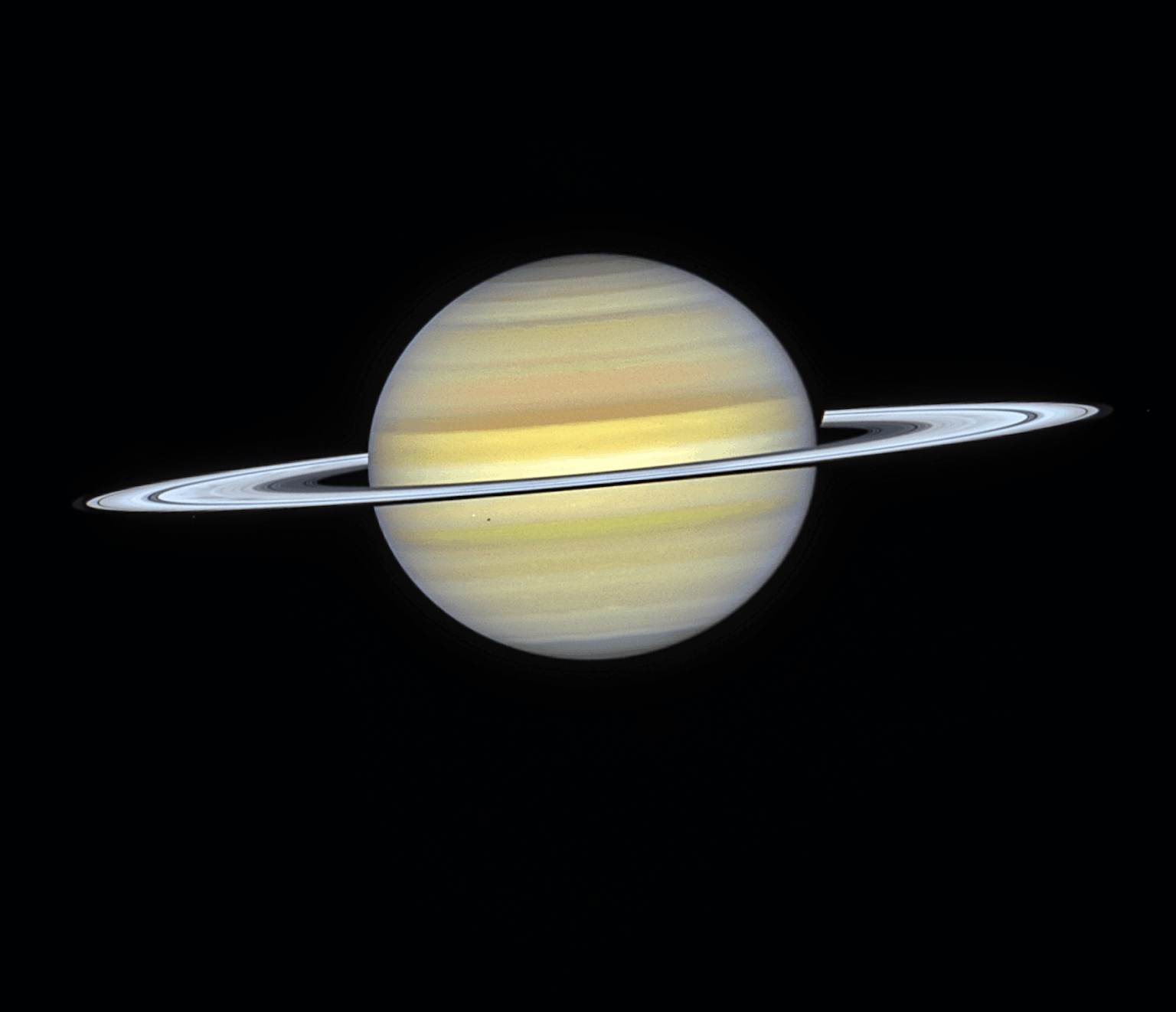
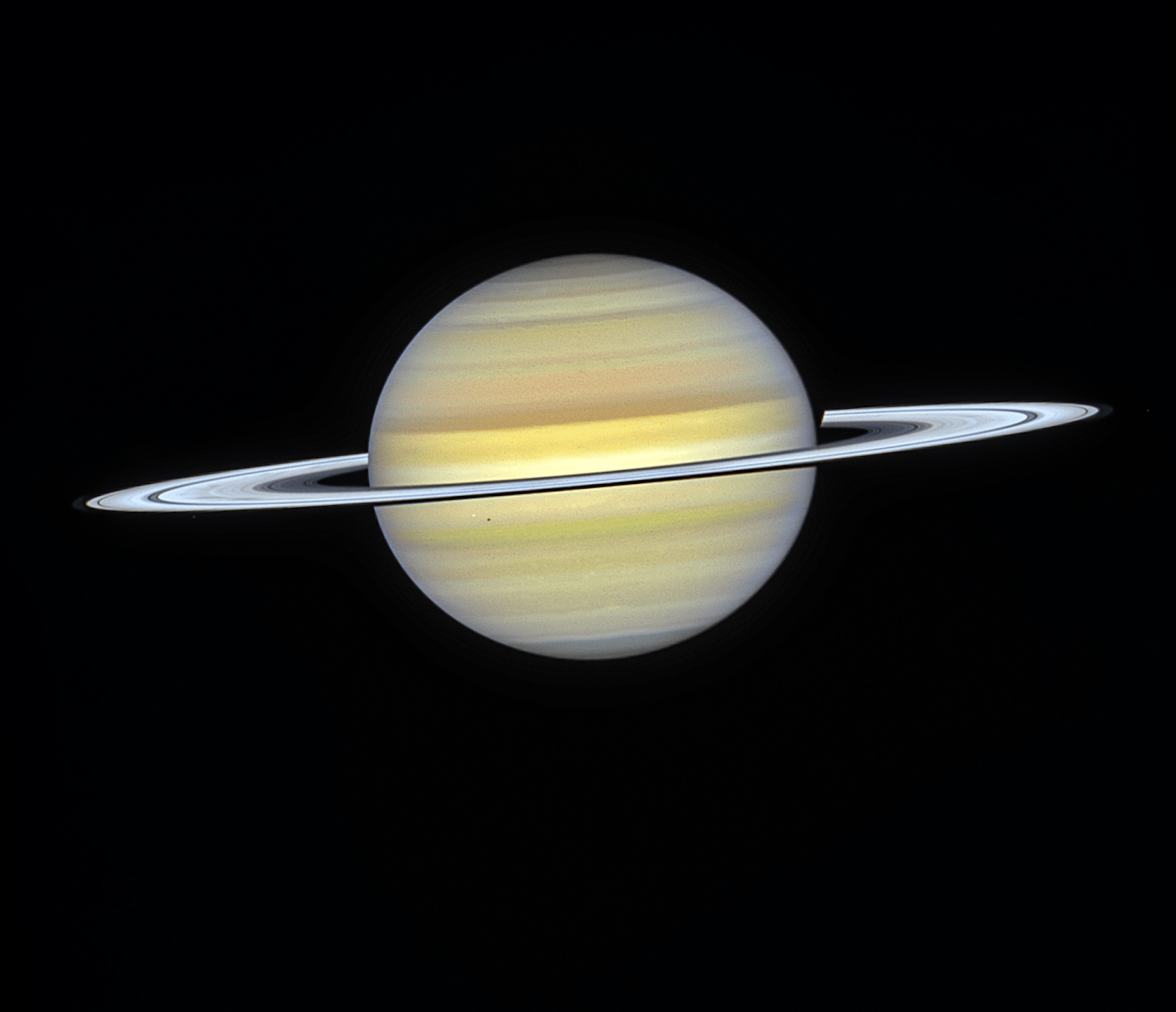
This visible-light image of Saturn, captured Aug. 22, 2024, by NASA’s Hubble Space Telescope as part of its long-running Outer Planet Atmospheres Legacy (OPAL) program, reveals the planet’s softly banded atmosphere and bright ring system. Several of Saturn’s larger moons appear in the image. Janus is visible to the left of the planet along the rings, while Mimas appears closer to the disk as a small point of light, with its shadow superimposed on Saturn. On the right side of the image is Epimetheus, a moon that shares a unique co-orbital relationship with Janus. The image helps scientists track seasonal changes, storms, and evolving atmospheric features on the ringed giant over time.
Image credit: NASA, ESA, STScI, Amy Simon (NASA-GSFC), Michael Wong (UC Berkeley); Image Processing: Joseph DePasquale (STScI)

1 Comment
Image from this post, text from post below the link:
[https://www.flickr.com/photos/nasahubble/55170194560/in/album-72157667717916603](https://www.flickr.com/photos/nasahubble/55170194560/in/album-72157667717916603)
This visible-light image of Saturn, captured Aug. 22, 2024, by NASA’s Hubble Space Telescope as part of its long-running Outer Planet Atmospheres Legacy (OPAL) program, reveals the planet’s softly banded atmosphere and bright ring system. Several of Saturn’s larger moons appear in the image. Janus is visible to the left of the planet along the rings, while Mimas appears closer to the disk as a small point of light, with its shadow superimposed on Saturn. On the right side of the image is Epimetheus, a moon that shares a unique co-orbital relationship with Janus. The image helps scientists track seasonal changes, storms, and evolving atmospheric features on the ringed giant over time.
Image credit: NASA, ESA, STScI, Amy Simon (NASA-GSFC), Michael Wong (UC Berkeley); Image Processing: Joseph DePasquale (STScI)