

 3 min read
Here’s what you’ll learn when you read this story:
A neutrino sensor array, ARCA, lines the Mediterranean seafloor near Sicily.A physicist took ARCA’s first huge win to a warm audience at the Neutrino 2024 conference.The highly energetic neutrino could indicate a source from an explosion in the cosmos.
At a 2024 conference, physicist Joao A. B. Coelho of the French Astroparticle and Cosmology Laboratory presented a project that shares a fair amount of DNA with Twister’s Dorothy: a big group of spherical artificial eyeballs that may help us detect featherlight neutrino particles from under the ocean. These ‘eyeballs’ are encased in a sphere, and then those spheres are in turn encased in another sphere.
Could a massive installation on the seafloor off the coast of Sicily help us pinpoint more of the universe’s mysterious (but plentiful) neutrinos?
Building facilities or infrastructure under the deep sea is a huge challenge. At about 3,500 meters (around 11,500 feet) deep in the Mediterranean Sea, the ARCA portion of the KM3NeT research rig experiences about 348 atmospheres of pressure. Compared with the one atmosphere of pressure we experience at sea level, and you can get an idea of the intensity of the conditions that far down. Deep underwater, however, sensors have a better chance of observing neutrinos because they are shielded from some of the electromagnetic noise of the surface.
You’ll Love These Stories
These clusters of sensors—which are hooked onto vertical strands that are 700 meters (about 2,200 feet) long—detect and separate three distinct layers of particle noise. Layer one is the naturally occurring background “optical noise,” which Coelho explained is mostly from the decay of the radioactive isotope potassium 40. This noise is so steady that it can actually help to calibrate the instruments, and it may also reveal neutrinos ejected from supernovae (which have a different signature than others detected by this machinery).
Layer two of the noise is cosmic rays from outer space. They constantly strike Earth’s atmosphere, and they become fireworks of particles when they collide with the nuclei of atoms found there. These resulting particles, Coelho explained, are muons that rapidly decay, making optical noise that can also be used for calibration, as well as helping to solve some outstanding problems with the existence of muons.
Finally, layer three is where we get neutrinos coming from Earth’s atmosphere. Some of the cosmic rays that strike our atmosphere create muons that, in turn, decay into muon neutrinos. In a strange way, it’s like an avocado that arrives from space. When the ‘avocado’ (cosmic ray) strikes a nucleus, it loses its ‘skin,’ leaving a less stable ‘flesh’ (muon) beneath. Then that flesh is stripped by physics, leaving only the ‘seed’ (muon neutrino). What we want here is that neutrino.
Related Story
Neutrinos are so extremely tiny that they can pass easily through almost anything, including water and the Earth itself. “The Earth is a great cosmic ray shield, but neutrinos don’t care,” Coelho explained on a slide. So, the strands of sensors on the deep-sea ARCA setup can detect these tiniest particles, as well as information that gives us what “flavor” the neutrinos are.
 Joao A.B. Coelho
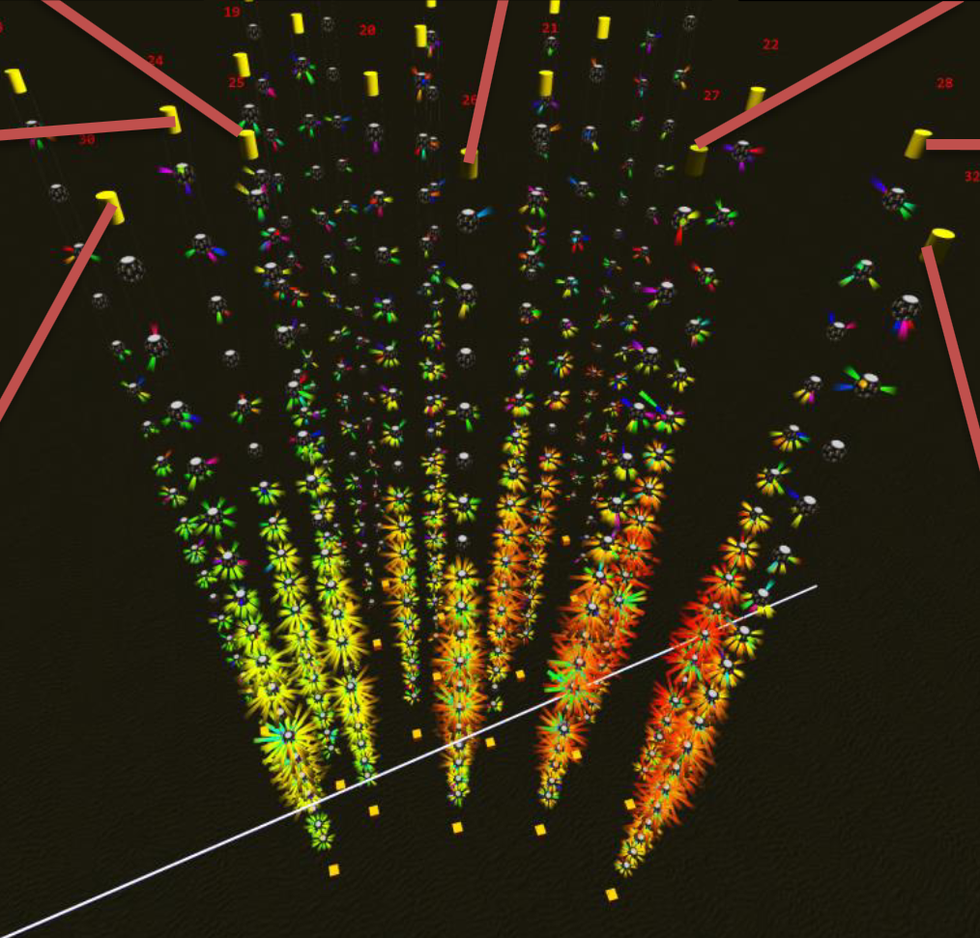
ARCA’s strands of sensors light up with an energetic neutrino signature.
Nature reports that ARCA has already detected the likely most energetic neutrino to date, and unlike the chill neutrinos created in our atmosphere, this one is probably from something “cataclysmic” in the faraway cosmos. And this is ARCA’s secret weapon: a fourth layer that ignores all the previous noise in order to amplify energetic neutrinos from further away.
At this energy level, Coelho explained, it’s almost always very dark. When many of ARCA’s sensors lit up with an unexpected and very bright event, the scientists all took notice. The energetic neutrino signature seems to have given ARCA a proving ground to continue searching for neutrinos from the cosmos—as well as their explosive sources.
Built to Work — Under $100

The Newest AirPods
 Apple Airpods 4
Now 22% Off
Best Flashlight
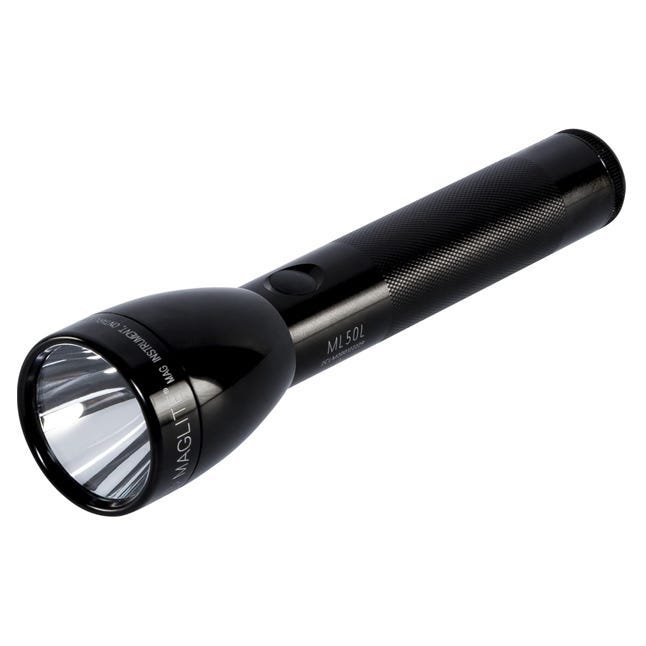 MagLite ML50L LED Flashlight
Budget Power Bank
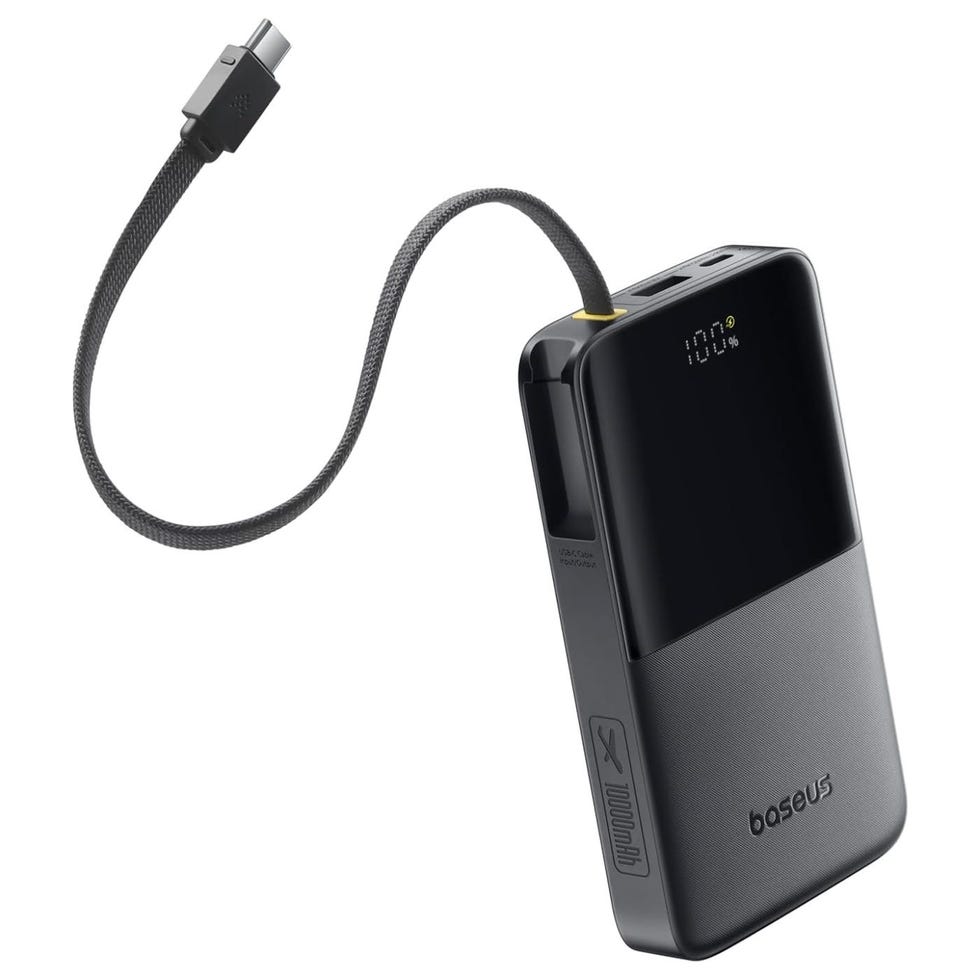 Baseus 10000mAh Fast Charging Power Bank
Now 13% Off
Best Slim Wallet
 Serman Brands RFID Blocking Slim Wallet
Now 20% Off
Best Pocket Knife
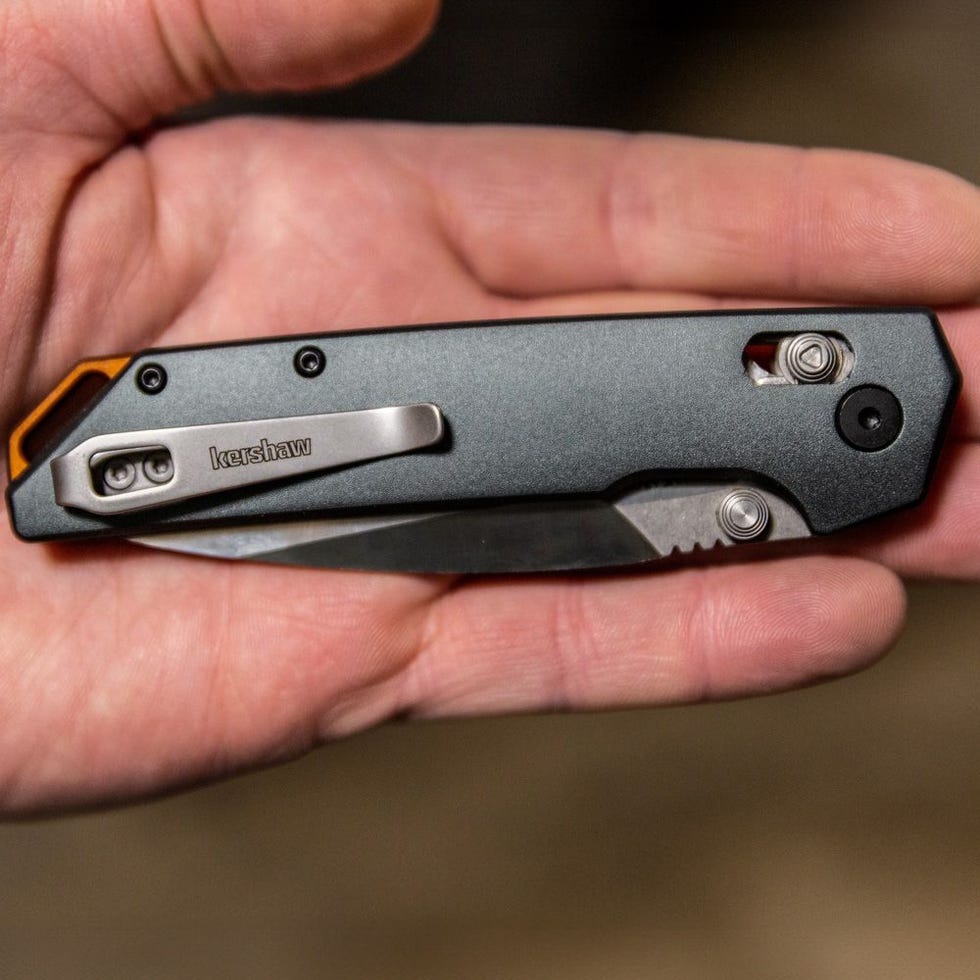 Kershaw Iridium Pocket Knife
Best Stud Finder
 BOSCH Wall Scanner and Stud Finder
Now 51% Off
Best Compact Power Bank
 Anker Nano 45W Power Bank
Best Budget Bluetooth Speaker
 soundcore Motion 300 Wireless Portable Speaker
Now 25% Off
Best Value Shop Vac
 STANLEY Wet/Dry Shop Vacuum
Now 19% Off

Caroline Delbert is a writer, avid reader, and contributing editor at Pop Mech. She’s also an enthusiast of just about everything. Her favorite topics include nuclear energy, cosmology, math of everyday things, and the philosophy of it all.