
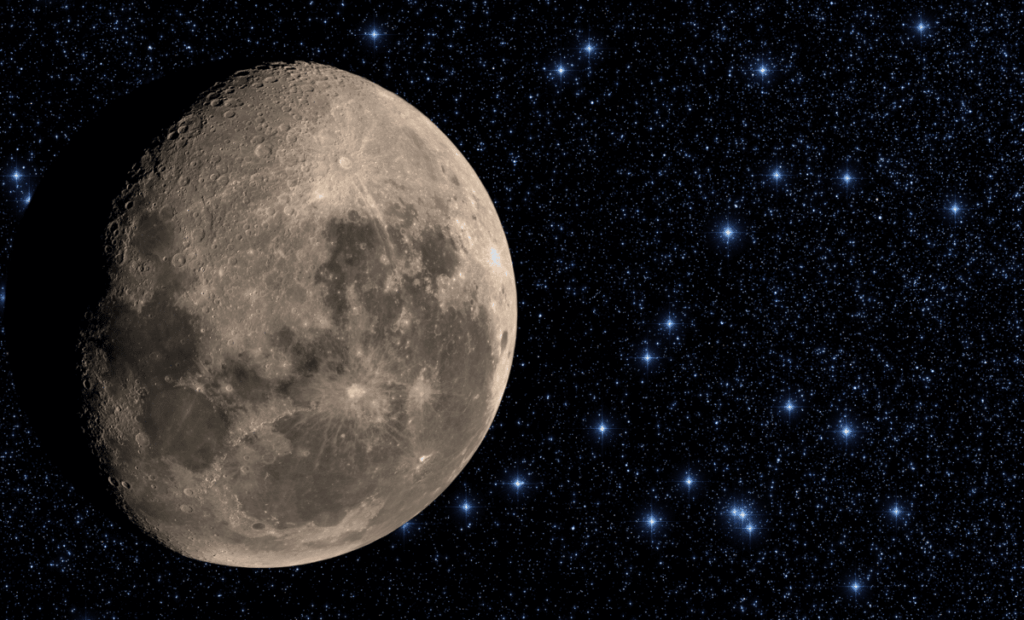
kywatchers will have the rare chance to witness the waxing moon pass close by the Beehive Cluster (M44) in the night sky on March 27, 2026. This stunning alignment, highlighted by Space.com, brings together two of the most captivating objects visible from Earth, the moon and one of the oldest star clusters in the Milky Way. This event promises to offer astronomers and casual stargazers alike a spectacle that showcases both the beauty of our lunar neighbor and the brilliance of deep space.
The Waxing Moon Meets the Beehive Cluster
On the evening of March 27, 2026, as darkness falls, the waxing gibbous moon will begin its dramatic dance across the southern sky, passing just a stone’s throw from the Beehive Cluster (M44), one of the most visually striking and accessible star clusters. According to Space.com, this spectacular event, observed from the Northern Hemisphere, will see the 77%-lit moon sweeping from right to left across the cluster’s brightest stars, offering a view of both the moon and the stars in their celestial splendor.
The Beehive Cluster, located at the heart of the constellation Cancer, is home to nearly 1,000 gravitationally bound stars. Formed around 600 to 700 million years ago, it is a relatively young cluster in terms of galactic history, making it a fascinating target for study. Even though it is visible to the naked eye, binoculars can reveal up to 20 of the brightest stars, while a 6-inch telescope will bring dozens more into focus.
The Perfect Time for Lunar and Stellar Observation
March 27 is an excellent opportunity not only to observe the Beehive Cluster but also to explore the surface of the moon itself. This particular phase, known as the waxing gibbous moon, reveals many interesting features, especially along the lunar terminator, the line that separates night from day on the moon’s surface. Telescopic viewers will be able to spot the large, dark maria, ancient volcanic plains, across the moon’s surface, formed when lava flooded impact craters millions of years ago.
Two colossal lunar impact craters, Copernicus and Tycho, will be prominently visible during this event. Copernicus, with its bright rays stretching across the moon’s surface, lies near the terminator line. Meanwhile, Tycho, with its pronounced central peak and shadowed eastern rim, stands out as one of the moon’s most striking features. For astronomers and stargazers alike, this dual sighting of the moon’s features and the Beehive Cluster represents a rare and rewarding experience.
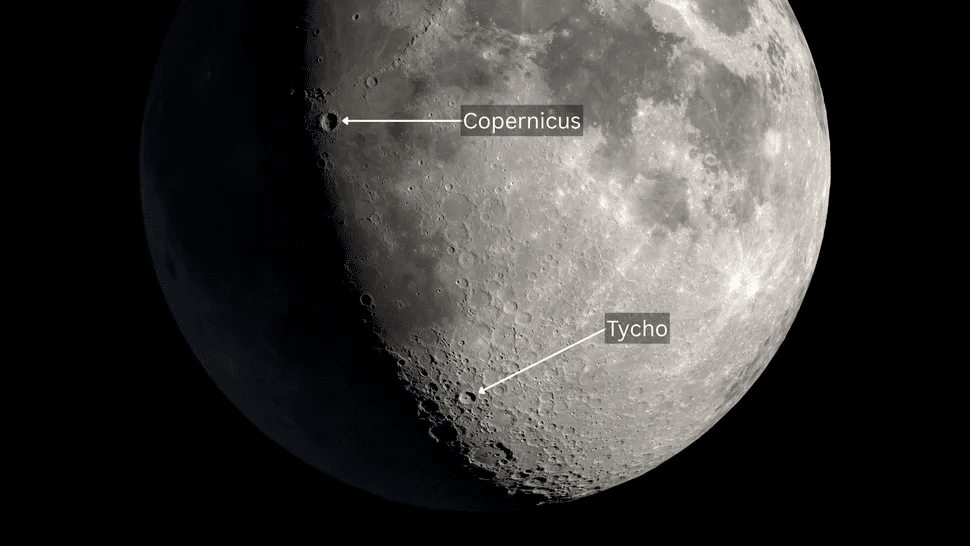 How to find Copernicus and Tycho crater on the waxing gibbous moon. (Image credit: NASA Scientific Visualization Studio)
A Snapshot of the Beehive Cluster’s Significance
The Beehive Cluster’s star-studded beauty has long captivated observers, but its scientific value goes far beyond its visual allure. As a relatively young stellar group, the cluster offers valuable insights into the early stages of star formation. By studying its stars, scientists can better understand the processes that lead to the birth of stars and the evolution of star clusters.
This cluster is also known for being one of the closest open clusters to Earth, situated about 577 light-years away. Its proximity and composition make it a natural laboratory for astronomers studying stellar dynamics. The unique alignment with the waxing moon offers an opportunity to examine these stars in new ways, as their light interacts with the lunar surface, providing a contrast between the old and the new in the cosmos.