
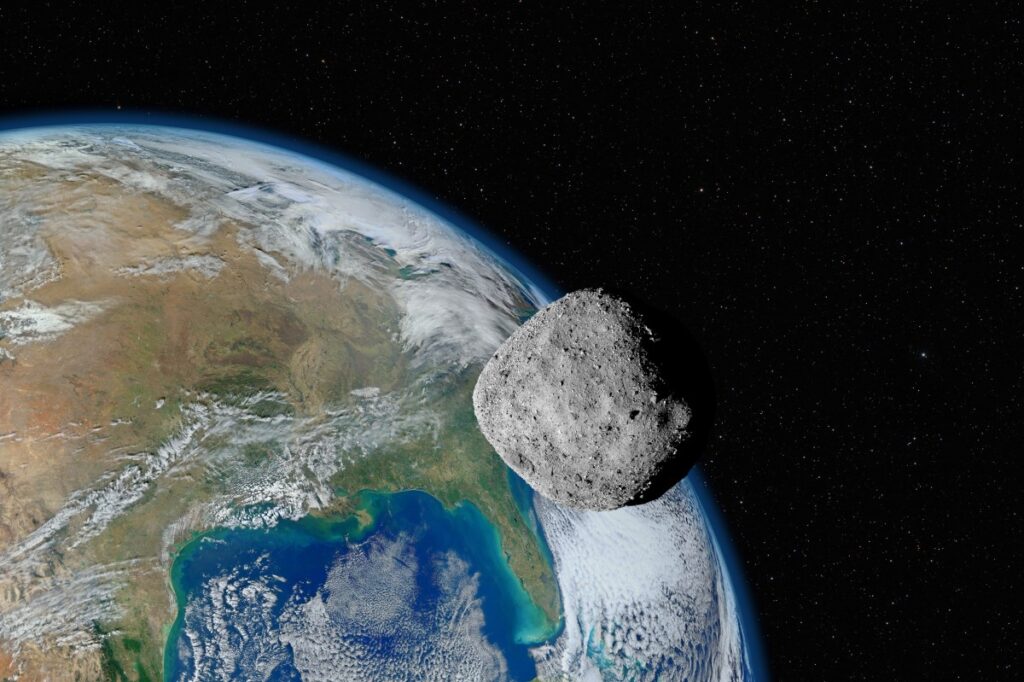
NASA is currently monitoring a bus-sized asteroid set to zoom past the Earth on March 26 at a speed of around 23,197 miles per hour.
The space rock—known as “2026 FB4″— is about 29 feet across and is set to make its closest approach to Earth tomorrow at a cosmically slight distance of just 404,000 miles, according to NASA’s Jet Propulsion Laboratory (JPL).
2026 FB4 is not the only asteroid that will be in the vicinity of our planet this today. NASA is also tracking a house-sized asteroid known as 2026 FB3, which is around 54 feet in diameter and will approach Earth at a distance of 1,750,000 miles.
Three more house-sized asteroids are due to make their closest approach later this week. 2026 FA3 will make its closest approach on Friday 27 at around 1,780,000 miles, and 2026 FL4 and 2026 FX5 will both be approaching on Saturday 28.
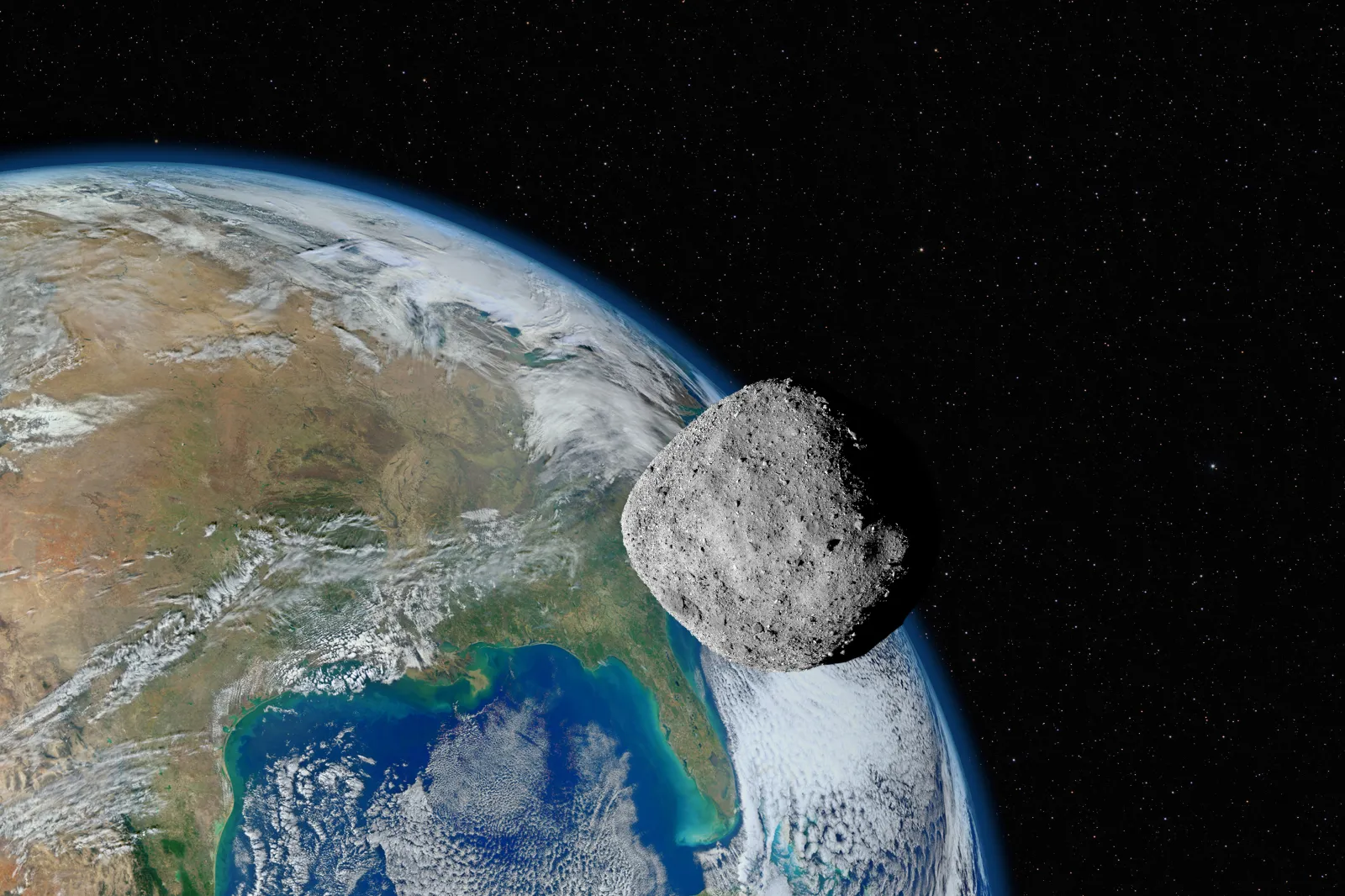
According to NASA, asteroids are inactive bodies made of all the rocky, dusty and metallic materials left behind from the formation of our solar system. They are mainly concentrated within the main asteroid belt, orbiting around the sun between the paths of Mars and Jupiter, though some may end up in the inner solar system.
If an asteroid were to hit Earth, the scale of damage would depend greatly on its size and composition, as well as where exactly it entered the atmosphere.
Hitting somewhere over the ocean, a rock under 300 feet would be unlikely to cause significant consequences like a tsunami, either from the middle of the ocean or even nearer to shore. Meanwhile, if airburst occurred over a populated region, it could cause minor structural damage.
However, an asteroid over 300 feet could cause more severe damage, including collapsing residential structures and shattering windows.
NASA explains that small asteroids hit Earth all the time but, because of their size, they don’t cause any damage. Instead, they create meteors—or “shooting stars”, as they are commonly known—that can be observed disintegrating in the atmosphere.
The most significant impact of this century occurred over Russia in 2013, when an asteroid the size of a small building disintegrated about 12.4 miles above the city of Chelyabinsk, leaving behind a fair number of meteorites in the ground.
Do you have a tip on a science story that Newsweek should be covering? Do you have a question about asteroids? Let us know via science@newsweek.com.