
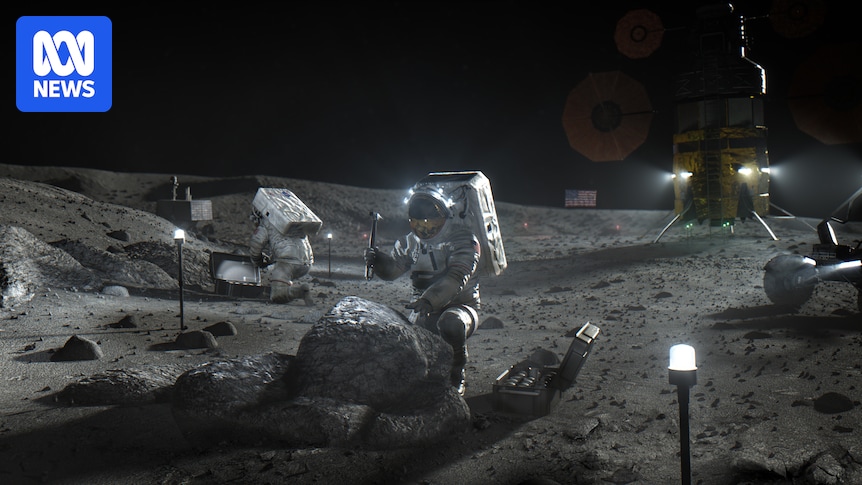
NASA has cancelled plans to deploy a space station in lunar orbit and will instead build a $28.7 billion base on the moon’s surface.
It will repurpose components from the suspended space station project for the base, while also planning to send a nuclear-powered spacecraft to Mars.
United States space agency chief Jared Isaacman announced an unprecedented array of changes to the Artemis moon program that would expand humanity’s footprint in space as the US pushes to return to the moon before China sends its astronauts there around 2030.
Mr Isaacman, an appointee of President Donald Trump, took charge at NASA in December.
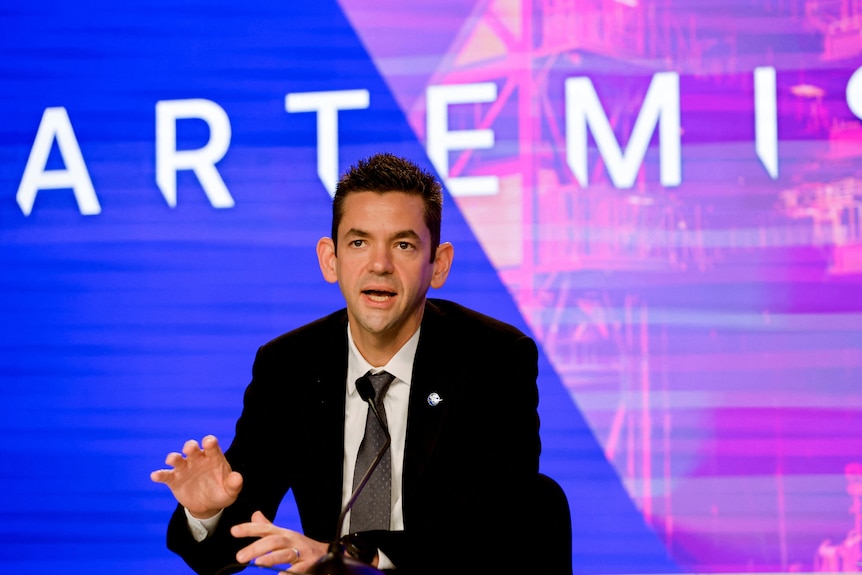
Jared Isaacman announced an array of changes to the Artemis moon program to expand the Unites States’ footprint in space. (Reuters: Joe Skipper)
The plans for the moon base included an aim to send more robotic landers, deploy a fleet of drones, and lay the groundwork for using nuclear power on the lunar surface in the next few years.
“This revised step-by-step approach to learn, build muscle memory, bring down risk, and gain confidence is exactly how NASA achieved the near impossible in the 1960s,” Mr Isaacman said, referring to the US Apollo program.
Nuclear-powered Mars mission
NASA also disclosed plans to launch a spacecraft called Space Reactor 1 Freedom to Mars before the end of 2028 in a mission it said would demonstrate advanced nuclear electric propulsion in deep space.
NASA called this a major step forward in bringing nuclear power and propulsion from the laboratory to space.
Artemis II mission to the Moon cleared for lift-off
Upon reaching Earth’s planetary neighbour, the spacecraft will deploy helicopters for exploring Mars, NASA said.
The Lunar Gateway station – largely already built with contractors Northrop Grumman and Intuitive Machines subsidiary Lanteris Space Systems – was meant to be a space station in a lunar orbit.
“It should not really surprise anyone that we are pausing Gateway in its current form and focusing on infrastructure that supports sustained operations on the lunar surface,” Mr Isaacman said at NASA’s Washington headquarters.
Repurposing Lunar Gateway to create a base on the moon’s surface — a difficult undertaking — leaves uncertain the future roles of Japan, Canada and the European Space Agency in the Artemis program, three key NASA partners that had agreed to provide components for the orbital station.
“Despite some of the very real hardware and schedule challenges, we can repurpose equipment and international partner commitments to support surface and other program objectives,” Mr Isaacman said.
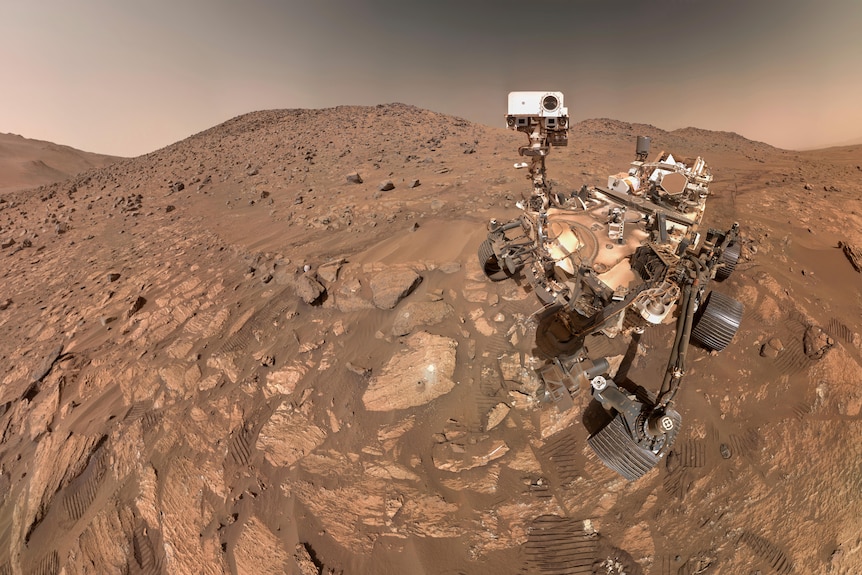
NASA also announced plans to land a spacecraft on Mars what will deploy helicopters to explore it before the end of 2028. (Supplied: NASA)
European Space Agency chief Josef Aschbacher, who attended the event, told Reuters he will study the new plans and continue talking to NASA about them.
Lunar Gateway was designed to serve as both a research platform and a transfer station that astronauts would use to board the moon landers before descending to the lunar surface.
NASA’s current plans call for landing astronauts on the moon’s surface in 2028.
The changes made by Mr Isaacman in recent weeks on the flagship US moon program are reshaping billions of dollars’ worth of contracts under the Artemis umbrella, sending companies scrambling to accommodate the extra US urgency as China makes progress toward its own planned 2030 moon landing.
Lunar lander projects behind schedule
Central to the Artemis program is its astronaut lunar lander program, with Elon Musk’s SpaceX and Jeff Bezos’ Blue Origin both racing to develop moon landers for NASA.
The two companies, each targeting an initial crewed landing on the moon in 2028, have fallen behind schedule.
NASA set to launch humans around Moon
Mr Isaacman and other senior NASA officials made little mention of the two companies’ plans to accelerate development of their landers to meet a 2028 astronaut landing deadline.
But NASA’s acting associate administrator Lori Glaze suggested the companies want to dock with the Orion astronaut capsule in a different orbit between Earth and the moon than planned, before ferrying the astronauts to the surface.
Ms Glaze said “SpaceX has been considering alternatives of their current Starship design” for the moon lander, “while implementing a more streamlined approach to try and speed things up and pull things forward”.
Earlier this month, NASA’s inspector general said SpaceX, tapped in 2021 for the first astronaut moon lander under the program, is two years behind schedule, while the company and Blue Origin face a list of complex engineering challenges before they can fly humans.
But as part of the agency’s Artemis shake-up, Ms Glaze said it would use whichever lander is ready first instead of sticking to a pre-determined order of mission assignments.
The Artemis program, begun in 2017 during Mr Trump’s first term, envisions regular lunar missions as NASA’s long-awaited follow-up to its first moon missions in the Apollo program that ended in 1972.
Reuters