
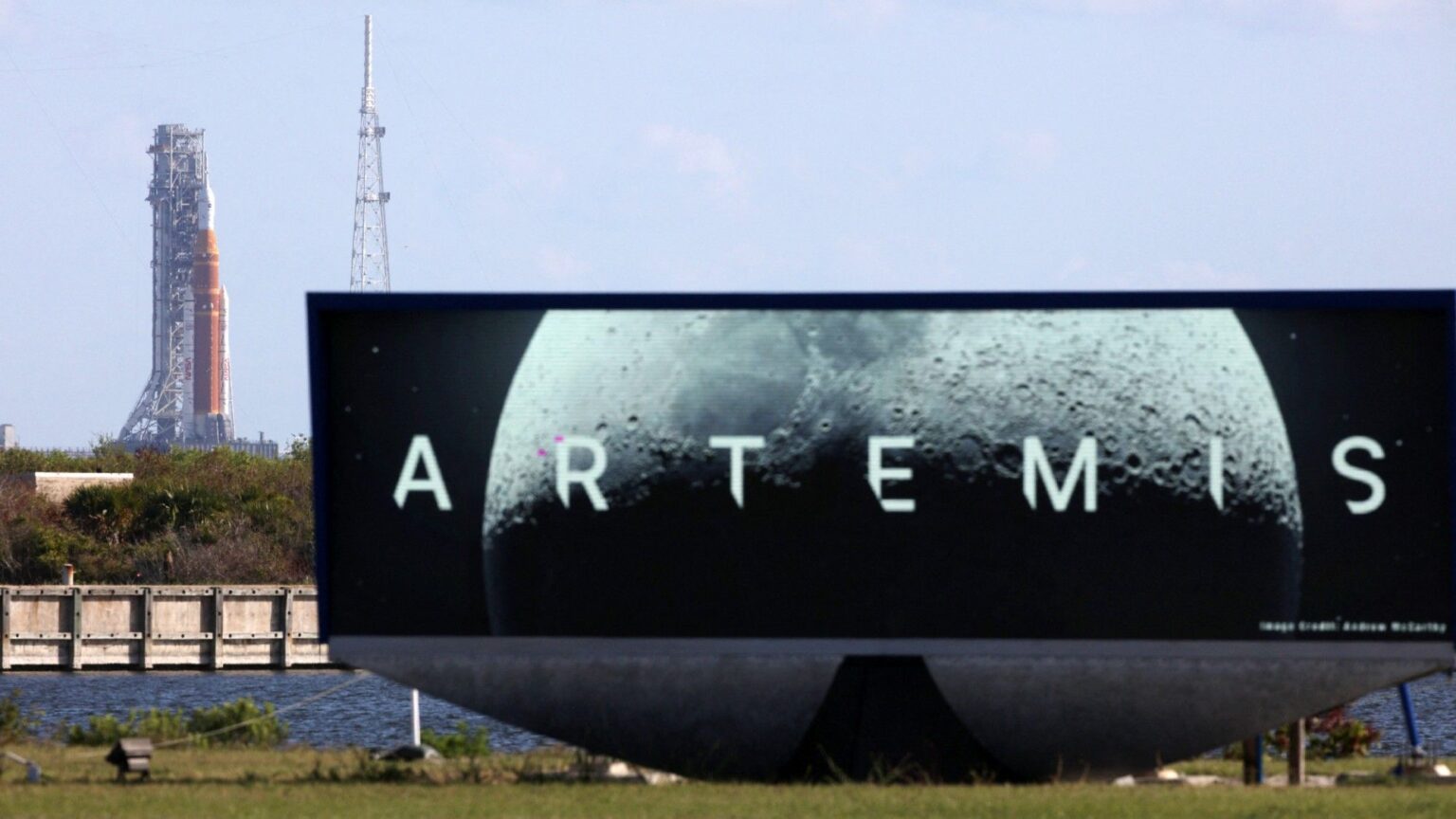
NASA on Tuesday announced that in the next few years it will start building a permanent base on the moon and send three small helicopters to Mars aboard a pioneering nuclear-powered robotic spacecraft. “This is the moment where we should all start believing again,” NASA’s new administrator, Jared Isaacman, said at an international space conference in Houston. “NASA once changed everything, and we’re going to do it again.”
Who said what
NASA’s “years of talking about lunar outposts in vague terms for sometime in the indefinite future” appear to have ended with this new “road map” with “specific plans and timelines,” The New York Times said. Isaacman said that NASA has committed to return astronauts to the moon “before the end of President Trump’s term” and ahead of “real geopolitical rival” China’s planned 2030 crewed lunar landing.
As part of Isaacman’s revamp of NASA’s flagship Artemis lunar program, the Lunar Gateway orbiting station, which is “largely already built,” will be shelved, Reuters said. The new plan to repurpose its components to build the $20 billion moon base raises questions about the “future roles” of “key” Artemis partners Japan, Canada and the European Space Agency. Experts also questioned the feasibility of launching a Mars-bound spacecraft powered by nuclear electric propulsion in 2028. The “dominant reaction” among spaceflight experts, cosmologist Katie Mack said, “is somewhere on the spectrum between mockery and dismay.”
Article continues below
You may like
The Week
Escape your echo chamber. Get the facts behind the news, plus analysis from multiple perspectives.
SUBSCRIBE & SAVE
Sign up for The Week’s Free Newsletters
From our morning news briefing to a weekly Good News Newsletter, get the best of The Week delivered directly to your inbox.
From our morning news briefing to a weekly Good News Newsletter, get the best of The Week delivered directly to your inbox.
What next?
Issacson said Artemis 3, now a mission to test the Orion space capsule’s integration with lunar landers, is scheduled for 2027, while Artemis 4 will send astronauts to the moon in 2028. Tuesday’s announcements came “one week before NASA’s targeted launch of Artemis 2,” the first crewed flight around the moon since 1972’s Apollo 17, space.com said.