
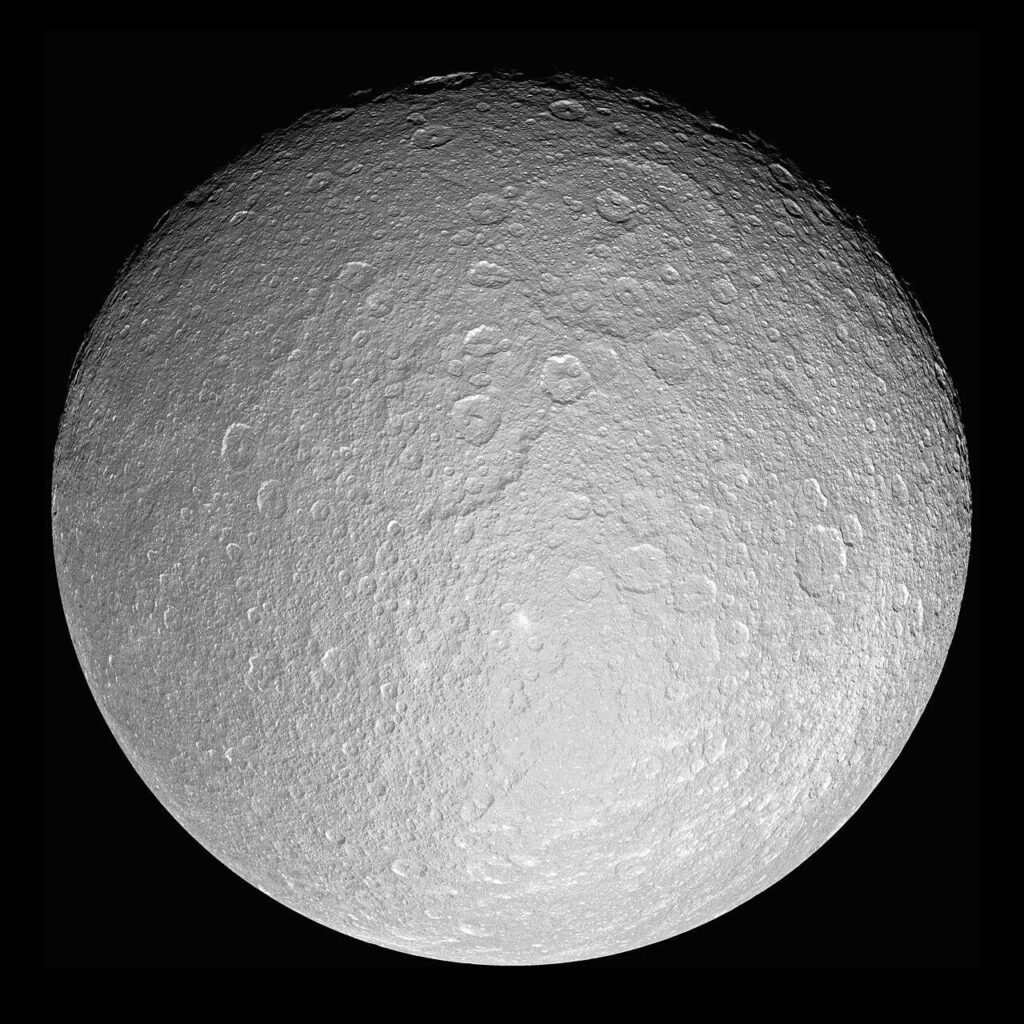
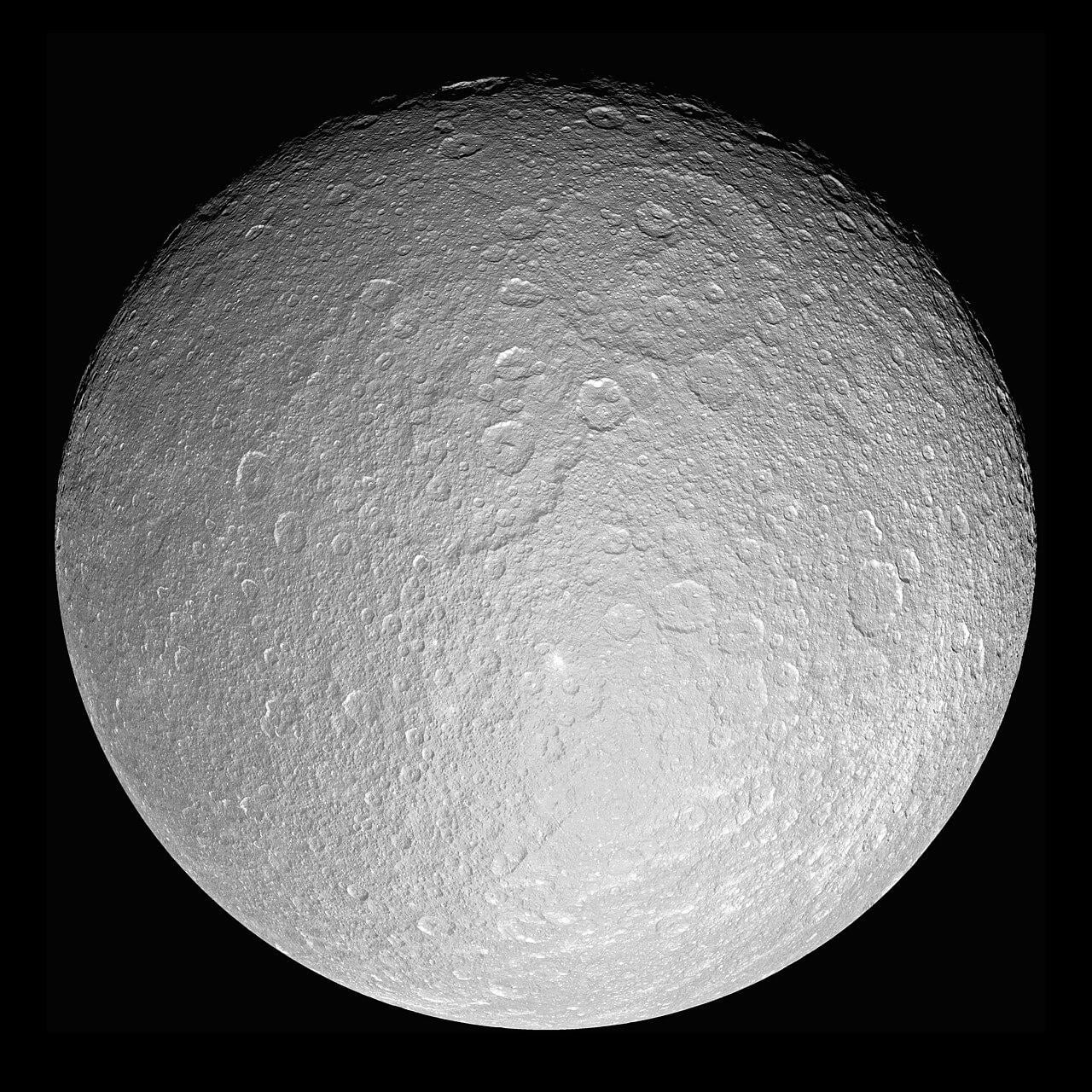
Wikipedia says that Rhea is the smallest body in the solar system confirmed to be in hydrostatic equilibrium¹, and so Iapetus, Dione, Enceladus, Ceres, Ariel, Miranda, Umbriel, Charon, Mimas, etc are all not in equilibrium, so how can they be round?
And why are there things larger and more massive than some of the above listed objects that are not round, like Proteus or Vesta, both larger than Mimas.
Also, all of them appear on the wikipedia page of "gravitationally rounded objects"² so they are gravitationally round, but not in hydrostatic equilibrium?
At last, Ceres is said to "possibly be" in equilibrium³, how can that be, if there are objects like Iapetus with double the mass that are explicitly said not to be⁴. Although it explains that the inconsistent oblateness is due to the formation of a thick crust freezing its shape, it doesn't explain how it got rounded in the first place.
1: https://en.wikipedia.org/wiki/Rhea_(moon)), first paragraph
2: https://en.wikipedia.org/wiki/List_of_gravitationally_rounded_objects_of_the_Solar_System
3: https://en.wikipedia.org/wiki/Ceres_(dwarf_planet)), "Geology" tab, second paragraph
4: https://en.wikipedia.org/wiki/Iapetus_(moon)), "Overall Shape" tab
by Rude_Boot9718
4 Comments
Iapetus is one I can address. It *is* in hydrostatic equilibrium but this doesn’t fully explain its shape. Earth’s moon is the same, it has substantial gravitational unevenness and its centre of mass is offset from its spherical centre by a substantial amount, due to differences in nearside and farside density.
Nobody would argue the Moon is not in hydrostatic equilibrium.
Hydrostatic equilibrium is not a “YES” or “NO” tickbox. Mount Everest is not in hydrostatic equilibrium, so Earth is also not in hydrostatic equilibrium. There are always rigid body forces and tidal forces involved, its whether these are **dominant** or not. On Iapetus, they are not.
Just from a casual understanding you might want to check the centrifugal forces from both there spins and from what they orbit. Id imagine theese woukd cause more internal stress/heat and result in a rounder object.
About Vesta, it is made of rock and metal, while Mimas is ice – a way more “flexible” material, and one that can be smelted at much lower temperatures. Therefore, very feeble gravitational forces that were enough to make Mimas round wouldn’t get the same result for Vesta, even with a larger mass.
That is, composition is also important for roundness. Also, historic of impacts: some small worlds may have been round at some point in the past, but they got whacked and broken by other stuff hitting them and never recovered to their former self.
TL;DR: roundness is a complicated issue and much of a gray area for smaller bodies.
Hydrostatic equilibrium just means internal pressure pushing up equals gravity pulling down. Boats do this all the time. The water pressure on the hull is a net upward force, while gravity from the overall weight of the boat is a downwards force. The boat floats at a height where those forces are equal.
But water is a liquid and flows easily. Mountains are not, so can maintain a height above surrounding land. So the question for smaller solar system bodies is what are they made of and how strong/fluid is that material?
Taking the case of Rhea, based on it’s density it is 25% rock and 75% water ice. Normal ice has a compressive strength of 6 MPa, which given the density and gravity on Rhea, would be reached 18.6 km down. The radius of Rhea is 763 km, so you reach the strength of ice not far down.
So Rhea can support some height differences, like the walls of the surface craters, but the overall shape can’t be more than 1.2% out of round. At that point the strength of ice would be exceeded and the high points would collapse down.
Now take the case of asteroid 4 Vesta. It is 22% out of round (flattened). It’s not locked to a parent planet like Rhea is and spins every 4.3 hours. It is composed of relatively dense rock, which is ~16x stronger than ice. It can support height differences of 132 km, where the actual out-of roundness is 63 km. The combination of size and self-gravity isn’t enough to force it to be round.