
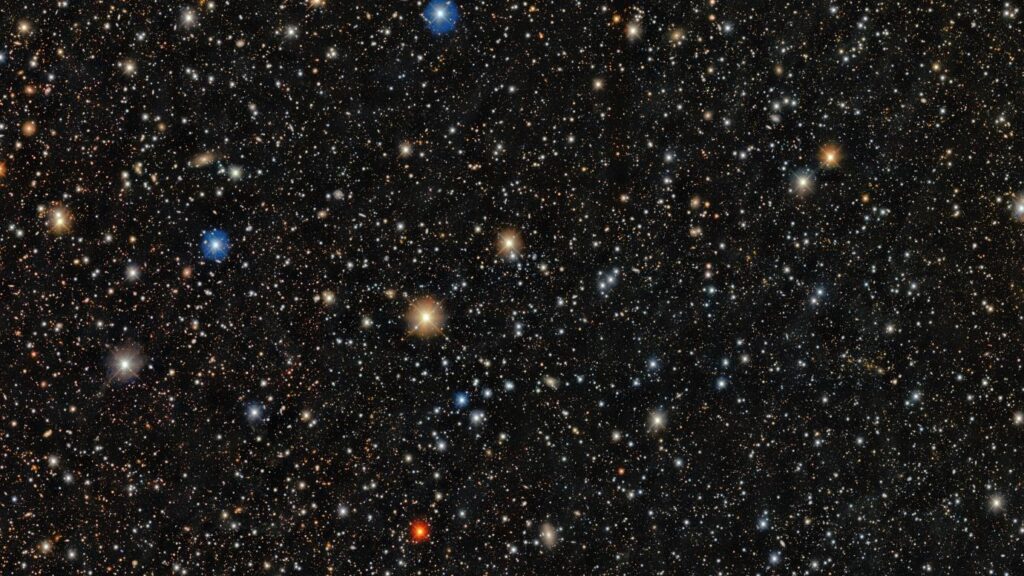
Astronomers have taken an important step toward understanding how the Universe became habitable. Thanks to the Dark Energy Camera (DECam) mounted on the 4-meter telescope in Chile, scientists have detected a unique object—the star PicII-503.
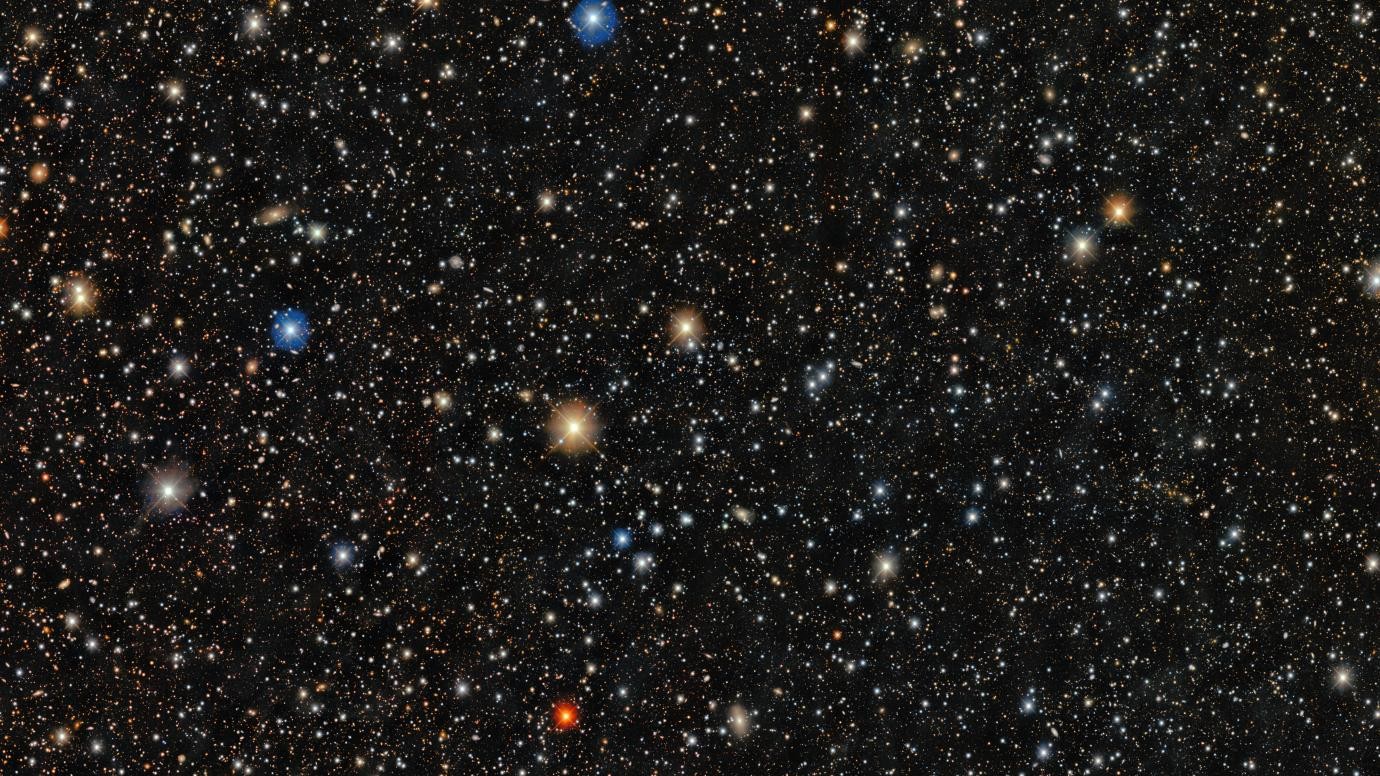 Stars in the extremely faint dwarf galaxy Pictor II, which is over ten billion years old. Scientists have determined that one of the stars in this image, PicII-503, likely belongs to the Population II stars in the Universe. Image credit: CTIO/NOIRLab/DOE/NSF/AURA
The star is located within the dwarf galaxy Pictor II, which is more than 10 billion years old. PicII-503 belongs to what is known as Population II—these are second-generation stars that formed when the Universe was very young. These are true relics of an era when there were no heavy metals in the Universe yet, and only hydrogen and helium prevailed.
A strict diet and excess carbon
The main feature of the PicII-503 lies in its chemical composition, which is striking in its contrasts. If we compare it to our Sun, we find that it contains 40,000 times less iron. However, what the star lacks in metals, it compensates for with carbon.
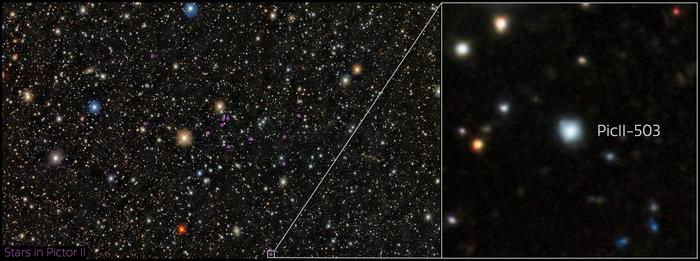 Location of PicII-503 inside the Pictor II telescope. Image: CTIO/NOIRLab/DOE/NSF/AURA
Researchers have discovered that the carbon-to-iron ratio in this ancient star is 1,500 times greater than that of our Sun. This “imbalance” in the composition is no accident—it holds the key to understanding how the Universe became enriched with the elements necessary for the emergence of biological life.
Work of “star archaeologists”
Most of the ancient Population II stars left their birthplaces long ago, which makes it difficult for scientists to test theories about their origins. But PicII-503 is a special case: it is still located in its original dwarf galaxy. This has allowed astronomers to act as “space archaeologists.”
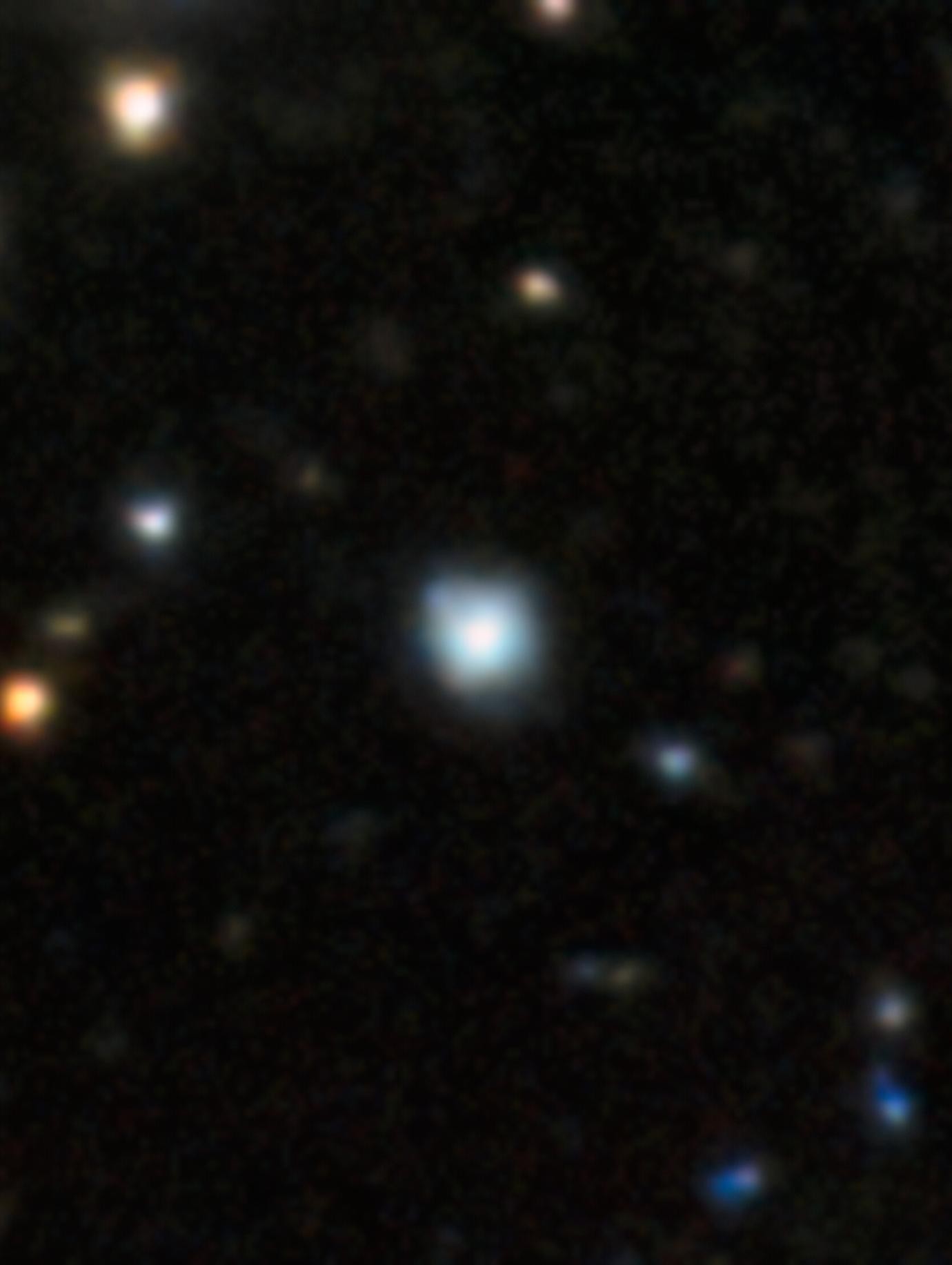 Close-up image of the star PicII-503, which has the lowest iron content of any star discovered outside the Milky Way. Image: CTIO/NOIRLab/DOE/NSF/AURA
An analysis of the star’s composition confirmed an important hypothesis:
Shock wave. During the powerful supernova explosions at the dawn of the Universe, light carbon from the stars’ outer layers was ejected much farther than other, heavier elements.
Seeding of space. This mechanism allowed carbon to spread over vast distances, making it available for the formation of future planets and, ultimately, complex organic molecules.
Carbon is a fundamental building block of life on Earth. Understanding how it formed in the cores of the first stars and spread throughout the galaxies brings us closer to answering the question as to the origin of life itself. PicII-503 proves that everything we see in the mirror today has been forged in the fire of the stars 10 billion years ago.
We previously reported on how the carbon in our bodies originated from beyond the Milky Way.
According to uchicago.edu