
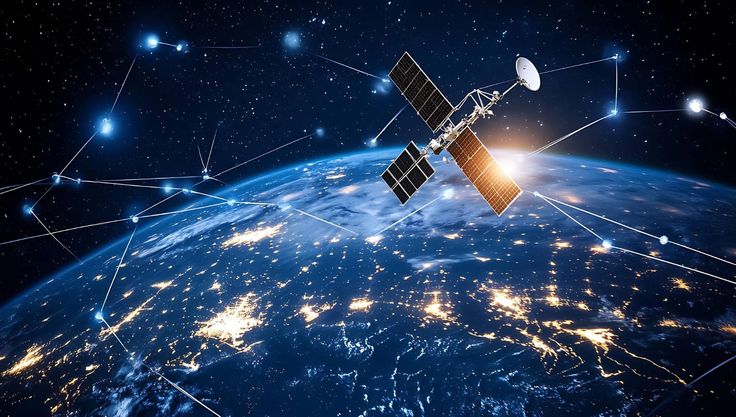
After weeks of uncertainty, the Proba-3 mission has successfully re-established communication with Earth, bringing relief to scientists at the European Space Agency. The spacecraft had gone silent for nearly a month, raising concerns about a potential mission failure.
🔹 What Happened?
The Proba-3 spacecraft, designed for precision formation flying and solar corona studies, unexpectedly lost contact during a routine operation:
Communication blackout lasted almost 30 days
Initial attempts to reconnect were unsuccessful
Engineers feared possible system malfunction or power failure
However, in a recent update, ESA confirmed that contact has been restored, and the spacecraft is now transmitting basic telemetry data.
🌞 Mission Importance
Proba-3 is a highly innovative mission aiming to:
Study the Sun’s corona by creating an artificial solar eclipse in space
Demonstrate precise formation flying between two spacecraft
Advance technologies for future space-based observatories
The mission is considered a technology demonstrator, meaning its success could influence next-generation space missions.
🔧 What Caused the Silence?
While investigations are ongoing, ESA engineers suspect:
A temporary power system glitch
Orientation issues affecting antenna alignment
Software-related anomalies disrupting communication
Early data suggests the spacecraft entered a safe mode, a protective state that limits functions while preserving core systems.
🔹 Recovery Efforts
ESA teams worked around the clock to:
Send repeated reconnection signals
Adjust ground station tracking parameters
Use backup communication protocols
The successful reconnection indicates that critical systems remain functional, though full recovery will take time.
📅 What’s Next
Engineers will now:
Conduct a full system health check
Gradually restore mission operations
Investigate the root cause to prevent future issues
If all systems return to normal, Proba-3 could resume its scientific objectives later in 2026.
🌌 Final Thoughts
The recovery of Proba-3 highlights both the challenges and resilience of modern space missions. Even in the harsh environment of space, advanced engineering and persistent effort can bring missions back from the brink, ensuring valuable scientific work continues.