


The Ala Wai Golf Course is seen inundated with water from Hawaii’s worst flooding in decades. (Image credit: Stephen Lam/San Francisco Chronicle via Getty Images)
The world’s climate is more out of balance than at any time in recorded history, the UN’s weather agency said in a dire warning today.
We already know that human-released carbon emissions blanket Earth’s atmosphere and increasingly trap more solar radiation than can be reemitted back into space, creating an imbalance that heats the planet. But a new report by the World Meteorological Organization (WMO) has revealed that this process is happening faster than any time in history, with 2025 beating the previous record set the year before.
Much of the excess heat, roughly 91%, was absorbed by the oceans; another 5% heated the land; 3% went into ice and 1% into the air. The spillover effects of this planetary heating are also becoming more pronounced. This month alone there has been snow in Alabama, a record-shattering heatwave across the West, and flooding that has prompted evacuations in Hawaii.
The trend
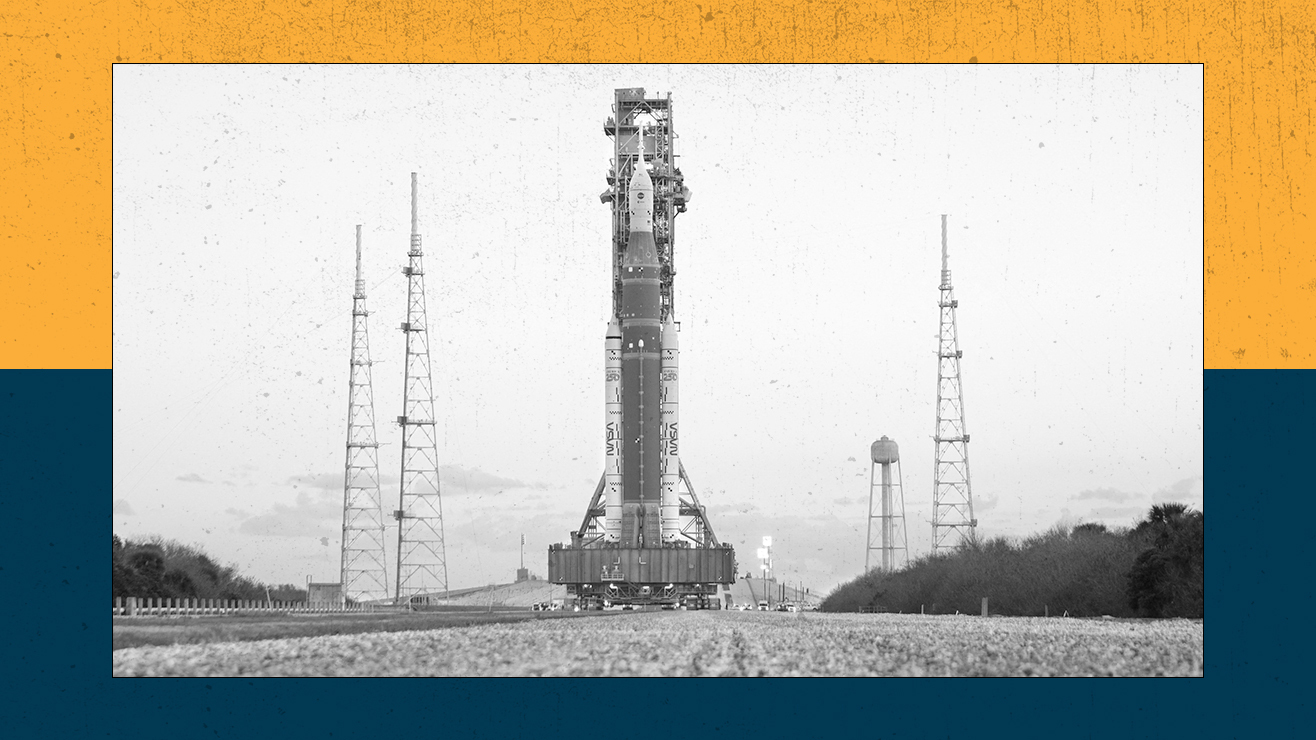
NASA’s Artemis II rocket rolls toward Launch Pad 39B at the Kennedy Space Center in Cape Canaveral. (Image credit: Gregg Newton / AFP via Getty Images)
NASA‘s Artemis II moon rocket is back on its launchpad as the space agency makes a final bid to launch the spacecraft before its April deadline.
This is the second time that the 322-foot-tall (98 meters) Space Launch System and Orion capsule stack has rolled out to the launchpad this year, the first having taken place on Jan. 17. But following two wet dress rehearsals and two leaks, NASA decided to wheel the rocket back to the Vehicle Assembly Building for repairs.
NASA is expected to announce further tests, including a wet dress rehearsal, this week. If the fixes have worked as planned, the rocket could blast off as early as April 1.
Three to readA new twist on matter? Strange ‘Half-Mӧbius’ molecule has rare properties chemists have never seen before [Live Science]China could be the world’s biggest public funder of science within two years [Nature]5m tonnes of CO2 emitted in just 14 days of US war on Iran, analysis finds [The Guardian]Say it, said itWord of the day
Stereopsis — Greek for “solid sight”, used to describe the forward-facing eyes of predators including cats, snakes and humans that judge distance by comparing the slight differences between their two views.
Quote of the day
“Our ability to adapt to our different environments and the cultural adaptations we see, the biological — that’s our superpower. That’s why there’s 9 billion of us and not 9 billion of some other primate.”
Herman Pontzer, a professor of evolutionary anthropology and global health at Duke University, on how humans used adaptability to take over the planet.
Fun and games
You’re reading this on one kind of computer or another. But how much do you know about the history of the now-ubiquitous technology? Test your knowledge with this quiz.
Follow Live Science on social media
Want more science news? Follow our Live Science WhatsApp Channel for the latest discoveries as they happen. It’s the best way to get our expert reporting on the go, but if you don’t use WhatsApp we’re also on Facebook, X (formerly Twitter), Flipboard, Instagram, TikTok, YouTube, Bluesky and LinkedIn.