

“Project Hail Mary“, the new movie based on author Andy Weir’s book of the same name, is a wild romp through the cosmos.
The film explores many of the same areas of science as Weir’s previous work, from engineering and psychology to planetary and stellar science. But it also ventures into new territory: speculative biology. Ahead of the movie’s release, we had the chance to talk to Weir about his approach to astrobiology and alien life in “Project Hail Mary”.
Article continues below
You may like
Searching for alien life
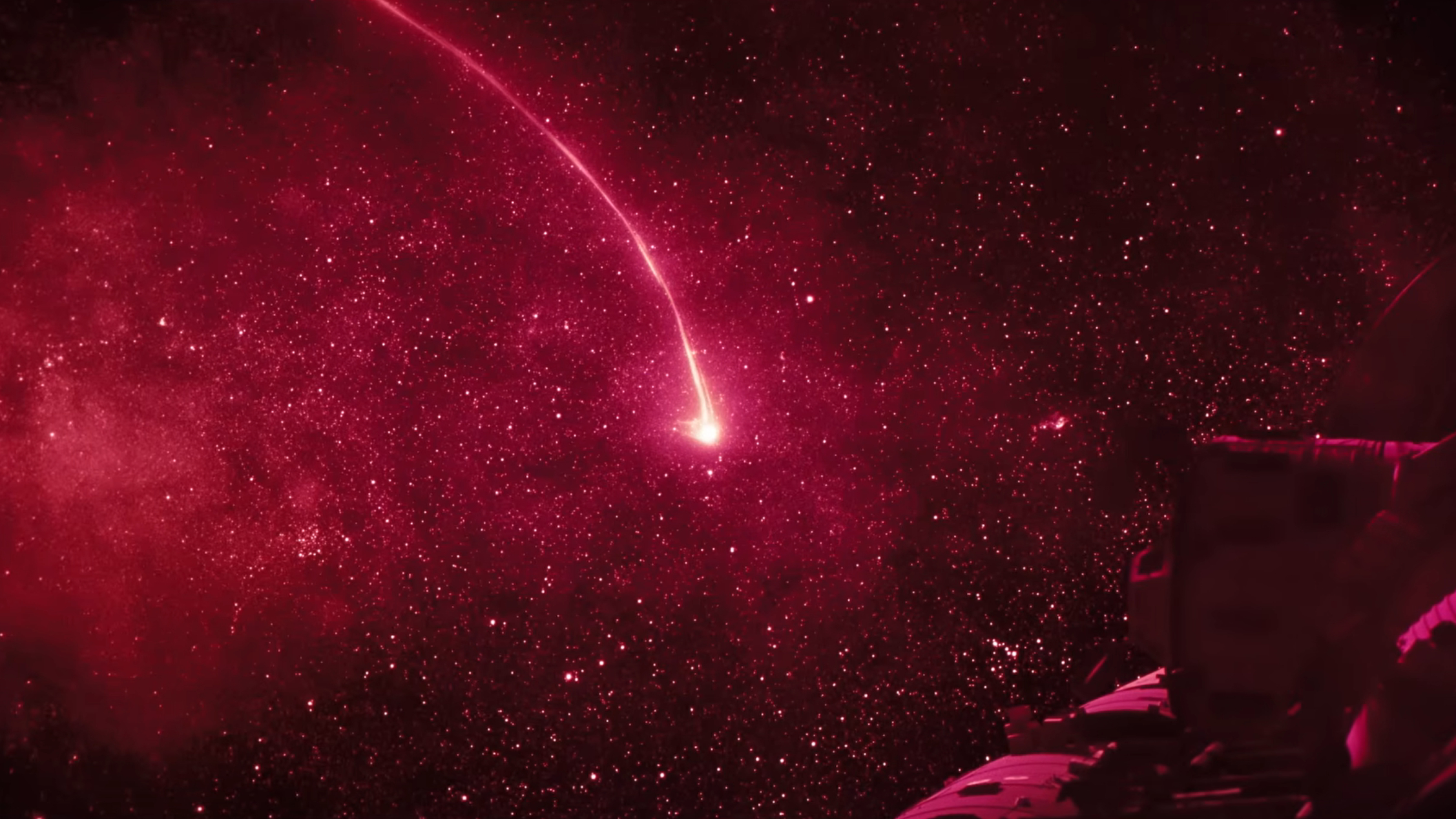
A pinkish-red line extending out from a star in space, shown in the movie Project Hail Mary. Yes we know what it is, no we’re not telling you. Spoilers! (Image credit: Amazon MGM)
In “Project Hail Mary”, our sun becomes infected with an alien microbe called “astrophage.” These single-celled organisms feed on stars, converting their heat into neutrinos and then light that they use to “scoot” between solar systems. “It’s basically just mold that lives on stars,” Weir told Space.com in an interview. Which is pretty cool — except that it slowly kills the stars it feeds on.
This becomes the main catalyst for the film’s plot: humanity needs to figure out a way to stop astrophage from eating the sun. And it provides an inroad for the story to probe the real-life field of astrobiology, or the study of how life may have evolved beyond Earth.
At this point in history, astrobiology is a pretty wide-open discipline. When we’re searching for life elsewhere in the universe, we only have life on Earth as a point of comparison (so far). That means scientists tend to look for familiar characteristics: composed of cells, carbon-based, and a genetic code containing DNA or RNA. They also look for certain chemical signatures, like methane, phosphine, or water, in the atmospheres of distant (or nearby) planets.
As far as we know, these aren’t hard constraints; life beyond Earth may well exist outside these boundaries. But these exotic types of life might be difficult for humans to interact with, or even recognize as living things. “I didn’t want to try to invent multiple different kinds of lifeforms all the way from the ground up,” says Weir. “So I decided there was a panspermia event.”
A point of origin
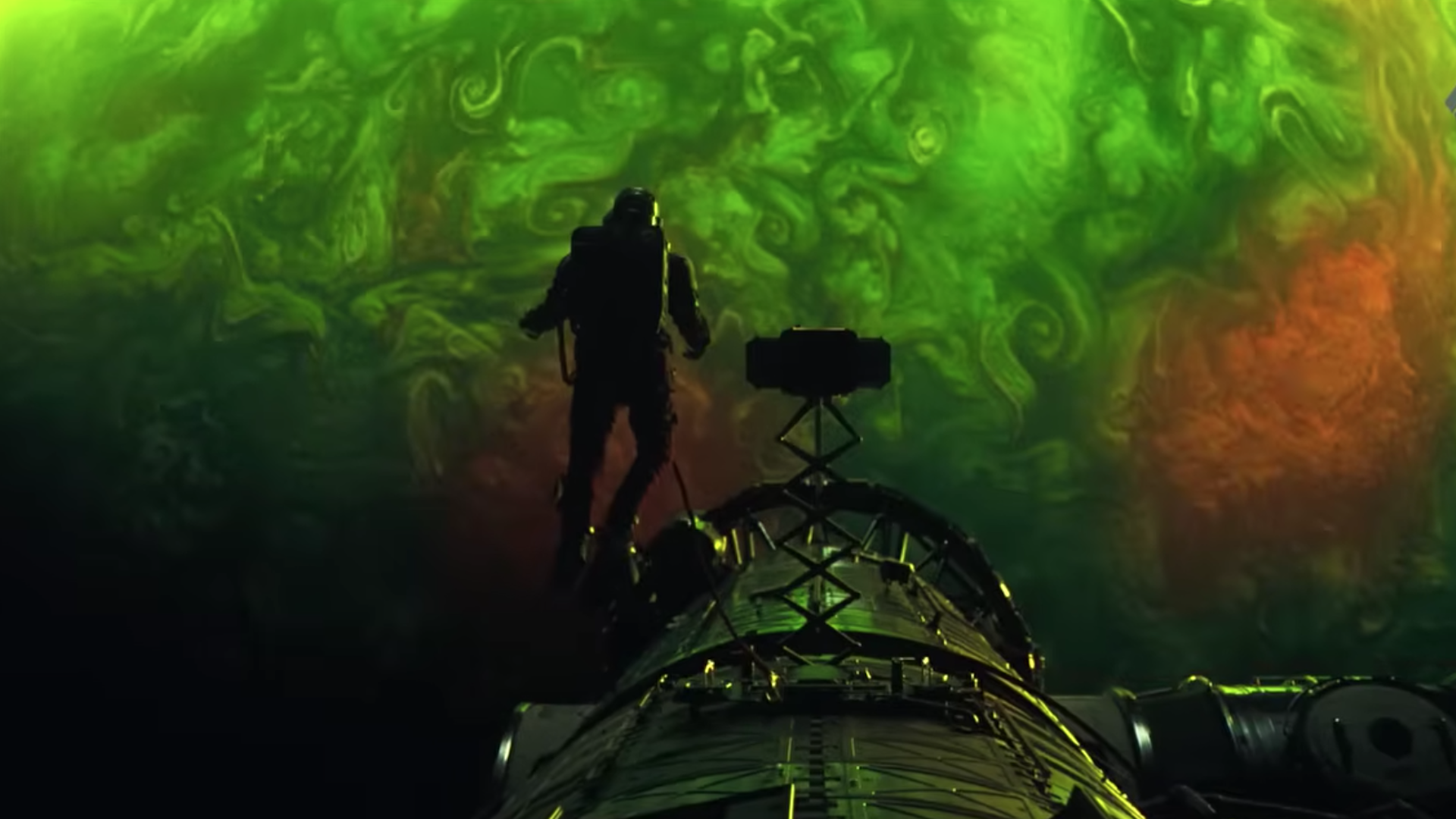
Ryland Grace performs a spacewalk in orbit of Tau Ceti e in Project Hail Mary. (Image credit: Amazon MGM Studios)
Panspermia is the hypothesis that life may have been “seeded” throughout the cosmos after arising in a particular location. In real life, some scientists hypothesize that life on Earth may have hitched a ride here on Martian meteorites, for example, or vice-versa. In the universe of “Project Hail Mary”, life evolved on a planet orbiting the star Tau Ceti some 11.9 light-years away from our solar system. These single-celled ancestors of astrophage developed a method to hop, skip, and jump from star to star, allowing them to disperse all the way to Earth and beyond.
Weir says this origin point was very deliberate. “I chose Tau Ceti on purpose because it’s a very old star,” he said. Tau Ceti is thought to be upwards of 9 billion years old, about twice the age of our sun. This would give any potential life in the Tau Ceti system a huge evolutionary head start compared to our planet.
What’s more, astronomers have confirmed that there are at least two rocky planets orbiting the star. These planets, Tau Ceti e — rechristened ‘Adrian’ in “Project Hail Mary” — and Tau Ceti f, are more massive than Earth, and each orbits at a distance that would allow liquid water to exist.
What to read next
Thought experiments in evolution
Project Hail Mary | “Grace Meets Rocky” – Official Clip – YouTube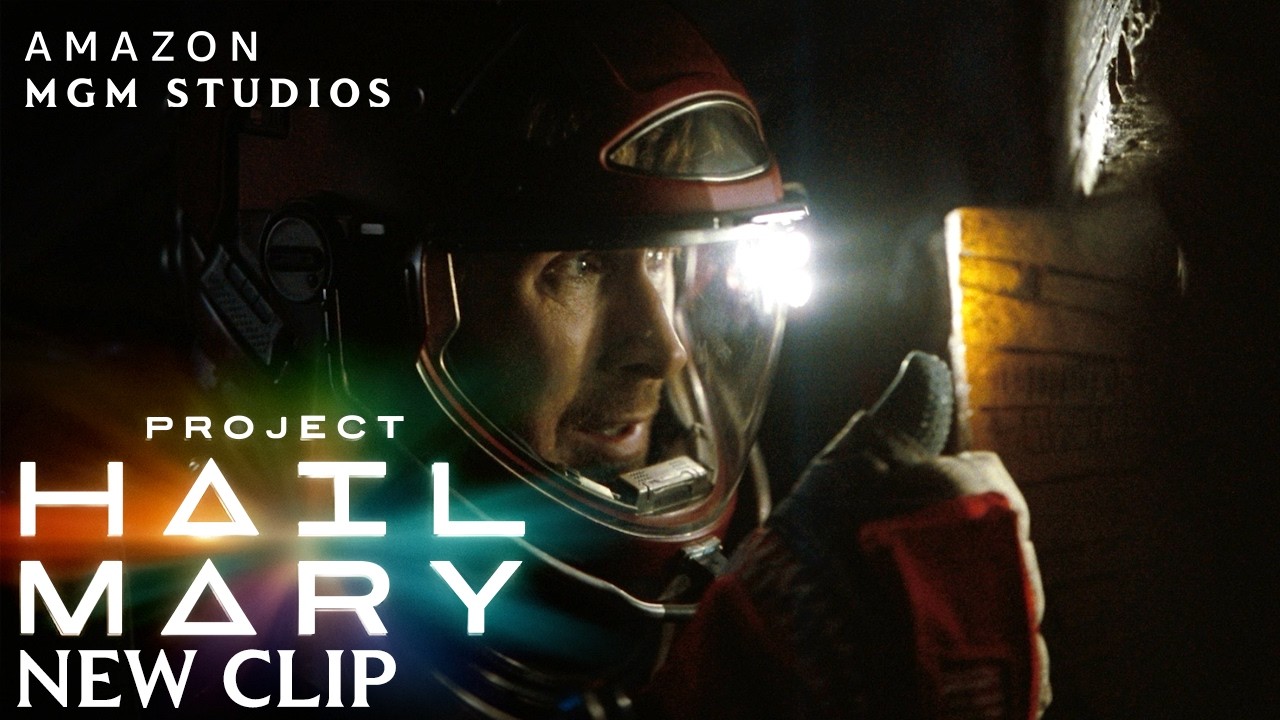
Over the course of the film, Ryan Gosling’s character, biologist Ryland Grace, encounters three extraterrestrial species: astrophage, its natural predator taumeoba, and Rocky, a sentient alien from a planet whose star is also infected with astrophage.
Astrophage’s unique biology allows it to metabolize thermal energy directly. Arguably, its most important function in the story is as the “MacGuffin” that powers Grace’s ship. By storing and releasing energy so efficiently, astrophage makes the perfect fuel for an interstellar spacecraft. “If we had that in real life, we really could make an interstellar ship right now,” Weir said.
While astrophage is the fantastical part of the story, its biology is not totally ungrounded — some extremophile microbes live in volcanic hot springs where temperatures regularly reach 80℃, while others can survive intense doses of radiation.
Taumeoba, another alien microbe, is captured high in the atmosphere of Adrian. This parallels many species of bacteria and fungi on Earth that make their home in the troposphere and sometimes influence the weather.
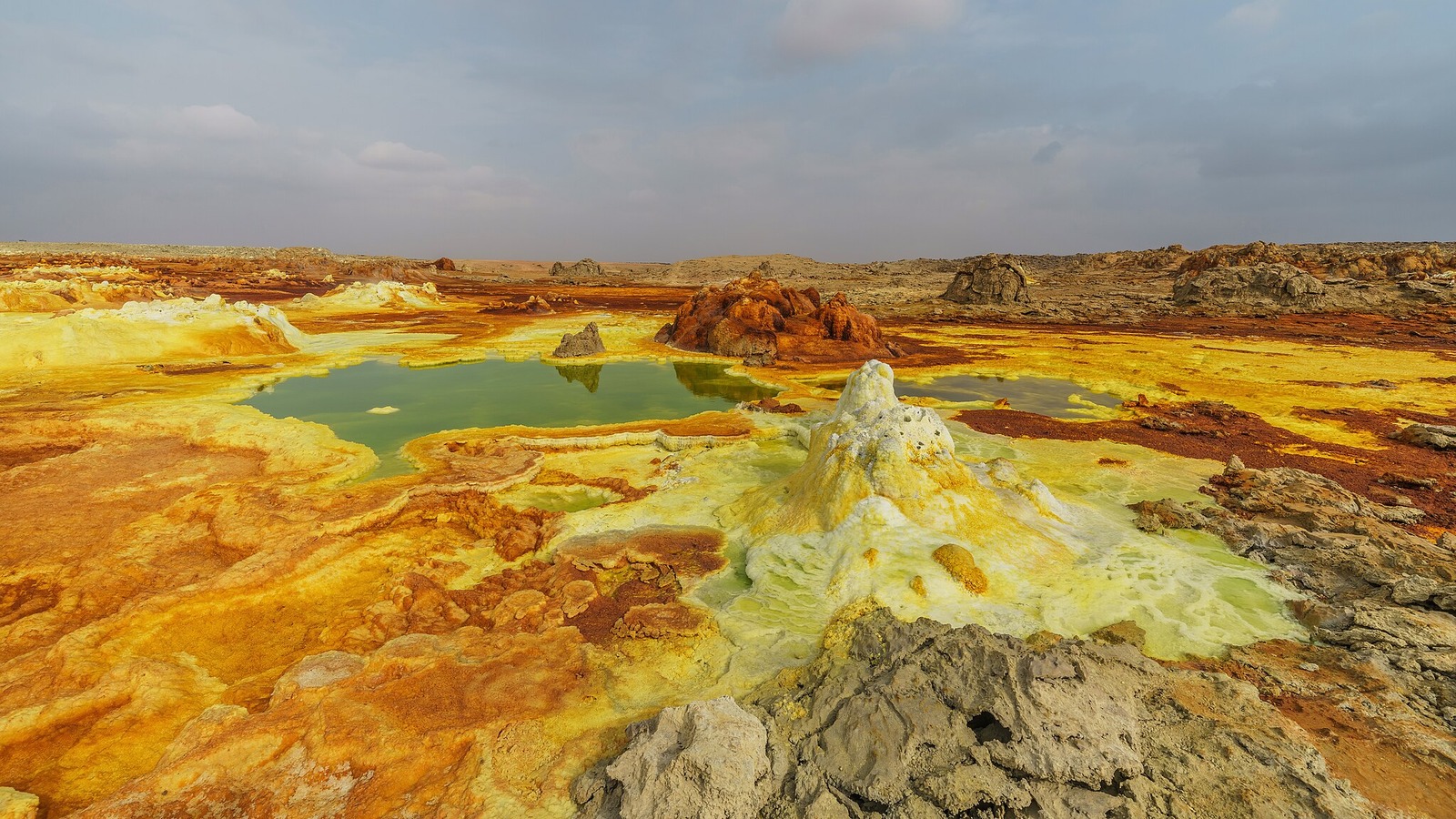
A volcanic hydrothermal system in the Danakil Depression, northeast of the Erta Ale Range in Ethiopia. This area’s harsh conditions make it a site of importance for astrobiology and extremophile study. (Image credit: A.Savin via Wikimedia Commons)
Rocky’s species is particularly intriguing. Like humans, they have spoken language, concepts of timekeeping, and advanced engineering. But unlike us, they evolved in an environment with very little light, an atmosphere composed largely of ammonia, and, notably, no liquid water. This last feature might sound like it would disqualify Rocky’s planet from hosting life. But this is an actual possibility that real-world biologists have explored. A 2018 study in Nature Scientific Reports found that life could, theoretically, evolve without water under specific circumstances.
Research and writing on astrobiology help scientists flex their imaginations and expand their horizons in the search for extraterrestrial life. Maybe one day we will find life beyond our planet, just as the protagonists of “Project Hail Mary” do.
But hopefully, it won’t try to eat the sun.
“Project Hail Mary” lands in theaters across the US on March 20, 2026.