
Image:
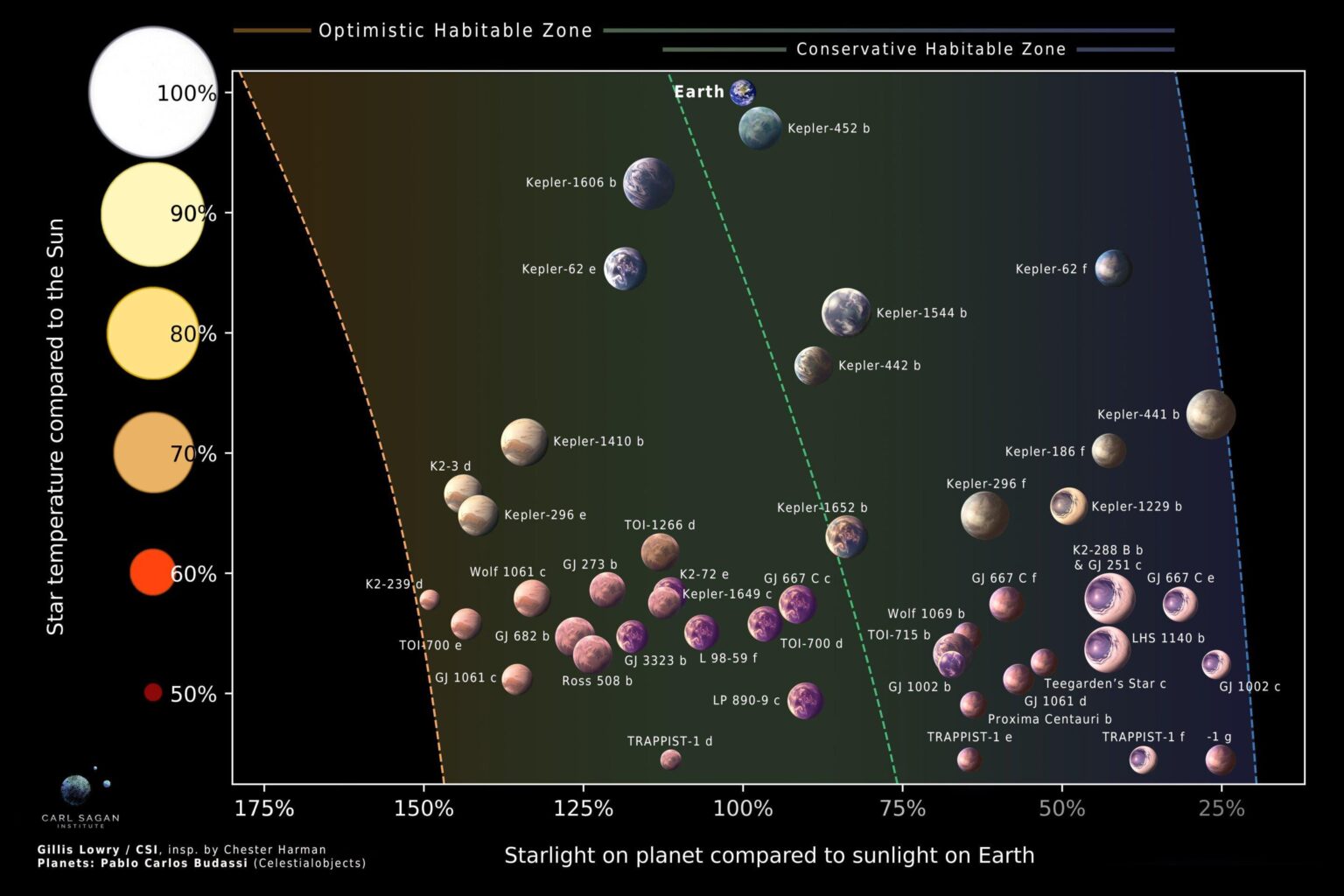
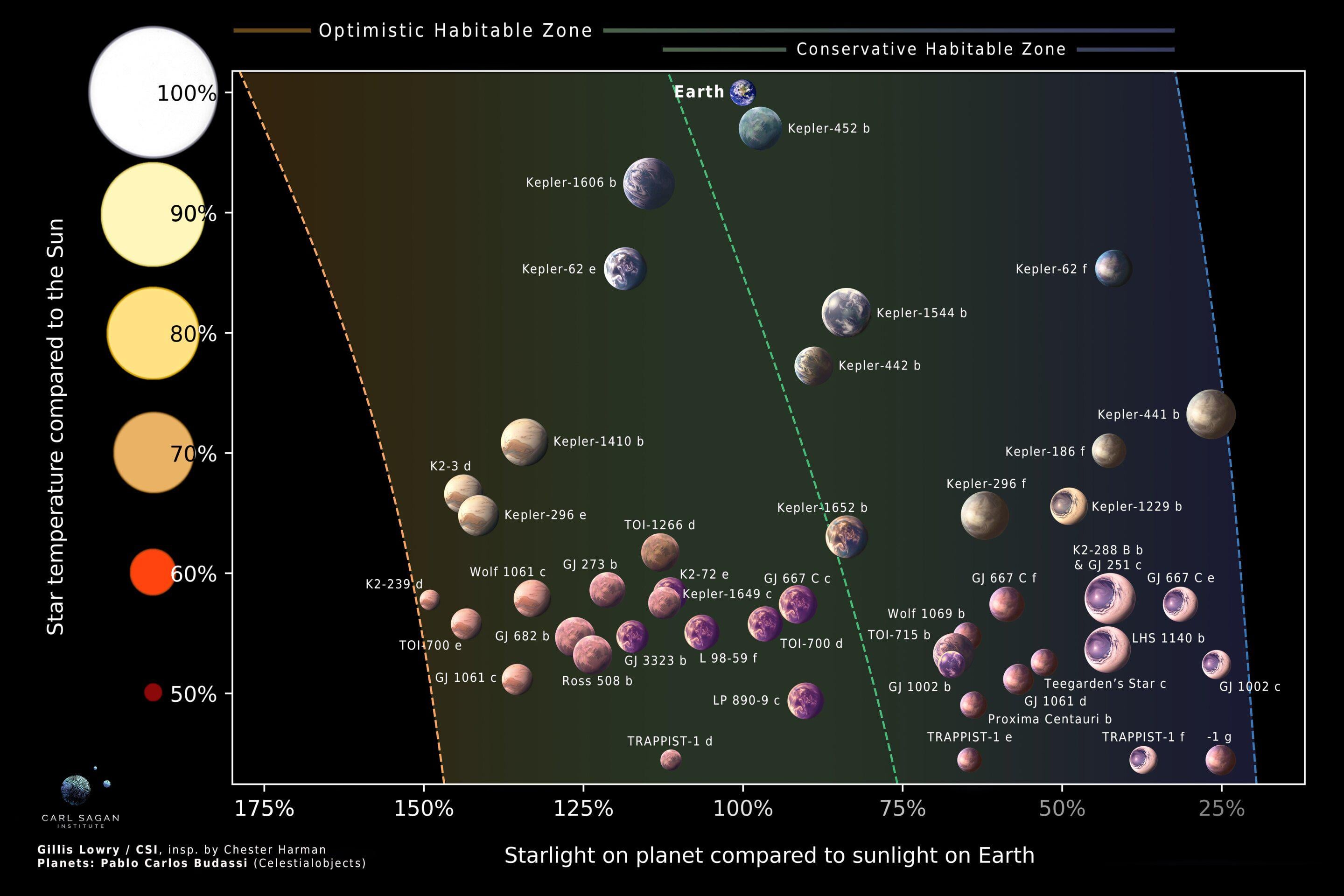
A diagram depicting habitable zone boundaries across star type with rocky exoplanets from Bohl et al. (2026). The boundaries of the habitable zone shift based on star colour, since different wavelengths of light will heat a planet's atmosphere differently.
Credit
Gillis Lowry / Pablo Carlos Budassi
.
If we're to find extraterrestrial life in the universe, astronomers have pinpointed the best places to look for it.
They have identified just under 50 rocky worlds most likely to be habitable out of the more than 6,000 exoplanets discovered so far.
Their research, published today in Monthly Notices of the Royal Astronomical Society, would be useful in a scenario portrayed in the newly-released Hollywood blockbuster Project Hail Mary, which sees Ryan Gosling's character having to travel to an exoplanet system in search of a way to save Earth.
On the way he encounters an alien lifeform named Rocky and the fictional extraterrestrial micro-organisms Astrophage and Taumoeba.
Professor Lisa Kaltenegger, director of the Carl Sagan Institute at Cornell University, and a team of undergraduate students used new data from the European Space Agency's Gaia mission and the NASA Exoplanet Archive to identify planets in the so-called habitable zone.
This is an area not too close to a host star that it’s too hot, and not too far away that it’s too cold. lt also means that, like Earth, a planet is much more likely to have water on its surface – which is a key ingredient for life.
The paper, titled 'Probing the limits of habitability: a catalogue of rocky exoplanets in the habitable zone', also shortlisted the worlds that receive the most similar energy from their star compared to what Earth gets from our Sun.
Paper
https://academic.oup.com/mnras/article-lookup/doi/10.1093/mnras/stag028
by Neaterntal
9 Comments
That’s not what Project Hail Mary is.
Why isn’t earth at 100% for the X-Axis?
Where’s Delta Pavonis?
Open the iris
Kepler 1606 B would be awesome if it really is just a bigger Earth.
Contact me now for Kepler 452 b real estate! $100 an acre!
.
*No refunds*
“You spent years combating the assumption that life requires liquid water. You have an entire section here called ‘The Goldilocks Zone Is for Idiots.’ You call out dozens of eminent scientists by name and berate them for believing a temperature range is a requirement.”
If you’d shrink the sun down to the size of a tennis ball, earth would be the size of a grain of sand and 20ft away. The closest star, Proxima Centauri, would be the size of a cherry and if the tennis ball was in New York City, the cherry would be a little south of Miami
Even if we find another habitable planet, i doubt we will ever reach it
Looks like we really gotta make it to the Kepler system