
 Astronomers Analyze Rare High-Resolution Imagery of Cometary Fragmentation in the Inner Solar System
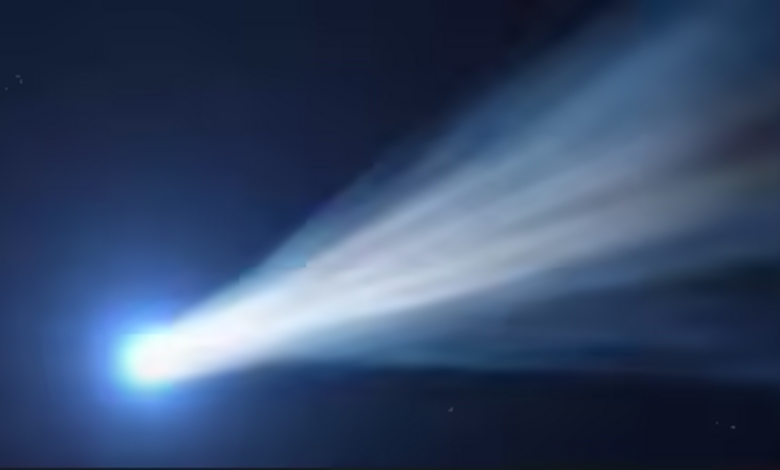
Washington: In a significant achievement for deep-space observation, NASA’s Hubble Space Telescope has captured high-resolution imagery of a celestial event involving the fragmentation of Comet C/2025 K1. The dramatic “cosmic explosion,” characterized by the comet shedding large volumes of ice and dust, provides astronomers with a rare opportunity to study the structural integrity of these ancient celestial bodies as they approach the sun.
According to a report by The Times of India, the Hubble telescope recorded the precise moment the comet began to lose its structural cohesion. The imagery reveals a trail of luminous debris following the nucleus, a phenomenon often triggered by the intense thermal pressure and gravitational forces encountered as a comet nears the inner solar system. Scientists at NASA noted that while cometary fragmentations are not unheard of, the clarity provided by Hubble in this instance is exceptional, allowing for a detailed analysis of the internal composition of C/2025 K1.
The data suggests that the “explosion” was likely caused by the sublimation of volatile gases trapped beneath the comet’s icy crust. As these gases heated up, the resulting internal pressure became too great for the fragile structure to contain, leading to a spectacular dispersal of material. The Times of India highlights that this event is particularly valuable for understanding the early building blocks of our solar system, as comets are often referred to as “dirty snowballs” that have remained largely unchanged for billions of years.
While the comet continues its trajectory, its brightness is expected to fluctuate significantly due to the ongoing loss of mass. NASA’s team of researchers intends to use these findings to refine models of cometary behavior and the potential impact such debris fields could have on future space missions.
Also read: Ancient Asteroid Hit North Sea, Triggered 330-Foot Tsunami Across Europe