
Applications
20/03/2026
19 views
1 likes
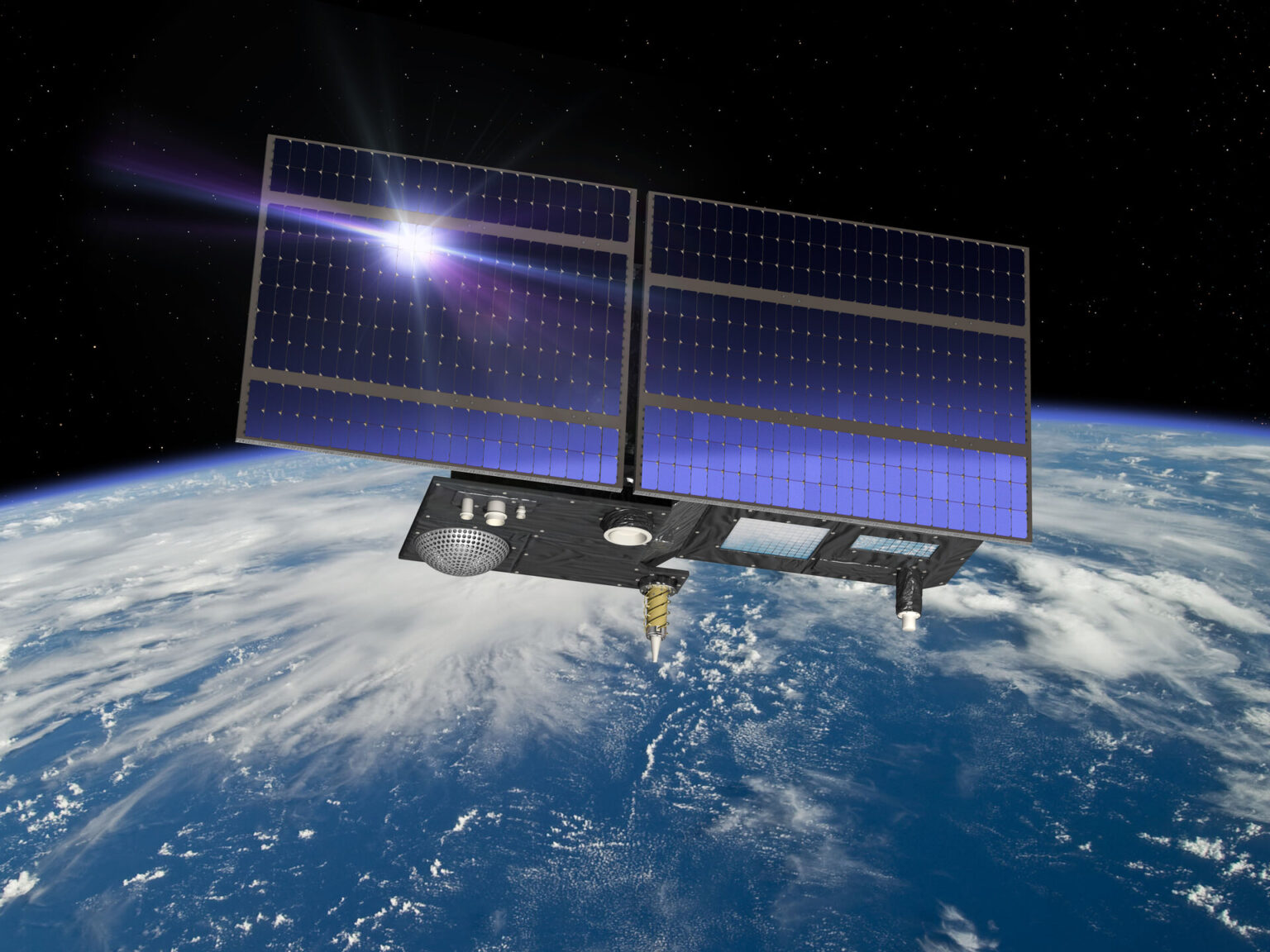
Genesis is the European Space Agency’s (ESA) navigation mission to measure Earth down to the millimetre. This precise measurement of Earth will have wide-ranging benefits, from satellite navigation to orbit determination to Earth science.
Genesis will improve the precision and stability of the International Terrestrial Reference Frame (ITRF), which is the foundation of satellite navigation and Earth science.
Earth is not a static system, instead, everything is moving over time, from ocean water to continents. The ITRF allows researchers to relate changes to Earth across space and time by providing a reference frame for their monitoring.
As the backbone for measuring and monitoring Earth, an improved ITRF will benefit navigation applications including aviation and traffic management, but it will also enhance many scientific areas.
1. Quantifying sea level change
Accurately measuring sea level change depends on knowing the precise location of tide gauges and having a precise measure of how the land the tide gauge is attached to is moving. By measuring Earth with unprecedented accuracy, Genesis will improve both metrics, enabling more accurate measurement of sea level change. This will allow better predictions of the impact of sea level rise on coastal areas.
2. Improved ice mass loss calculation
Penguins resting on Antarctic sea ice
Measures of ice mass loss need a very stable reference frame so that measurements can be compared over time. By improving the stability of the ITRF, Genesis will allow more precise calculation of ice mass loss.
3. Natural hazard prediction
Natural hazards such as earthquakes are preceded by small changes in the Earth’s surface. By increasing the stability and precision of the ITRF, Genesis could allow these changes to be monitored and interpreted for reliable prediction of earthquakes.
4. Understanding radiation accumulation
The Earth’s atmosphere seen from space
The amount of radiation Earth accumulates is an important measure of climate change. Researchers can measure the amount of excess heat oceans absorb as a proxy for the radiation Earth is gaining. By improving the ITRF, Genesis will enable more precise estimations of how much excess heat oceans are absorbing, providing insight into climate change.
5. Electron density profiles of polar regions
The ionosphere is the layer of the atmosphere with a high concentration of ions and electrons. Genesis’ circular orbit at 6000 km above Earth will allow it to provide ionosphere models, particularly around polar regions, which are not well covered by other missions.
6. Improved knowledge of Earth’s shape and gravity
The distribution of mass across Earth impacts its gravity field. By measuring Earth with millimetre precision, Genesis will enable scientists to describe Earth’s gravity field more accurately and improve their understanding of Earth’s geometry and rotation.
7. Precise positioning of satellites and space probes
For many satellites and space probes, knowing their precise location is key for analysing their data. This is because the observations they make are only useful if researchers can pinpoint where the observations were taken. By contributing to a stable ITRF and calibrating satellite navigation signals, Genesis will enable millimetre-level positioning of satellites and space probes, which will improve the data from these missions.
Scientific collaborations
From 12-13 March in Brussels, the annual Genesis Science Workshop brought the international geodetic community and ESA Genesis team together with industry. During the workshop, the ESA team provided updates on Genesis’ Preliminary Design Review and the work ahead for the Critical Design Review and experts from the Genesis Science Exploitation Team provided updates on how Genesis data will be used by the scientific community.
Since the beginning, the geodetic community has contributed to the development and definition of the services and products derived from Genesis data. Genesis will contribute significantly to advancing accuracy, interoperability and long-term resilience of the global geodetic supply chain, which is recognised by the United Nations for its essential role in global geospatial infrastructure.
The data from Genesis will be merged with measurements from existing satellites and worldwide ground-based networks to achieve the highest possible precision. Experts in geodetic techniques, specialists in data combination and researchers working on Earth system science will jointly analyse Genesis data in a global partnership that includes universities, research institutes, space agencies and analysis centres across many countries. Genesis’ impact will be felt when the next update of the ITRF is computed after its launch, but its importance is already apparent in the enforced collaboration across the geodetic community.
About Genesis
Genesis is a mission of the FutureNAV programme, an optional ESA Navigation programme with support from Italy, Belgium, Germany, France, Switzerland, Hungary, Finland and the UK.
Genesis aims to significantly contribute to improving the accuracy and stability of the International Terrestrial Reference Frame (ITRF), which serves as a reference for all space- and ground-based observations for navigation and Earth sciences. Improving the ITRF will impact navigation applications such as aviation, autonomous vehicle driving and traffic management. In Earth sciences it will help refine models used for climate and environmental monitoring and much more.
Genesis’s extreme accuracy is achieved by co-locating the four geodetic (Earth-measuring) techniques (satellite navigation, very-long-baseline interferometry, satellite laser ranging and DORIS) onboard one well calibrated satellite that acts as a flying observatory. The instruments will be synchronized by an ultra-stable oscillator (USO).
For more information, visit www.esa.int/Genesis
Like