

In the earlier days of Hollywood, alien movies were regarded as perfectly fun popcorn flicks, but it was Steven Spielberg who perfected the genre and led it into its most earnest era. The legendary filmmaker is finally returning to the world of flying saucers and otherworldly visitors this year with Disclosure Day.
The mysterious film about the discovery of proof of extraterrestrial life, which hits theaters June 12, 2026, is already being touted as one of the Academy Award winner’s creepiest sci-fi efforts yet, purely based on key moments from its trailer. Of course, this raises the question of what moments from Spielberg’s alien movies have most effectively made audiences question if we are alone and pray that we are.
The Interdimensional Beings From Indiana Jones and the Kingdom of the Crystal Skull
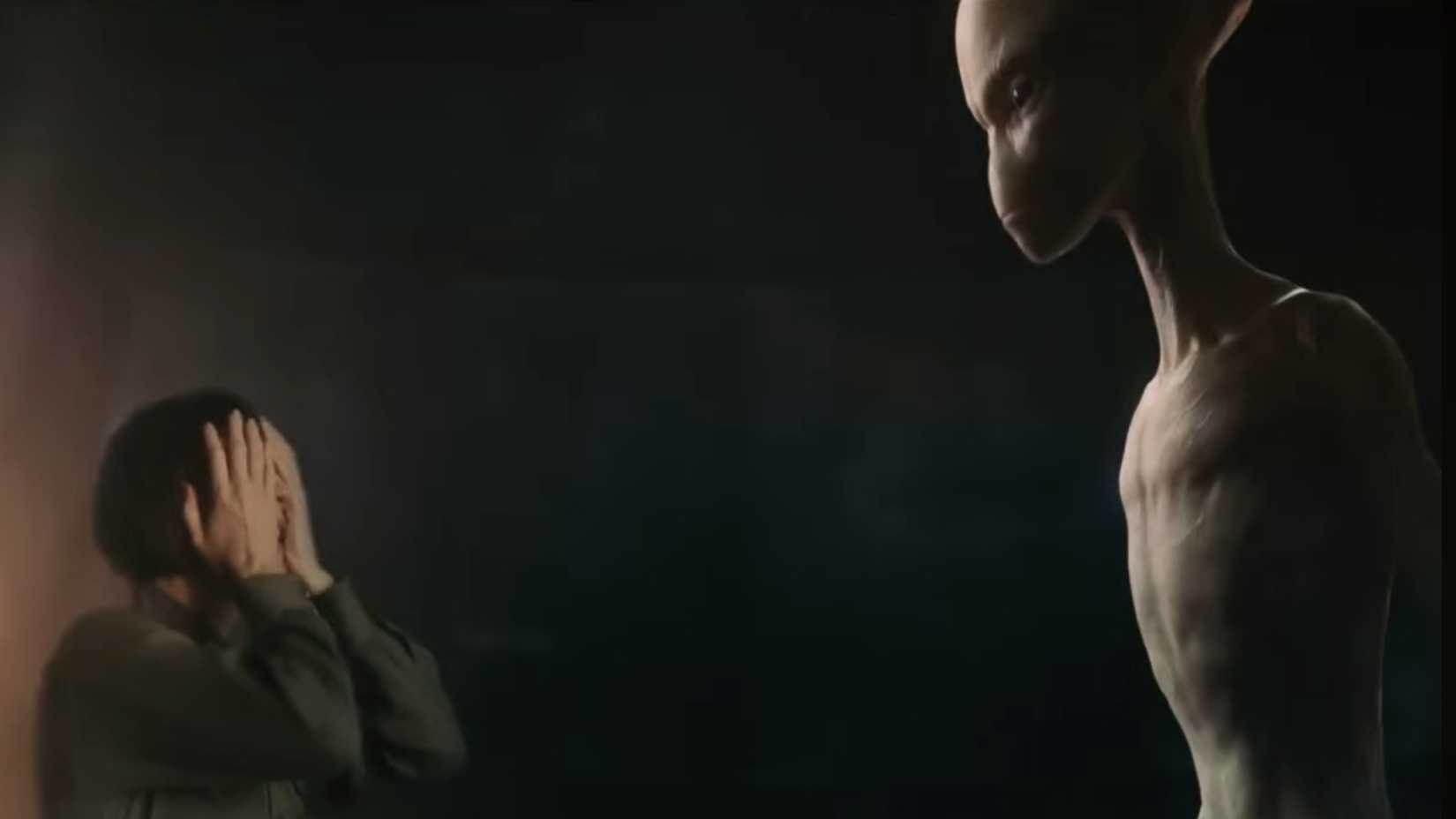
Cate Blanchett confronting an alien in Indiana Jones and the Kingdom of the Crystal SkullImage via Paramount/Lucasfilm
The last of Spielberg’s films that anyone expected to be an alien movie was the long-awaited fourth installment of his Harrison Ford-led action-adventure franchise. While 2008’s Indiana Jones and the Kingdom of the Crystal Skull is understandably polarizing, few can deny that the climax is quite unsettling.
A group of crystal skeletons merges into one “trans-dimensional” creature, which Dr. Irina Spalko (Cate Blanchett) begs to instill in her the knowledge of all the universe’s greatest mysteries. Unfortunately, the Ukrainian-Soviet Agent could not anticipate that no human can withstand that level of enlightenment, causing her to disintegrate from within.
The Mothership Arrives in Close Encounters of the Third Kind
Spielberg changed how UFOs are defined in pop culture in 1977 with only his fourth feature, Close Encounters of the Third Kind. The interweaving stories of ordinary humans’ witnessing extraordinary circumstances involving visitors from another planet culminate in a grand finale.
The alien visitors’ massive mothership presents itself to the Earthlings, who have long anticipated its appearance, by hovering over Devil’s Tower. John Williams’ instantly recognizable, rousing score wonderfully complements the moment that is as awe-inspiring as it is terrifying in the way it reinforces how insignificant the human race is in comparison to the unimaginable scale of the universe.
The “Mecha” Evolution in A.I. Artificial Intelligence
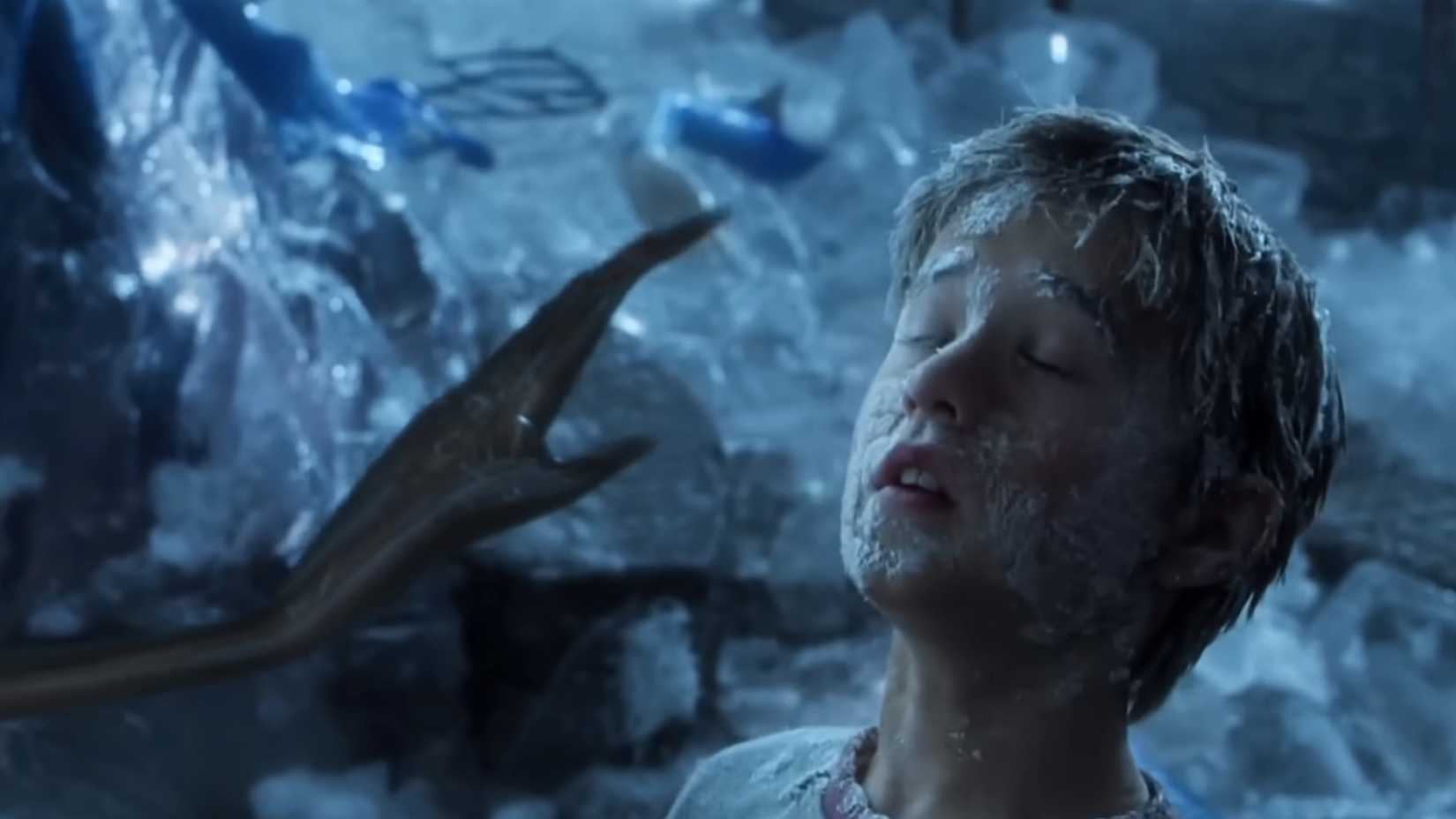
Haley Joel Osment as David having his mind read by an alien in A.I.: Artificial IntelligenceImage via Warner Bros.
Spielberg’s ingenious approach to depicting sympathetic aliens is to let the audience stew in their initially fearful reactions to such unfamiliar creatures before making their kindly nature more apparent. He demonstrates this process effectively in the final act of 2001’s widely forgotten A.I. Artificial Intelligence, which was originally envisioned by Stanley Kubrick.
Haley Joel Osment’s David, a machine boasting the appearance and personality of a child, does not get his wish to be a “real boy,” but is given the chance to spend one last day with his adoptive mother, courtesy of advanced androids that revive him thousands of years after mankind’s extinction. In truth, granting David’s request is more of an experiment for their benefit, representing their cold detachment from humanity, which, coupled with their alien-like appearance, makes for a bewilderingly bittersweet conclusion.
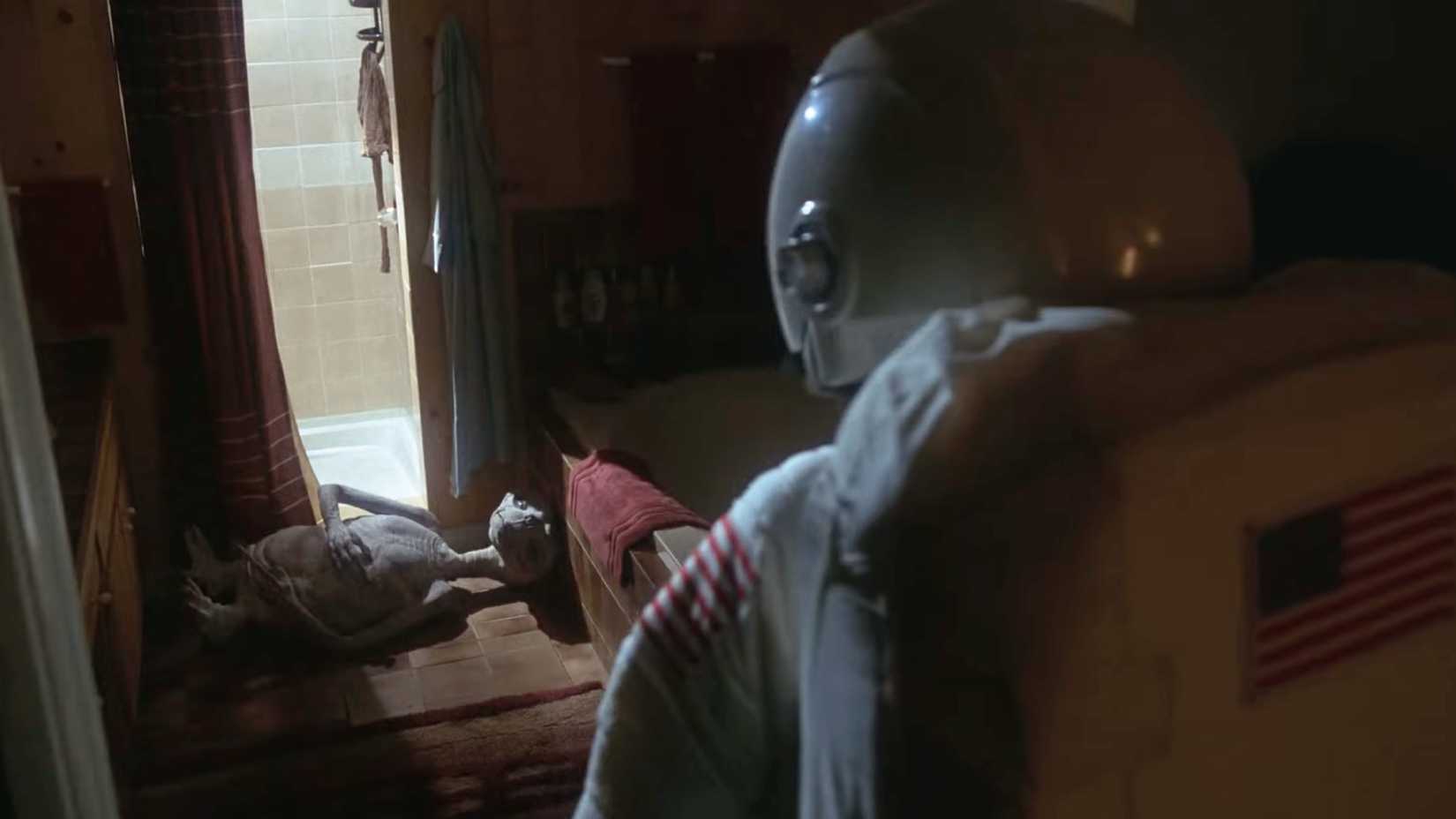
A man in an astronaut suit observes an ill E.T. in E.T. the Extra-TerrestrialImage via Universal/Amblin
The expectation that comes with any alien movie is that the otherworldly creature, or creatures, pose a horrifying threat, but that is, of course, not the case with E.T. the Extra-Terrestrial. In fact, the heartwarming 1982 blockbuster really has no villain, but Spielberg frames government scientists tracking the child-like visitor as such for the film’s majority.
The peak of the human “antagonists’” chilling semblance occurs when they invite themselves into the home of 10-year-old Elliot Taylor (Henry Thomas) and his family, turning it into a center to study E.T. without permission. They invade the suburban household, which is shrouded in plastic, which is an obvious protective measure, but also gives them a faceless, inhuman quality that surely terrified a generation of young moviegoers.
The Empty Ship in War of the Worlds
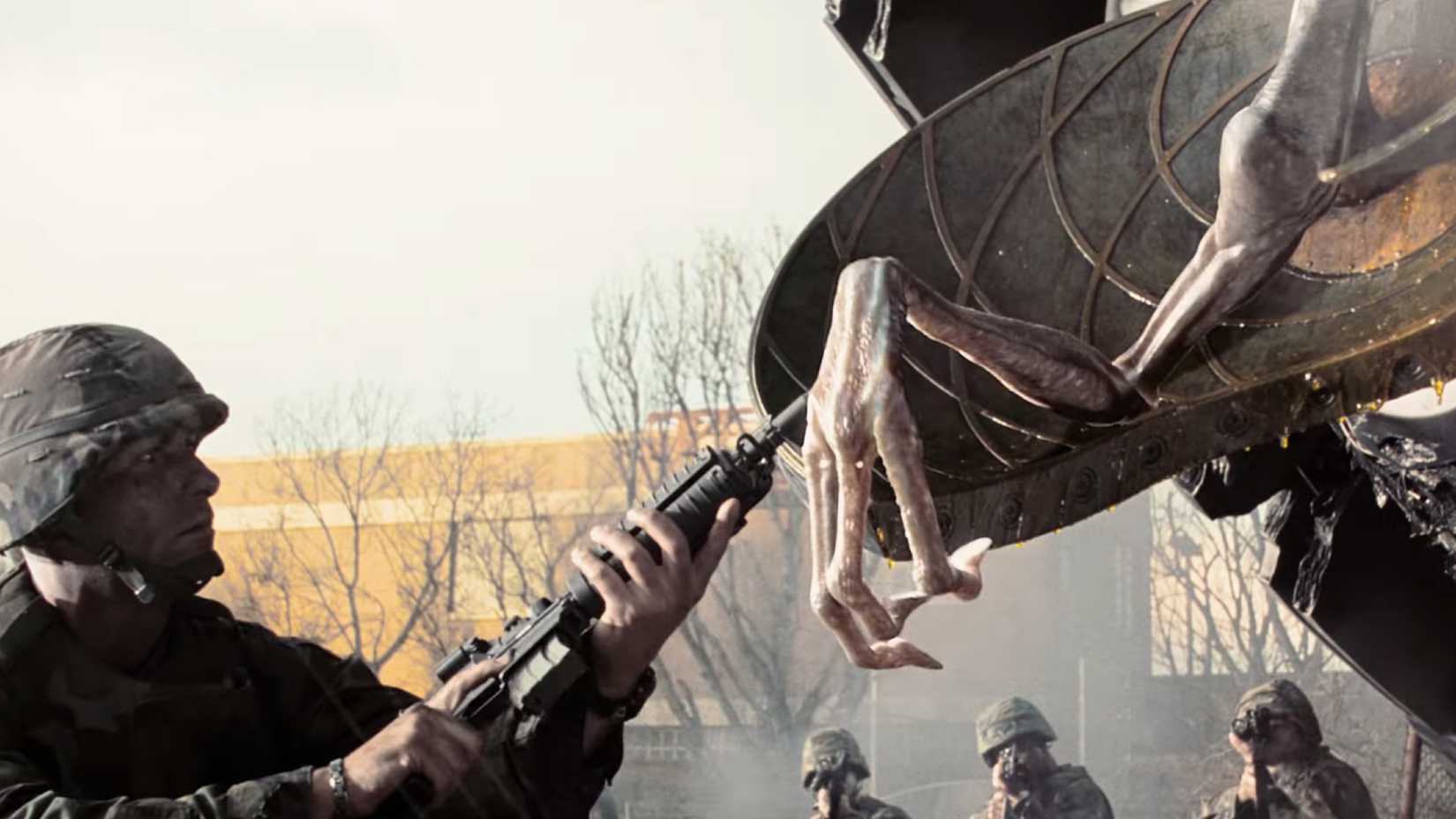
A soldier plays with a lifeless alien hand with the barrel of his rifle in War of the WorldsImage via Paramount Pictures
For his third exploration of interplanetary encounters, Spielberg helmed a modernized adaptation of H.G. Wells’ The War of the Worlds, starring Tom Cruise as a divorced father struggling to keep his children safe amid an Earth-shattering conflict. The 2005 hit stays true to the source material’s conclusion, but in a thrilling and ultimately disturbing manner.
With the invaders no longer protected by a force field, the military successfully brings down a tripod, from which one of the visibly unwell creatures emerges, before a soldier curiously plays with his weakened arm with the nose of his rifle. It is a rare moment of humanization for the monstrous enemy that makes the nature of their genocidal acts all the more unsettling.
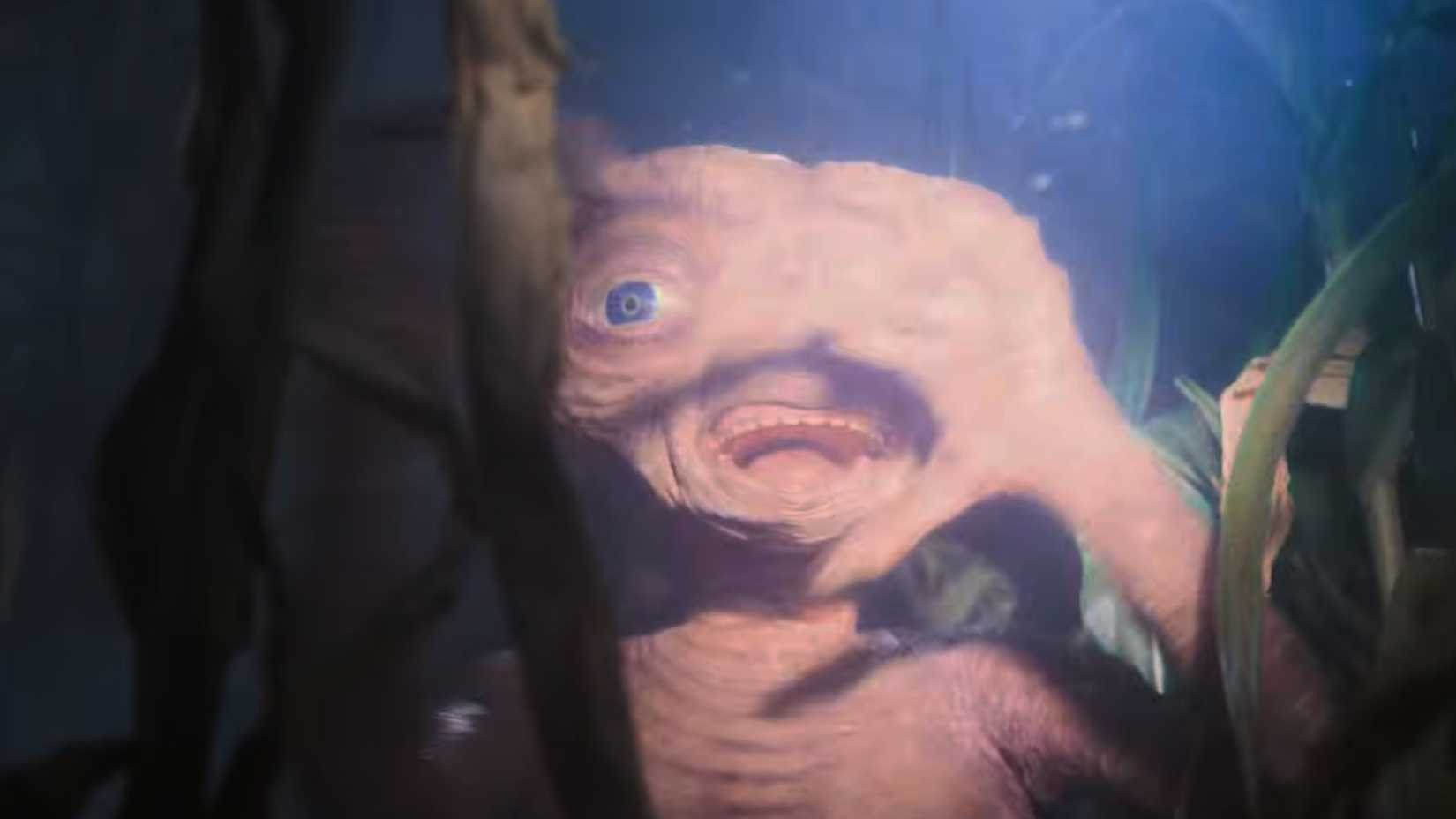
A frightened E.T. in E.T. the Extra-TerrestrialImage via Universal/Amblin
Hollywood has not introduced a more cuddly and adorable alien than the title role of, arguably, Steven Spielberg’s best movie, E.T. the Extra-Terrestrial. However, it would have been understandable if some parents chose to remove their children from the theater or eject the tape early after the first full glimpse of the character.
Before Elliott forms a close bond with him, the creature does not make the best first impression, positively frightening him when he discovers E.T. hiding behind cornstalks behind his home and lets out a high-pitched screech. The suspense leading up to the unusual being’s discovery and his startling reaction to being found under the boy’s flashlight beam is Spielberg letting his fearful sensibilities take charge before incorporating the film’s signature childlike whimsy.
The Mechanical Eye from War of the Worlds
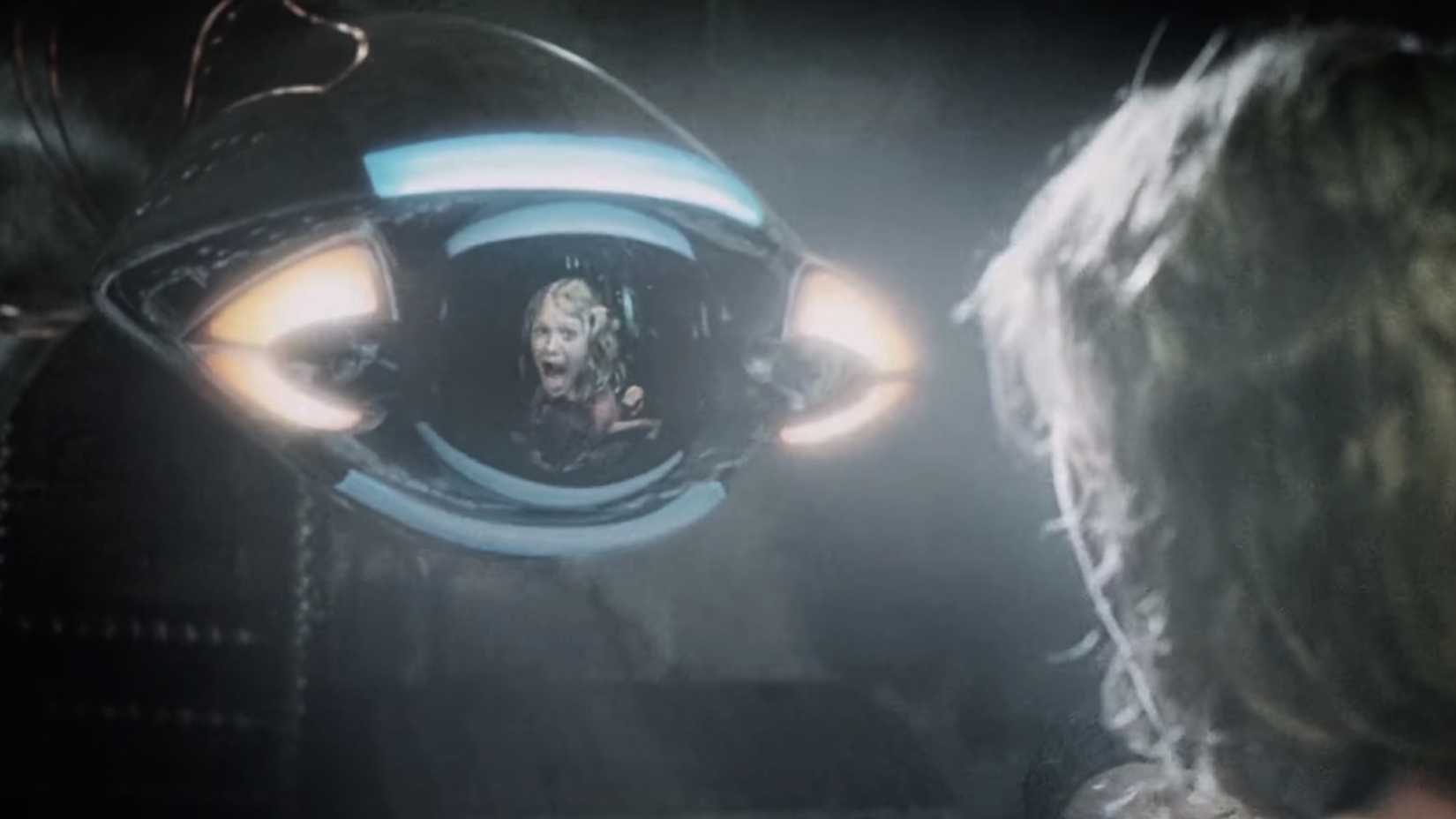
Dakota Fanning’s scream reflected in the mechanical eye lens in War of the WorldsImage via Paramount Pictures
The key to the success of 1975’s Jaws is keeping the audience drowning in anticipatory dread as the shark remains unseen, a secret weapon discovered by accident after the mechanical beast suffered frequent technical difficulties. Spielberg would utilize this initially unintentional tactic to great effect once again in War of the Worlds.
Of course, while the aliens themselves make a late appearance, their presence is felt through the use of their technology, such as a snake-like camera lens used to hunt Ray (Tom Cruise), his daughter, Rachel (Dakota Fanning), and their disturbed host, Harlan Ogilvy (Tim Robbins), in a dingy basement. Essentially, a game of Hide and Seek with an invasive mechanical eye, the sequence is a masterful exercise in the petrifying power of silence.
The Abduction of Barry in Close Encounters of the Third Kind
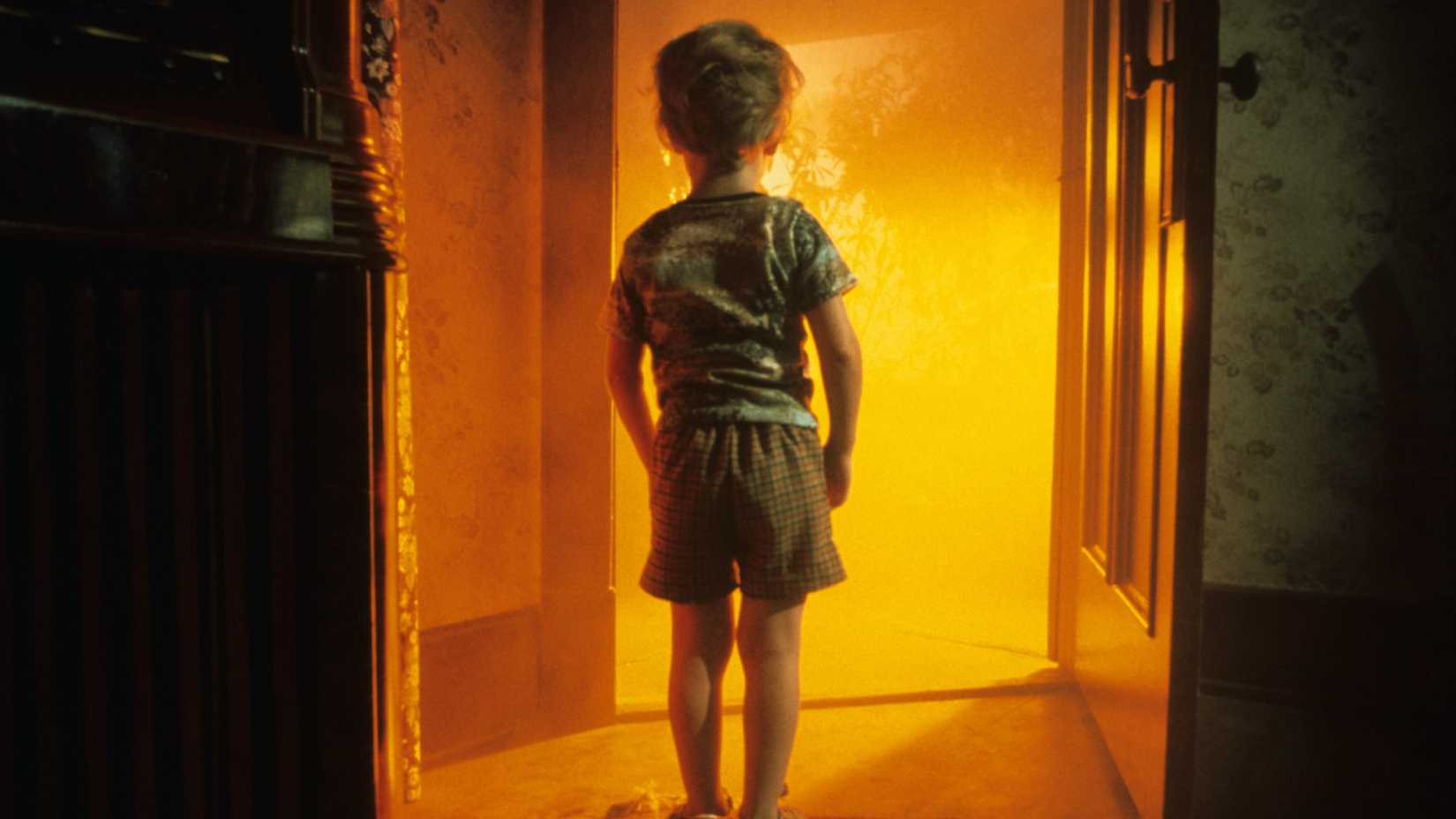
Barry standing in front of a doorway with orange light coming through in Close Encounters of the Third KindImage via Columbia Pictures / Courtesy of Everett Collection
War of the Worlds may have been Spielberg’s first film to involve genuinely evil extraterrestrial invaders. However, he initially offered audiences a taste of how he would portray interplanetary malevolence with Close Encounters of the Third Kind in one of the most sinister horror sequences in sci-fi history.
Jillian Guiler (Melinda Dillon) helplessly tries to barricade her home from the visitors that surround it in a heart-stopping orange glow and begin to remotely manipulate various objects and every possible opening in her house to find a way in. Amidst the chaos, the aliens successfully abduct her three-year-old son, Barry (Cary Guffey), through their doggy door, at which point she runs outside, tearfully calling after him as the aliens ascend to the sky, leaving the mother unsure if she will ever see her child again.
The Kansas City Weather Report in Disclosure Day

Emily Blunt in Disclosure DayImage via Universal Pictures
There is still very little known about the plot of Spielberg’s upcoming return to alien invasion stories. Yet, the trailer for Disclosure Day gives more than enough reason for moviegoers to be sure they are in for another thrilling treat from the living legend.
Perhaps the promo’s most unsettling moment sees Academy Award nominee Emily Blunt as a smiling Kansas City meteorologist, whose weather report is suddenly interrupted by an inhuman clicking sound… coming from her own mouth. It seems that the director has gone from aliens manipulating inanimate objects to aliens assuming bodily autonomy over humans with Disclosure Day, and this tease of that and other bizarre horrors has certainly left fans intrigued.
The Tripod Emerges in War of the Worlds
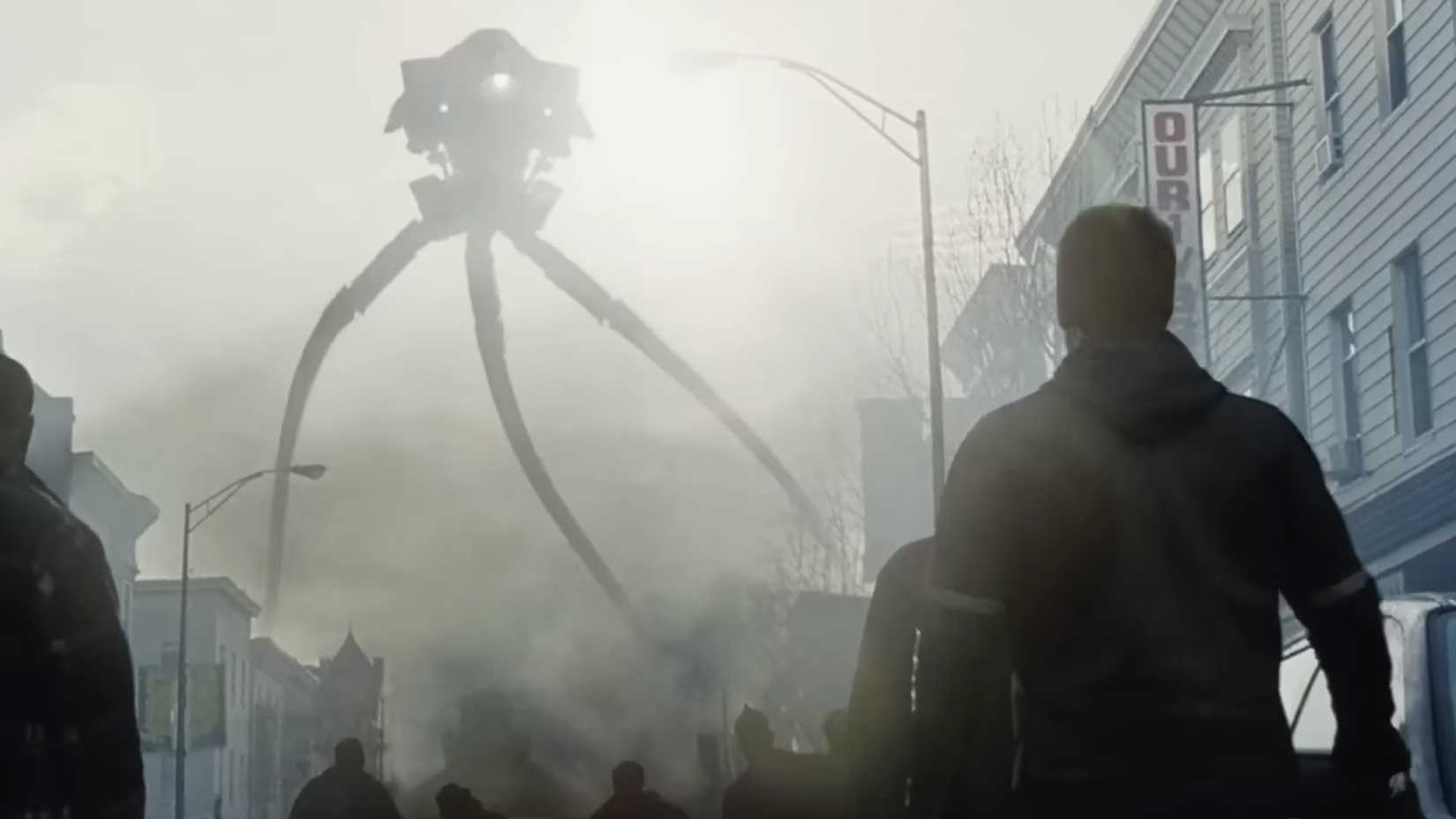
The tripod from War of the WorldsImage via Paramount Pictures
Spielberg did more than just bring H.G. Wells’ classic novel into the 21st century with War of the Worlds. He completely redefined the formula of alien invasion movies in just one scene that first reveals the antagonistic extraterrestrials.
Instead of descending upon their human prey from the sky, these invaders ascend from the ground in a tripod that towers over an assembly of terrified New Jerseyans who, if not fast enough to escape, are vaporized into gray ash with a single laser blast. The sight of the concrete cracking open beneath an old church and the sound of the tripod’s blaring, dispiriting horn alone earn this heart-stopping sequence as Spielberg’s scariest alien movie moment.