
4 min readNew DelhiMar 19, 2026 04:48 PM IST
Scientists have identified one of the oldest and most chemically primitive stars ever observed, offering a rare glimpse into how the first stars shaped the universe we see today.
Astronomers are calling the discovery a form of “cosmic archaeology,” as they have identified a star that acts like a fossil from the early universe. The object, designated PicII-503, is thought to be a member of a second generation of stars that formed shortly after the very first stars existed.

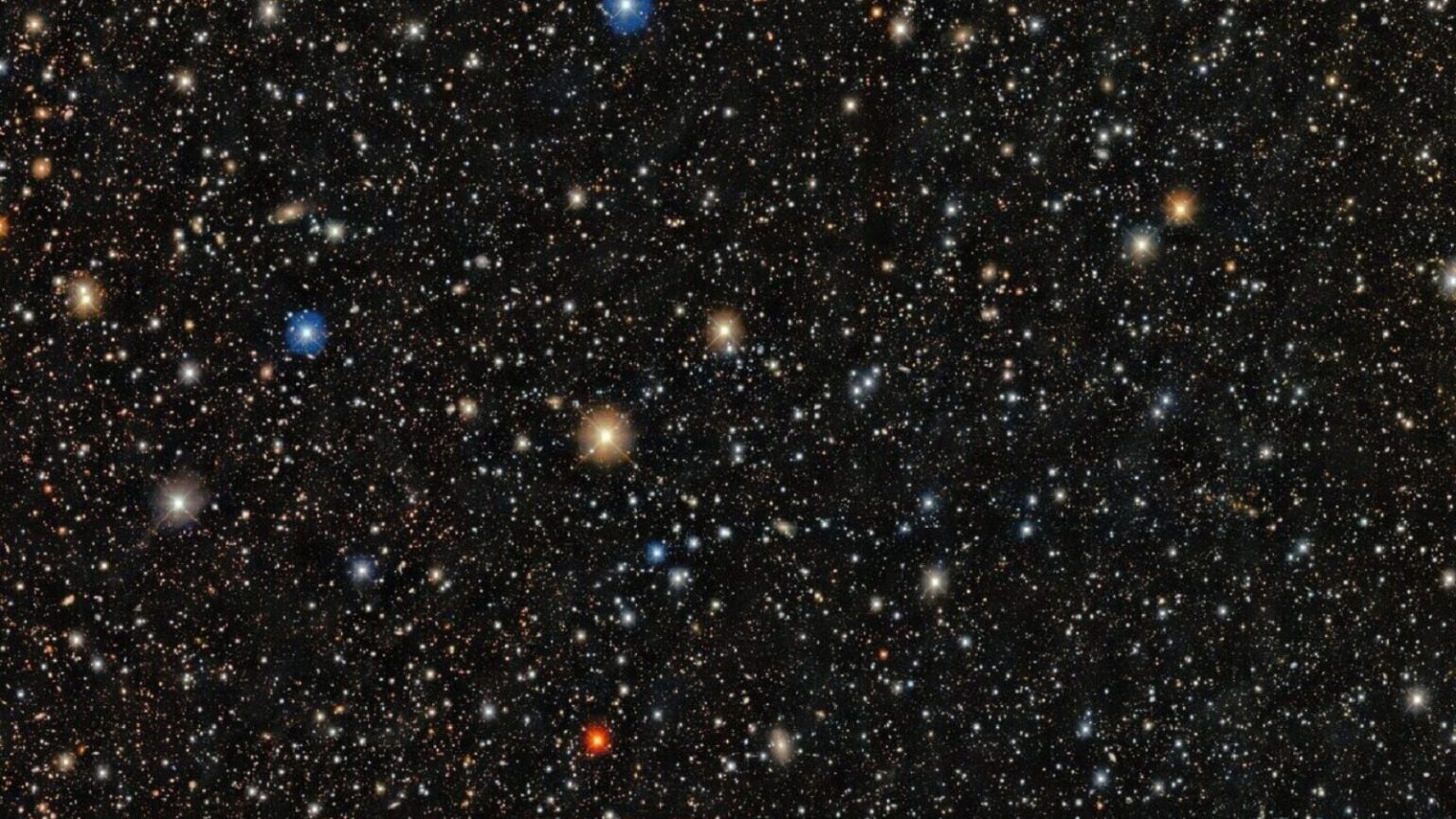
This rare discovery was found in a dwarf galaxy called Pictor II, which is 150,000 light-years away from Earth and is located in the constellation Pictor. Scientists used the highly advanced Dark Energy Camera, which is attached to the Víctor M Blanco Telescope.
What makes PicII-503 stand out is its extremely low iron content. Scientists found that it contains just 1/40,000th of the iron seen in our Sun. This makes it one of the most iron-poor stars ever discovered outside the Milky Way and thus makes it one of the most ancient objects known.
A peculiar chemical signature
While the iron content is low, the star has a peculiar feature in the form of a huge quantity of carbon. The ratio of carbon to iron is over 1,500 times greater than the Sun’s ratio.
The peculiar chemical signature is quite similar to the signature that astronomers have noted in some of the most ancient stars in the outer regions of the Milky Way galaxy. The signature indicates that PicII-503 bears the chemical fingerprint of the first stars that ever existed in the universe.
To comprehend the significance of this, astronomers turn their attention to the earliest stage in the evolution of the universe. The first stars, named Population III stars, consisted mostly of hydrogen and helium and had very small traces of elements.
Story continues below this ad
When these early stars died in massive explosions, they created heavier elements like carbon and iron. These materials were then scattered into space, forming the building blocks for the next generation of stars.
PicII-503 belongs to this second generation, often called Population II stars. These stars act as time capsules, preserving evidence of how the first stars lived and died.
A rare and challenging discovery
Finding such a star is extremely difficult. Researchers describe the discovery as being “at the edge of what we thought possible,” given how rare these objects are.
The star was first identified through a specialised survey designed to locate ancient stars. Follow-up observations were carried out using the Very Large Telescope and Magellan Telescope to further verify its unique chemical composition.
Story continues below this ad
According to scientists, this is the “first confirmed case of such a primitive star in a faint dwarf galaxy.”
What makes this star unique
One theory behind the unique chemical composition of PicII-503 is that the initial stars’ supernovas were not very energetic. In fact, scientists believe that the initial supernovas were “relatively low-energy events.”
As a result, lighter elements such as carbon would have been ejected into space, whereas heavier elements such as iron may have been pulled back into the star. This is evidenced by the fact that PicII-503 is rich in carbon and poor in iron.
Moreover, the fact that PicII-503 is located in a small dwarf galaxy with weak gravity lends weight to this theory.
Story continues below this ad
This discovery helps to piece together the connection between the initial stars and those we see today. It is a direct evidence of the evolution of the universe from a state devoid of heavier elements to what we see today.
For scientists, this is not just about this particular star; it is about understanding the origins of everything around us. The research was published in Nature Astronomy, and this is a step forward in the research of the early universe.
Expand
© IE Online Media Services Pvt Ltd